THE ADVENTURE COLLECTIVE® · Independent discovery and booking for outdoor travel

Two days of dramatic cave towns, Ottoman-era fortifications and UNESCO churches — a drive-led cultural loop from Tbilisi that blends geology, medieval history and mountain air. Plan for long transfers, short hikes through rock-cut architecture, and plenty of stairs.
Two days of dramatic cave towns, Ottoman-era fortifications and UNESCO churches — a drive-led cultural loop from Tbilisi that blends geology, medieval history and mountain air. Plan for long transfers, short hikes through rock-cut architecture, and plenty of stairs.
You arrive before dawn in a minivan, the road slipping through foothills while stone villages slacken in morning light. By mid-morning the cliffs of Vardzia rise like a city carved out of the rock — tiers of rooms, narrow tunnels and faded frescoes cut into a south-facing escarpment that once sheltered a medieval population. The tour threads through Samtskhe-Javakheti’s volcanic plateaus and the pine-lined valley of Borjomi, then climbs north toward ancient trade routes that link Uplistsikhe and the old capital, Mtskheta.
Verified experiences and guided adventures in the surrounding area.
Operated by Sakura Travel Agency · Tbilisi, Tbilisi
You arrive before dawn in a minivan, the road slipping through foothills while stone villages slacken in morning light. By mid-morning the cliffs of Vardzia rise like a city carved out of the rock — tiers of rooms, narrow tunnels and faded frescoes cut into a south-facing escarpment that once sheltered a medieval population. The tour threads through Samtskhe-Javakheti’s volcanic plateaus and the pine-lined valley of Borjomi, then climbs north toward ancient trade routes that link Uplistsikhe and the old capital, Mtskheta.
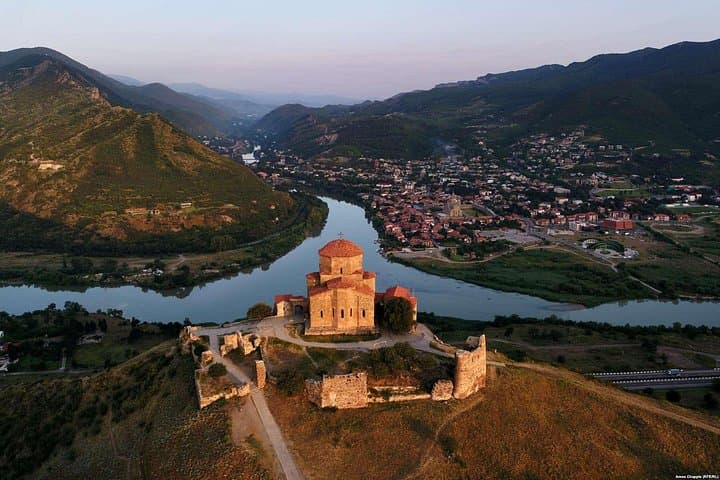
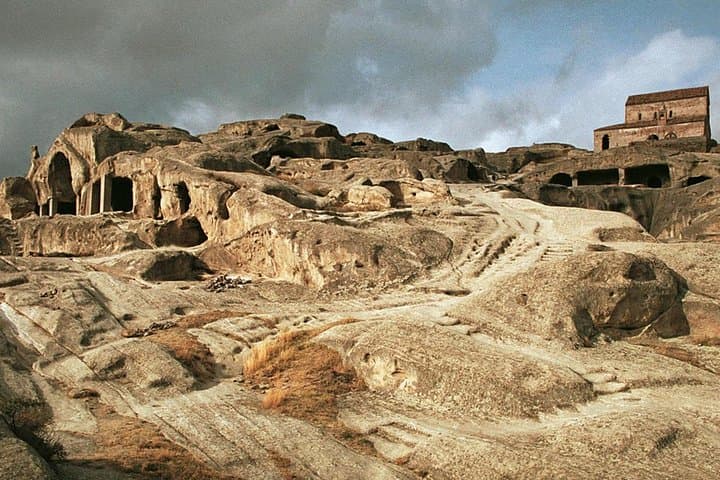
Vardzia dates to the 12th century and is associated with Queen Tamar and the high point of unified medieval Georgia; Uplistsikhe predates Christianity, a Silk Road-era cave town with Hellenistic and Persian echoes. Akhaltsikhe’s Rabati Fortress shows Ottoman and Georgian layers of rule, while Jvari and Svetitskhoveli in Mtskheta reflect early Christian architecture that shaped the Caucasus.
Expect long driving segments interspersed with short, sometimes steep walks and stairs through caves and narrow courtyards. Terrain ranges from paved roads to dirt pullouts; sites have uneven surfaces and exposed sections. Practical notes: start early to avoid buses at the major sites, bring cash for local vendors and tips, and reserve sturdy footwear for limestone steps and cobbled castle yards. Hydrate on the road, and allow time for the Borjomi mineral spring stop to stretch legs. Guides typically handle entry fees and accommodations, but bring a small daypack for camera, layers and sunscreen.
Most operators pick up from central Tbilisi hotels; confirm your exact meeting point when booking.
This tour lists entrance fees for Vardzia, Rabati and Uplistsikhe as included, but carry small cash for any optional stops.
Sites have uneven ground and many stairs; the tour is labeled physically easy but not fully accessible for wheelchairs.
Yes — the itinerary includes twin room accommodation (3*) on the first night as stated in the tour details.
Sakura Travel Agency operates guided outdoor trips and adventures with an emphasis on safety, stewardship, and memorable experiences.
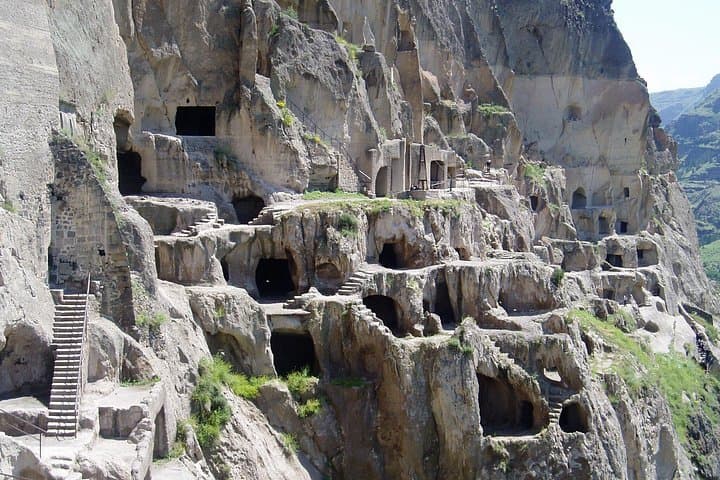
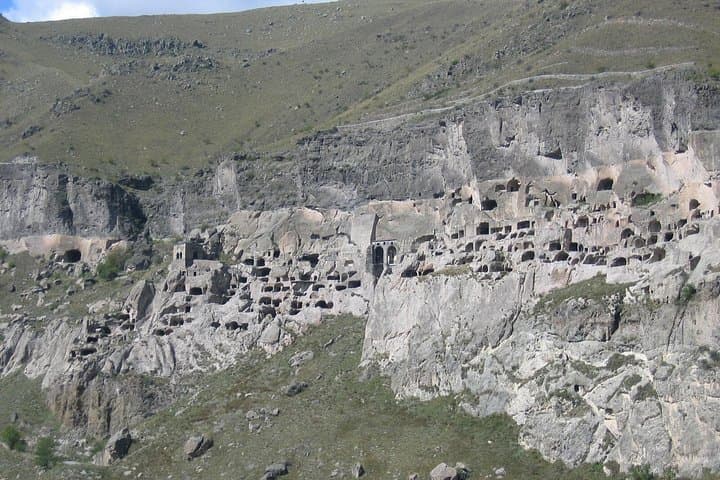
You arrive before dawn in a minivan, the road slipping through foothills while stone villages slacken in morning light. By mid-morning the cliffs of Vardzia rise like a city carved out of the rock — tiers of rooms, narrow tunnels and faded frescoes cut into a south-facing escarpment that once sheltered a medieval population. The tour threads through Samtskhe-Javakheti’s volcanic plateaus and the pine-lined valley of Borjomi, then climbs north toward ancient trade routes that link Uplistsikhe and the old capital, Mtskheta.
You arrive before dawn in a minivan, the road slipping through foothills while stone villages slacken in morning light. By mid-morning the cliffs of Vardzia rise like a city carved out of the rock — tiers of rooms, narrow tunnels and faded frescoes cut into a south-facing escarpment that once sheltered a medieval population. The tour threads through Samtskhe-Javakheti’s volcanic plateaus and the pine-lined valley of Borjomi, then climbs north toward ancient trade routes that link Uplistsikhe and the old capital, Mtskheta.
Vardzia dates to the 12th century and is associated with Queen Tamar and the high point of unified medieval Georgia; Uplistsikhe predates Christianity, a Silk Road-era cave town with Hellenistic and Persian echoes. Akhaltsikhe’s Rabati Fortress shows Ottoman and Georgian layers of rule, while Jvari and Svetitskhoveli in Mtskheta reflect early Christian architecture that shaped the Caucasus.
Expect long driving segments interspersed with short, sometimes steep walks and stairs through caves and narrow courtyards. Terrain ranges from paved roads to dirt pullouts; sites have uneven surfaces and exposed sections. Practical notes: start early to avoid buses at the major sites, bring cash for local vendors and tips, and reserve sturdy footwear for limestone steps and cobbled castle yards. Hydrate on the road, and allow time for the Borjomi mineral spring stop to stretch legs. Guides typically handle entry fees and accommodations, but bring a small daypack for camera, layers and sunscreen.