THE ADVENTURE COLLECTIVE® · Independent discovery and booking for outdoor travel

Walk Venice after dusk with a local guide and a small group: from San Zaccaria to Campo San Tomà, explore quiet squares, Gothic churches, and stories hidden in the calli. This two-hour night tour balances history, neighborhood life, and practical tips for navigating Venice’s stone streets.
Walk Venice after dusk with a local guide and a small group: from San Zaccaria to Campo San Tomà, explore quiet squares, Gothic churches, and stories hidden in the calli. This two-hour night tour balances history, neighborhood life, and practical tips for navigating Venice’s stone streets.
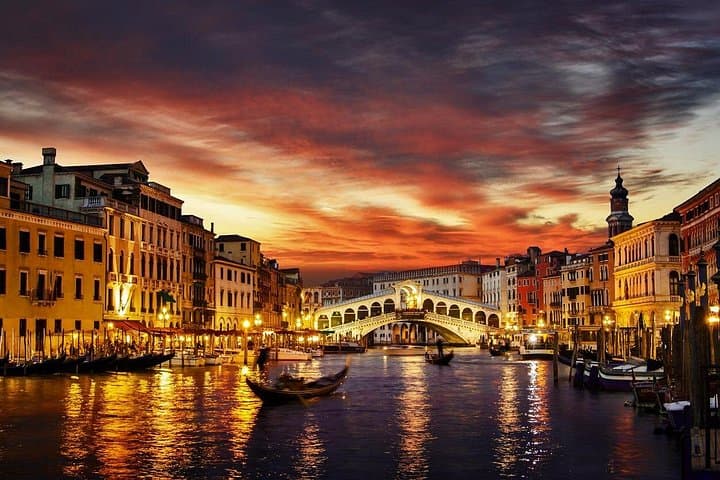
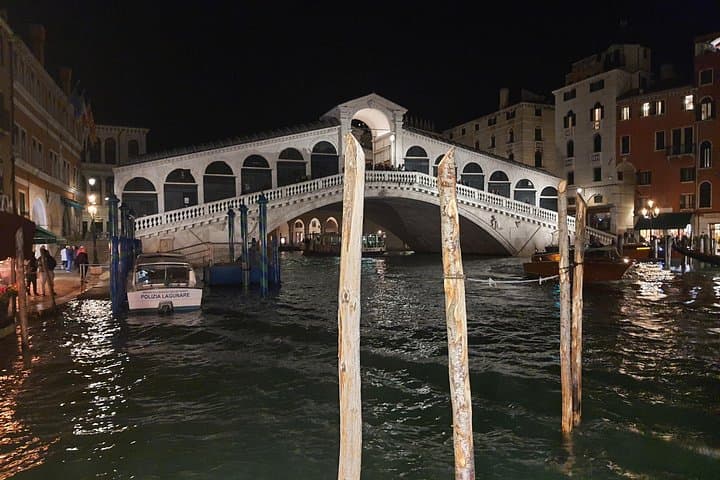
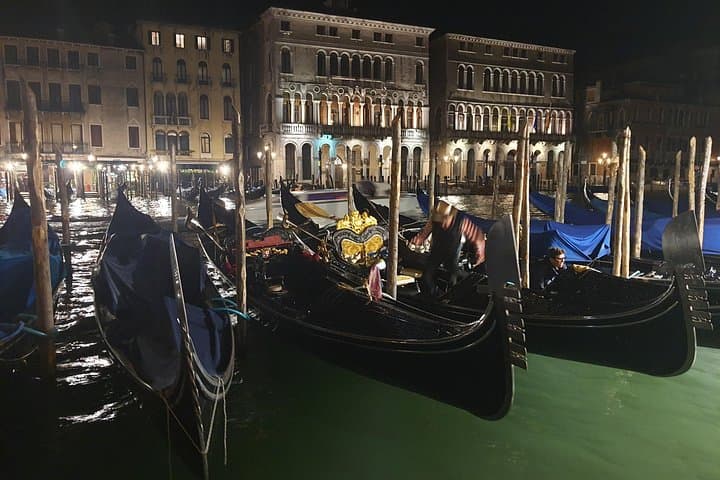
The lanterns along San Zaccaria throw a pool of light across slick, worn stone as the group gathers and the guide begins to walk. Footsteps click on the calli—narrow alleys that direct the city’s rhythm—and the canals answer with soft, undulating echoes. This is Venice at a different speed: quieter, more deliberate, where shop shutters and the last vaporetto disappear and the city’s architecture moves forward in relief against a navy sky.
Verified experiences and guided adventures in the surrounding area.
Operated by Stress Free Tours - Guided Tours and drivers in Rome and Italy · Venice, Veneto
The lanterns along San Zaccaria throw a pool of light across slick, worn stone as the group gathers and the guide begins to walk. Footsteps click on the calli—narrow alleys that direct the city’s rhythm—and the canals answer with soft, undulating echoes. This is Venice at a different speed: quieter, more deliberate, where shop shutters and the last vaporetto disappear and the city’s architecture moves forward in relief against a navy sky.
The two-hour small-group tour threads through neighborhoods that tell Venice’s long story. From the fifteenth-century grace of San Zaccaria you’ll move toward Campo Santa Margherita, the student-filled square that still hums late into the night; past Marco Polo’s house by the Grand Canal, a reminder of the city’s role on medieval trade routes; and into San Polo, where Sant’Aponal’s Gothic face and the modest palazzo that houses Carlo Goldoni’s museum give a close-up on civic and cultural life.
Geologically the city stands on a lagoon of silt and salt—wooden piles driven into clay, capped with Istrian stone—an engineering solution that shaped Venice’s look and its vulnerabilities. That history is visible in the bridges and the uneven paving, and it explains why Venetians remain protective of the city’s stones, waterways, and rhythms.
Culturally the night belongs to locals: students in Campo Santa Margherita, old men at the bar, and restaurant kitchens that trade day’s leftovers for midnight conversations. Your guide will point out small details—inscriptions on lintels, a bell tower’s repair marks, where the Rialto market once roared—and explain practical realities like the occasional municipal access fee for day visitors and the city’s measures around acqua alta (high water).
Practicalities: the tour meets by the entrance to San Zaccaria Church and ends at the Vaporetto stop near Campo San Tomà—easy to reach by public transport. Expect about 1.5–2.5 kilometers of walking over flat streets punctuated by several bridges with steps; mobility is generally easy but not entirely step-free. Wear grippy shoes for wet stone, carry a light layer (sea evenings can be chilly), and bring a small torch or the phone’s light for very narrow calli. If you want fewer crowds, book on weeknights and aim for the blue hour—just after sunset—for the best mix of light and atmosphere.
The tour suits curious travelers who want history with neighborhood life rather than a checklist of landmarks. For photographers, the canal reflections and quiet squares provide memorable frames; for slow travelers, it’s a way to read Venice’s architecture and its people under an evening sky.
The meeting point is near the entrance of San Zaccaria Church; your booking confirmation includes a map and local directions.
Yes—infants and small children can use strollers in most sections, but expect some bridges with steps that require lifts.
No—this is an outdoor walking tour focused on streets and squares; admissions to interiors are not included.
The tour may be canceled or rescheduled for heavy rain or high acqua alta; full refunds are available if you cancel at least 24 hours prior under the operator’s policy.
Venice has an access fee that can apply to day visitors on certain dates—check municipal guidance; overnight guests are sometimes exempt depending on the arrangements.
Yes—the low light at blue hour is ideal; bring a steady hand or small tripod for longer exposures and avoid flash in quiet residential areas.
Stress Free Tours - Guided Tours and drivers in Rome and Italy operates guided outdoor trips and adventures with an emphasis on safety, stewardship, and memorable experiences.
The lanterns along San Zaccaria throw a pool of light across slick, worn stone as the group gathers and the guide begins to walk. Footsteps click on the calli—narrow alleys that direct the city’s rhythm—and the canals answer with soft, undulating echoes. This is Venice at a different speed: quieter, more deliberate, where shop shutters and the last vaporetto disappear and the city’s architecture moves forward in relief against a navy sky.
The lanterns along San Zaccaria throw a pool of light across slick, worn stone as the group gathers and the guide begins to walk. Footsteps click on the calli—narrow alleys that direct the city’s rhythm—and the canals answer with soft, undulating echoes. This is Venice at a different speed: quieter, more deliberate, where shop shutters and the last vaporetto disappear and the city’s architecture moves forward in relief against a navy sky.
The two-hour small-group tour threads through neighborhoods that tell Venice’s long story. From the fifteenth-century grace of San Zaccaria you’ll move toward Campo Santa Margherita, the student-filled square that still hums late into the night; past Marco Polo’s house by the Grand Canal, a reminder of the city’s role on medieval trade routes; and into San Polo, where Sant’Aponal’s Gothic face and the modest palazzo that houses Carlo Goldoni’s museum give a close-up on civic and cultural life.
Geologically the city stands on a lagoon of silt and salt—wooden piles driven into clay, capped with Istrian stone—an engineering solution that shaped Venice’s look and its vulnerabilities. That history is visible in the bridges and the uneven paving, and it explains why Venetians remain protective of the city’s stones, waterways, and rhythms.
Culturally the night belongs to locals: students in Campo Santa Margherita, old men at the bar, and restaurant kitchens that trade day’s leftovers for midnight conversations. Your guide will point out small details—inscriptions on lintels, a bell tower’s repair marks, where the Rialto market once roared—and explain practical realities like the occasional municipal access fee for day visitors and the city’s measures around acqua alta (high water).
Practicalities: the tour meets by the entrance to San Zaccaria Church and ends at the Vaporetto stop near Campo San Tomà—easy to reach by public transport. Expect about 1.5–2.5 kilometers of walking over flat streets punctuated by several bridges with steps; mobility is generally easy but not entirely step-free. Wear grippy shoes for wet stone, carry a light layer (sea evenings can be chilly), and bring a small torch or the phone’s light for very narrow calli. If you want fewer crowds, book on weeknights and aim for the blue hour—just after sunset—for the best mix of light and atmosphere.
The tour suits curious travelers who want history with neighborhood life rather than a checklist of landmarks. For photographers, the canal reflections and quiet squares provide memorable frames; for slow travelers, it’s a way to read Venice’s architecture and its people under an evening sky.