
Venice by Night Guided Walking Tour — San Zaccaria to Campo San Tomà
Trade daytime crowds for a cooler, quieter Venice on this two-hour guided walking tour. From the lit arcades of San Zaccaria to the hush of Campo San Tomà, discover architecture, stories, and shortcuts few visitors see after dark.
An Adventure In Venice.
Trade daytime crowds for a cooler, quieter Venice on this two-hour guided walking tour. From the lit arcades of San Zaccaria to the hush of Campo San Tomà, discover architecture, stories, and shortcuts few visitors see after dark.
Read the full experience
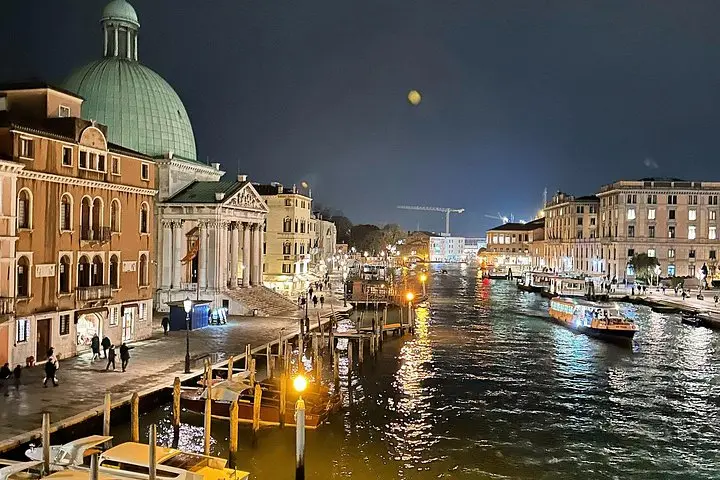
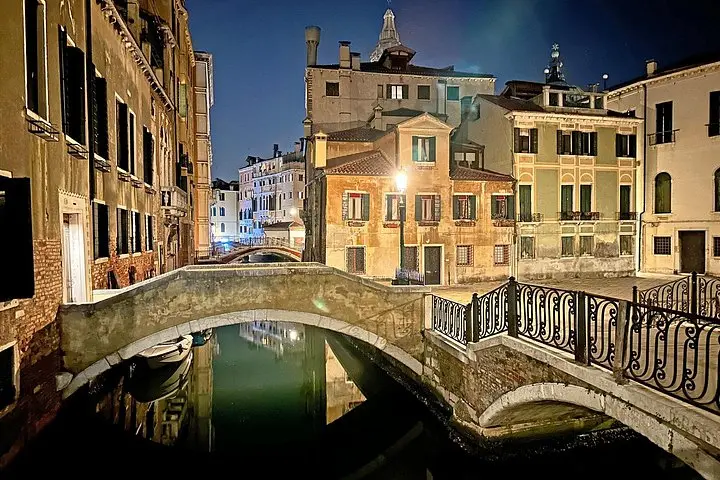
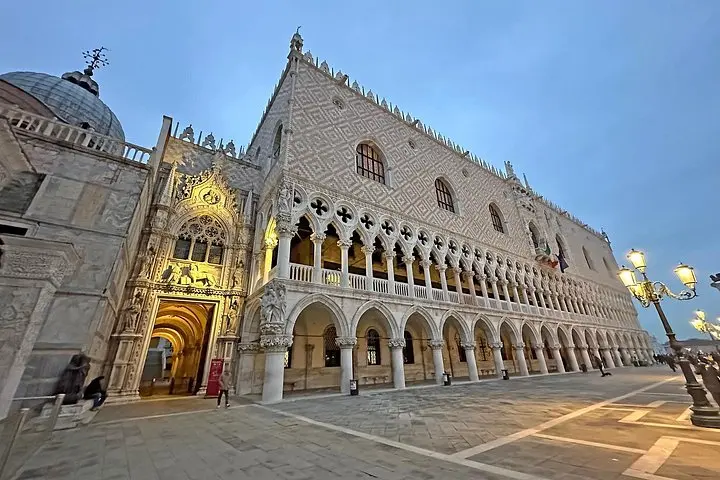
The lamps along the canals are already lit when you meet your guide beside San Zaccaria, the church's façade casting a pale reflection across the water. A cool breeze threads the calli, carrying the faint scent of espresso and seaweed; the city that crowds fray from by day tightens into a tighter, quieter Venice. You move deliberately—over stone bridges, past shuttered bakeries, into squares where only a handful of locals linger at late tables.
The lamps along the canals are already lit when you meet your guide beside San Zaccaria, the church's façade casting a pale reflection across the water. A cool breeze threads the calli, carrying the faint scent of espresso and seaweed; the city that crowds fray from by day tightens into a tighter, quieter Venice. You move deliberately—over stone bridges, past shuttered bakeries, into squares where only a handful of locals linger at late tables.
This two-hour tour reads like a compact primer to Venetian life after dusk. Starting at San Zaccaria, a 15th-century Renaissance church with a ghostly arcade, the route drops into Campo Santa Margherita, the beat of student life by day that quiets into soft conversation at night. The walk skirts the Rialto stretch where Marco Polo's house marks the end of an explorer's life rather than the start of a voyage. Sant'Aponal's Gothic profile appears unexpectedly on a narrow canal, then the guide steers you toward Campo de' Frari and Carlo Goldoni's modest house-museum—a reminder that Venice's creative history lives in small rooms, not just grand palazzi. The finale at Campo San Tomà is deliberately low-key: a place for reflection, away from the throng and under the glow of street lamps.
Geologically, Venice is an engineered city: timber piles driven into the lagoon's silts, stone and brick raised above acqua alta, and a web of canals that decide where you walk. Culturally, evening is where Venetians reclaim parts of their city—bars light up, markets close, and the rhythm slows. The tour's small-group format (max 15) keeps that nuance intact: you see rooms and façades, not just postcard views.
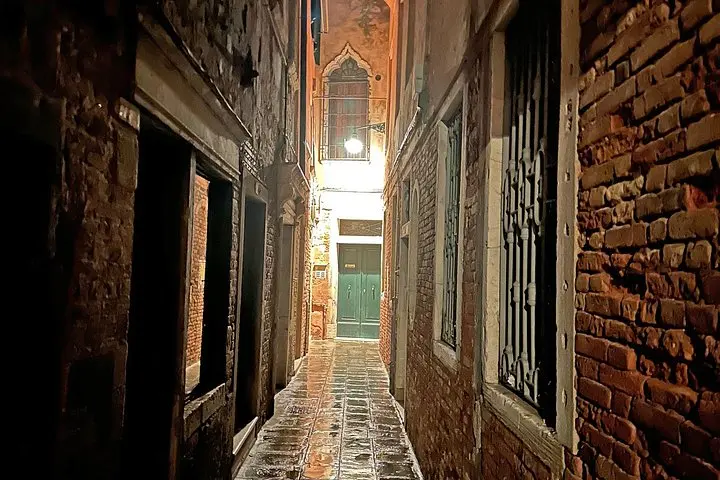
Practicalities are straightforward. The walk covers roughly 2–3 kilometers on uneven stone and repeated bridge steps; expect cobblestones and narrow alleys. The meeting point is next to San Zaccaria church—arrive 10 minutes early. Bring layers: evenings on the lagoon bite even in summer. The guide provides local context and points out quieter entrances to crowded sites; admissions aren't included, but stops are timed for photo-friendly light and minimal queues.
For first-time visitors, this tour is an efficient way to understand Venice’s nocturnal personality without the daytime crush. For return visitors, it's a reminder that the city's stories are embedded in its alleys and squares. Keep your camera ready, but also put it away to listen; Venice at night rewards the attentive walker.
Frequently asked questions
Meet next to the main entrance of San Zaccaria church at the canal edge; arrive about 10 minutes before the listed start time.
Yes—infants and small children in strollers are accommodated, though some bridges have steps requiring brief lifts.
No admissions are included; the route focuses on exterior sights and neighborhood stories rather than museum entries.
This listing specifies an English-speaking local guide; private options may offer other languages on request.
Shared tours are limited to 15 people to preserve intimacy and access to smaller alleys and squares.
The operator may cancel or alter the route in bad weather or high water; check the cancellation and refund policy for full details.
About This Experience
Private Tours of Venice operates guided outdoor trips and adventures with an emphasis on safety, stewardship, and memorable experiences.
Adventure tips
Recommended gear
- Comfortable walking shoes: Good grip and support for cobblestones and bridge steps.
- Light rain jacket or umbrella: Spring showers and sudden lagoon mist make a compact waterproof useful.
- Light layers (sweater or scarf): Even summer evenings can feel cool near the water—layers help adjust as temperatures drop.
- Small crossbody bag: Keeps valuables secure and hands free while navigating narrow streets.
Photos of the experience
Related adventures & guides
Read the full experience
The lamps along the canals are already lit when you meet your guide beside San Zaccaria, the church's façade casting a pale reflection across the water. A cool breeze threads the calli, carrying the faint scent of espresso and seaweed; the city that crowds fray from by day tightens into a tighter, quieter Venice. You move deliberately—over stone bridges, past shuttered bakeries, into squares where only a handful of locals linger at late tables.
The lamps along the canals are already lit when you meet your guide beside San Zaccaria, the church's façade casting a pale reflection across the water. A cool breeze threads the calli, carrying the faint scent of espresso and seaweed; the city that crowds fray from by day tightens into a tighter, quieter Venice. You move deliberately—over stone bridges, past shuttered bakeries, into squares where only a handful of locals linger at late tables.
This two-hour tour reads like a compact primer to Venetian life after dusk. Starting at San Zaccaria, a 15th-century Renaissance church with a ghostly arcade, the route drops into Campo Santa Margherita, the beat of student life by day that quiets into soft conversation at night. The walk skirts the Rialto stretch where Marco Polo's house marks the end of an explorer's life rather than the start of a voyage. Sant'Aponal's Gothic profile appears unexpectedly on a narrow canal, then the guide steers you toward Campo de' Frari and Carlo Goldoni's modest house-museum—a reminder that Venice's creative history lives in small rooms, not just grand palazzi. The finale at Campo San Tomà is deliberately low-key: a place for reflection, away from the throng and under the glow of street lamps.
Geologically, Venice is an engineered city: timber piles driven into the lagoon's silts, stone and brick raised above acqua alta, and a web of canals that decide where you walk. Culturally, evening is where Venetians reclaim parts of their city—bars light up, markets close, and the rhythm slows. The tour's small-group format (max 15) keeps that nuance intact: you see rooms and façades, not just postcard views.
Practicalities are straightforward. The walk covers roughly 2–3 kilometers on uneven stone and repeated bridge steps; expect cobblestones and narrow alleys. The meeting point is next to San Zaccaria church—arrive 10 minutes early. Bring layers: evenings on the lagoon bite even in summer. The guide provides local context and points out quieter entrances to crowded sites; admissions aren't included, but stops are timed for photo-friendly light and minimal queues.
For first-time visitors, this tour is an efficient way to understand Venice’s nocturnal personality without the daytime crush. For return visitors, it's a reminder that the city's stories are embedded in its alleys and squares. Keep your camera ready, but also put it away to listen; Venice at night rewards the attentive walker.
Make a day of it nearby.
Verified experiences and guided adventures in the surrounding area.