THE ADVENTURE COLLECTIVE® · Independent discovery and booking for outdoor travel

Walk the lanes between Rialto and San Polo, tasting Venice one cicchetto at a time. This 2.5-hour guided food tour pairs market visits and historic sights with authentic local bites—perfect for curious eaters who want history with their gelato.
Walk the lanes between Rialto and San Polo, tasting Venice one cicchetto at a time. This 2.5-hour guided food tour pairs market visits and historic sights with authentic local bites—perfect for curious eaters who want history with their gelato.
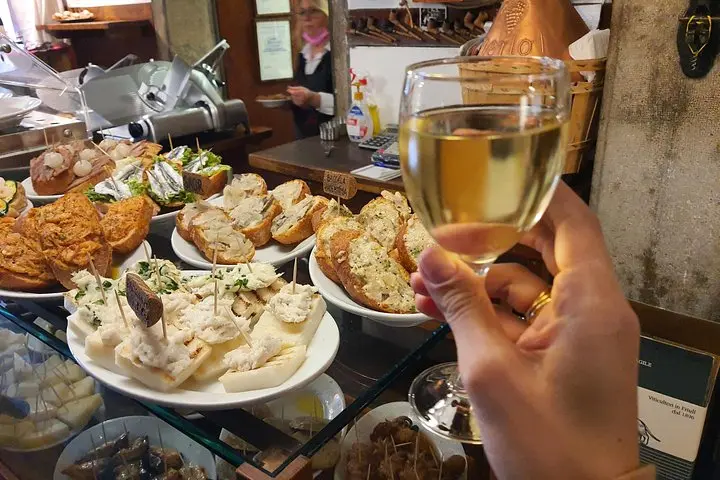
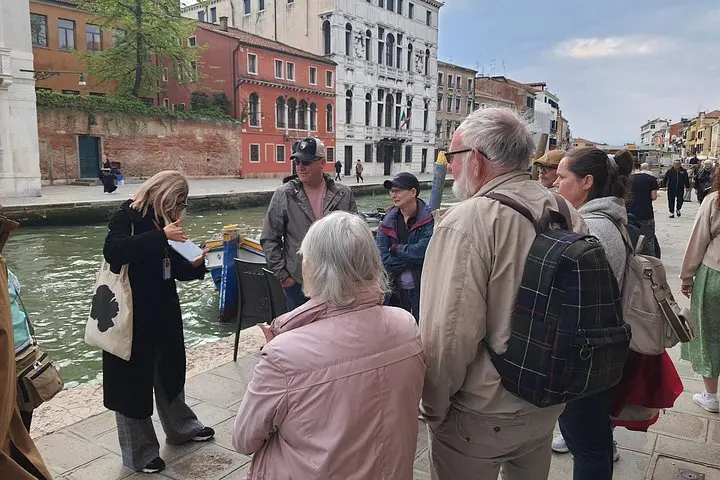
You meet at Campo San Bartolomeo, fifteen minutes early as requested, where a guide holds a modest sign reading “Street Food Tour.” The square smells of espresso and salt; a vaporetto burbles on the Grand Canal and a gondolier’s steady oar punctuates the morning. The group slips off the tourist drag and into alleys where sunlight strips down to a single ribbon on water-worn stone. This is a walking tour that reads Venice through its food—cicchetti stacked like small flags on a counter, buranelli crisp from a pastry cart, and gelato that brightens a shadowed campo.
Verified experiences and guided adventures in the surrounding area.
Operated by Alberto Tours · Venice, Veneto
You meet at Campo San Bartolomeo, fifteen minutes early as requested, where a guide holds a modest sign reading “Street Food Tour.” The square smells of espresso and salt; a vaporetto burbles on the Grand Canal and a gondolier’s steady oar punctuates the morning. The group slips off the tourist drag and into alleys where sunlight strips down to a single ribbon on water-worn stone. This is a walking tour that reads Venice through its food—cicchetti stacked like small flags on a counter, buranelli crisp from a pastry cart, and gelato that brightens a shadowed campo.
The route threads through San Polo and the Rialto Market, a place of commerce since the 11th century. Sellers still lay out fish on crushed ice under wooden roofs, continuing traditions that shaped Venetian trade and identity. You’ll pass the Frari’s gothic façade and the house associated with Marco Polo; the tour lets the city’s maritime past, mercantile wealth, and artistic reach surface between bites. Geologically, Venice is a lagoon city built on timber piles driven into silt; tides and the ever-present acqua alta are part of how food and people move here—the market’s rhythms synchronized to the lagoon’s mood.
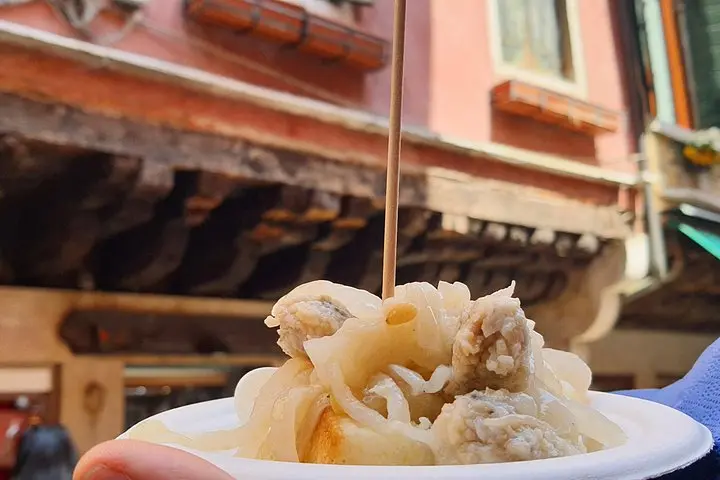
Culinary culture in Venice is compact and purposeful. Cicchetti are more than snacks: they’re social currency in bacari (wine bars), meant to be eaten standing with a glass of local prosecco or ombra. The guide explains the provenance of ingredients—the lagoon’s clams, Adriatic sardines, and the seasonal produce that shapes menus—and points out how small plates reflect centuries of trade routes and resourcefulness.
Practicalities matter. This is a 2.5-hour, mostly flat walk across cobbled bridges and narrow ramps—expect roughly 1.5–2 miles of walking with frequent standing during tastings. Wear shoes with solid soles for uneven stones and bring a small crossbody bag that zips; alleys are narrow and busy. Cash may be handy for extra treats but most stops accept cards; if you have dietary restrictions, notify in advance—vegetarian options are possible but full vegan, gluten-free, and dairy-free menus are limited.
Timing is tactical: mornings catch the Rialto Market at its liveliest; avoid Mondays and some afternoons when sections close. In high water season (autumn/winter) the route may change and some stalls relocate. The tour is rain-or-shine; a light packable jacket helps. Finally, taste deliberately—ask questions about what you try. The food tour is a sensory introduction to Venice: each small plate is a local story, and the city, like any good host, keeps revealing itself one bite at a time.
Local street food tastings at several stops and an expert guide; admissions to churches are not included.
Yes—vegetarian options can be accommodated if you notify the operator when booking.
Infants and small children can use a stroller, but seats aren’t guaranteed and the route includes narrow alleys and bridges.
The tour runs rain or shine; in high water the guide may modify the route to avoid flooded areas.
It’s classified easy but involves standing and walking on uneven surfaces for approximately 2–2.5 hours.
Campo San Bartolomeo next to the statue—look for a guide holding a sign reading “Street Food Tour” and arrive 15 minutes early.
Alberto Tours operates guided outdoor trips and adventures with an emphasis on safety, stewardship, and memorable experiences.
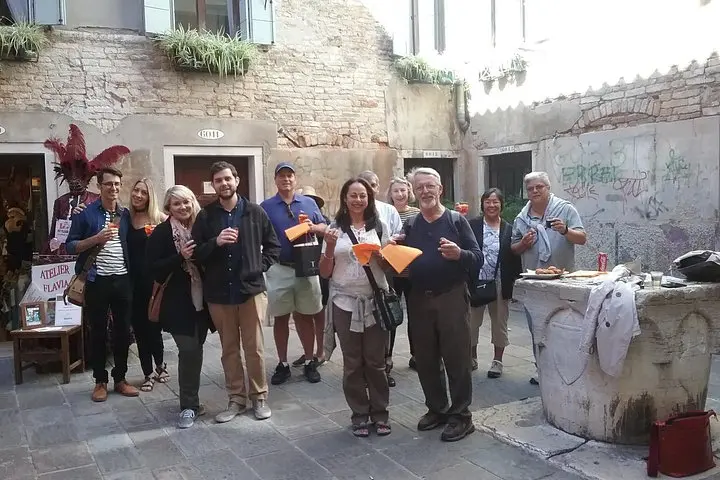
You meet at Campo San Bartolomeo, fifteen minutes early as requested, where a guide holds a modest sign reading “Street Food Tour.” The square smells of espresso and salt; a vaporetto burbles on the Grand Canal and a gondolier’s steady oar punctuates the morning. The group slips off the tourist drag and into alleys where sunlight strips down to a single ribbon on water-worn stone. This is a walking tour that reads Venice through its food—cicchetti stacked like small flags on a counter, buranelli crisp from a pastry cart, and gelato that brightens a shadowed campo.
You meet at Campo San Bartolomeo, fifteen minutes early as requested, where a guide holds a modest sign reading “Street Food Tour.” The square smells of espresso and salt; a vaporetto burbles on the Grand Canal and a gondolier’s steady oar punctuates the morning. The group slips off the tourist drag and into alleys where sunlight strips down to a single ribbon on water-worn stone. This is a walking tour that reads Venice through its food—cicchetti stacked like small flags on a counter, buranelli crisp from a pastry cart, and gelato that brightens a shadowed campo.
The route threads through San Polo and the Rialto Market, a place of commerce since the 11th century. Sellers still lay out fish on crushed ice under wooden roofs, continuing traditions that shaped Venetian trade and identity. You’ll pass the Frari’s gothic façade and the house associated with Marco Polo; the tour lets the city’s maritime past, mercantile wealth, and artistic reach surface between bites. Geologically, Venice is a lagoon city built on timber piles driven into silt; tides and the ever-present acqua alta are part of how food and people move here—the market’s rhythms synchronized to the lagoon’s mood.
Culinary culture in Venice is compact and purposeful. Cicchetti are more than snacks: they’re social currency in bacari (wine bars), meant to be eaten standing with a glass of local prosecco or ombra. The guide explains the provenance of ingredients—the lagoon’s clams, Adriatic sardines, and the seasonal produce that shapes menus—and points out how small plates reflect centuries of trade routes and resourcefulness.
Practicalities matter. This is a 2.5-hour, mostly flat walk across cobbled bridges and narrow ramps—expect roughly 1.5–2 miles of walking with frequent standing during tastings. Wear shoes with solid soles for uneven stones and bring a small crossbody bag that zips; alleys are narrow and busy. Cash may be handy for extra treats but most stops accept cards; if you have dietary restrictions, notify in advance—vegetarian options are possible but full vegan, gluten-free, and dairy-free menus are limited.
Timing is tactical: mornings catch the Rialto Market at its liveliest; avoid Mondays and some afternoons when sections close. In high water season (autumn/winter) the route may change and some stalls relocate. The tour is rain-or-shine; a light packable jacket helps. Finally, taste deliberately—ask questions about what you try. The food tour is a sensory introduction to Venice: each small plate is a local story, and the city, like any good host, keeps revealing itself one bite at a time.