THE ADVENTURE COLLECTIVE® · Independent discovery and booking for outdoor travel

Walk the Rialto quarter with a native guide and taste Venice in miniature—cicchetti, local wine, and the color and clamour of the Rialto Market. This four-hour tour pairs food tastings with historical context and practical tips for navigating the canals and crowds.
Walk the Rialto quarter with a native guide and taste Venice in miniature—cicchetti, local wine, and the color and clamour of the Rialto Market. This four-hour tour pairs food tastings with historical context and practical tips for navigating the canals and crowds.
You step out of a narrow calle into sunlight that skips across green water. The guide—a native who talks in quick, affectionate sentences—meets you in Campo San Giacomo di Rialto, near the bridge that has watched Venice change for five centuries. Around you, the city breathes: gondoliers steer like slow oars of a clock, gulls argue over scraps, and the Grand Canal pulls light toward the horizon.
Verified experiences and guided adventures in the surrounding area.
Operated by Tours of Naples · Venice, Veneto
You step out of a narrow calle into sunlight that skips across green water. The guide—a native who talks in quick, affectionate sentences—meets you in Campo San Giacomo di Rialto, near the bridge that has watched Venice change for five centuries. Around you, the city breathes: gondoliers steer like slow oars of a clock, gulls argue over scraps, and the Grand Canal pulls light toward the horizon.
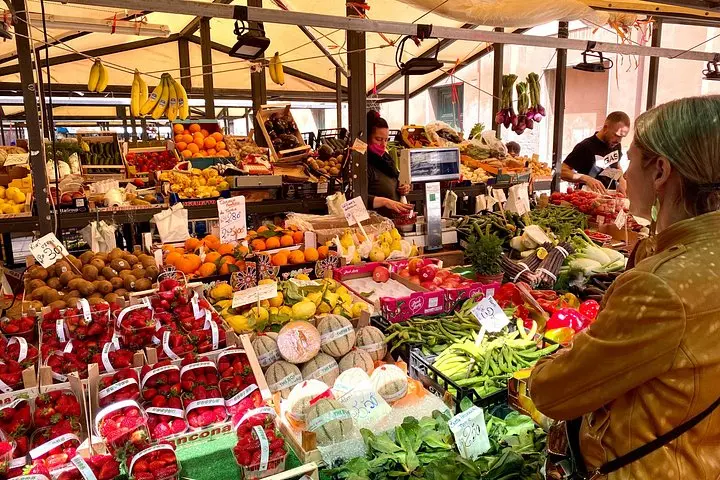
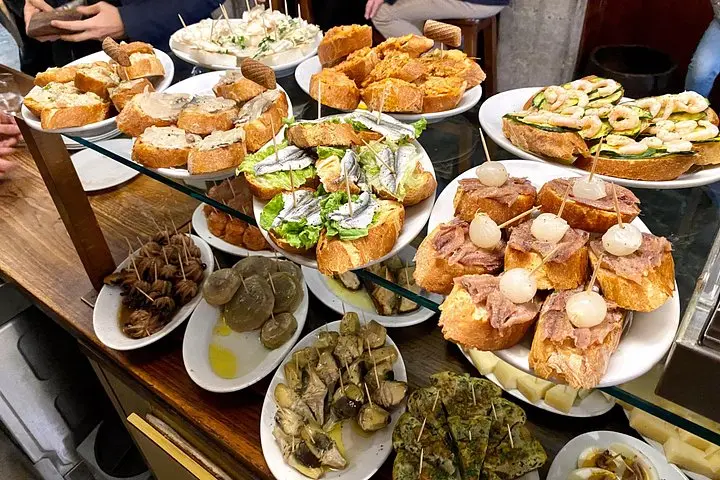
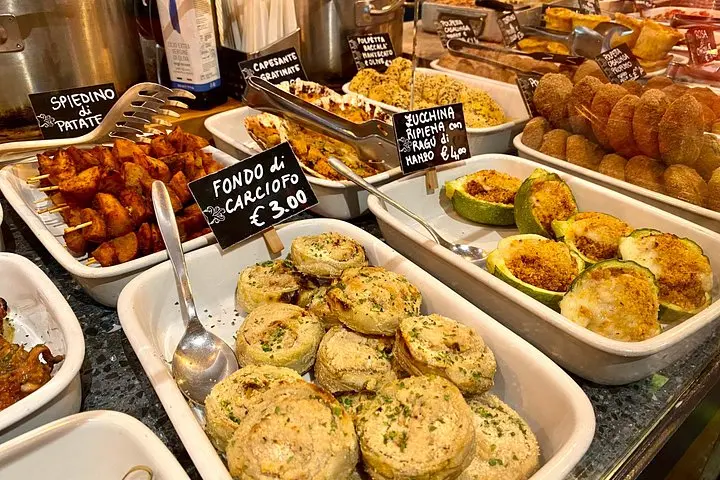
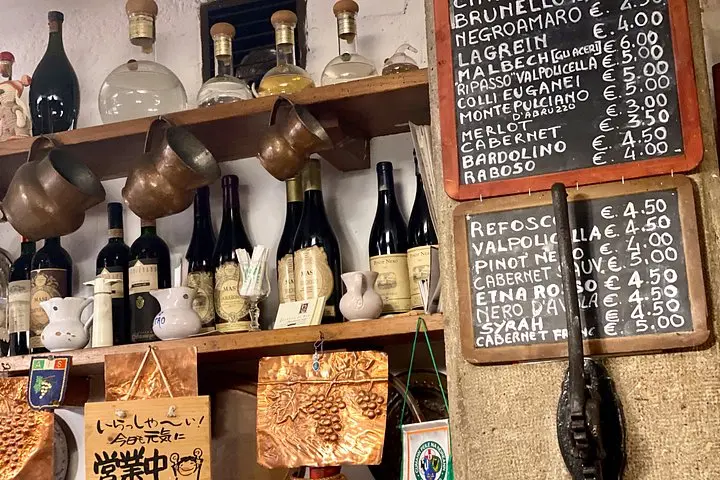
The four-hour walk threads the Rialto district, a place where commerce and cuisine have been braided since the Middle Ages. The Mercato di Rialto still does the work of markets: fishermen lift silver glints of catch, produce stalls arrange color into practical bouquets, and the air pulls you toward salty, citrus, fried notes. Your guide pauses between bacari—compact Venetian bars—handing you cicchetti: tiny warm plates built for tasting and conversation. A small glass of local wine cuts the salt; a fried baccalà bites back with texture.
This tour is as much about anatomy as appetite. Bridges here are not mere crossings but territorial signs; the Rialto Bridge, finished in 1591, was an engineering answer to a city that needed a public heart. The stones underfoot remember merchants, and the canal has always been both highway and thermostat—its tidal moods shaping daily life. Your guide will weave facts about Marco Polo’s Venetian origins, the market’s centuries-old role in Mediterranean trade, and the constant negotiation between preservation and tourism.
Practicalities are simple but vital. The meeting point is Campo San Giacomo di Rialto—arrive 10 minutes early; groups cap at 14 and the walk departs on time. The market is closed Sunday, Monday and many afternoons; tours that day visit the market area without active stalls. The tour accommodates vegetarians if advised at booking but cannot handle vegan, gluten-free, or dairy-free restrictions, so mention allergies when you reserve.
Wear comfortable walking shoes—stone streets and narrow bridges demand grip—and bring a water bottle: tastings are frequent but portions are small. Expect roughly two miles of low-impact walking on uneven, sometimes wet, pavements. In case of rain the tour continues; bring a compact rain jacket.
Photography is straightforward: capture market stalls in morning light, the arch of Rialto Bridge from the Fondamenta, and street-level shots of cicchetti on a wooden counter. Above all, move with the pace of Venice: curious, patient, and ready to taste the city one small dish at a time.
Meet your guide in Campo San Giacomo di Rialto near the Rialto Bridge; your guide will hold a sign that reads FOOD TOUR—arrive 10 minutes early.
No. The market is closed on Sunday, Monday and many afternoons; tours on those days will visit the area but stalls may be closed.
Vegetarian requests can be accommodated if informed at booking; the tour cannot support vegan, gluten-free or dairy-free diets.
Expect roughly two miles of walking across mostly flat, uneven stone with several bridge steps over about four hours.
Yes if they can manage moderate walking and bridge steps; the tour is not wheelchair accessible due to historical bridges and narrow streets.
It’s helpful to bring small cash amounts for additional snacks or drinks—some small vendors may prefer cash for minor purchases.
Tours of Naples operates guided outdoor trips and adventures with an emphasis on safety, stewardship, and memorable experiences.
You step out of a narrow calle into sunlight that skips across green water. The guide—a native who talks in quick, affectionate sentences—meets you in Campo San Giacomo di Rialto, near the bridge that has watched Venice change for five centuries. Around you, the city breathes: gondoliers steer like slow oars of a clock, gulls argue over scraps, and the Grand Canal pulls light toward the horizon.
You step out of a narrow calle into sunlight that skips across green water. The guide—a native who talks in quick, affectionate sentences—meets you in Campo San Giacomo di Rialto, near the bridge that has watched Venice change for five centuries. Around you, the city breathes: gondoliers steer like slow oars of a clock, gulls argue over scraps, and the Grand Canal pulls light toward the horizon.
The four-hour walk threads the Rialto district, a place where commerce and cuisine have been braided since the Middle Ages. The Mercato di Rialto still does the work of markets: fishermen lift silver glints of catch, produce stalls arrange color into practical bouquets, and the air pulls you toward salty, citrus, fried notes. Your guide pauses between bacari—compact Venetian bars—handing you cicchetti: tiny warm plates built for tasting and conversation. A small glass of local wine cuts the salt; a fried baccalà bites back with texture.
This tour is as much about anatomy as appetite. Bridges here are not mere crossings but territorial signs; the Rialto Bridge, finished in 1591, was an engineering answer to a city that needed a public heart. The stones underfoot remember merchants, and the canal has always been both highway and thermostat—its tidal moods shaping daily life. Your guide will weave facts about Marco Polo’s Venetian origins, the market’s centuries-old role in Mediterranean trade, and the constant negotiation between preservation and tourism.
Practicalities are simple but vital. The meeting point is Campo San Giacomo di Rialto—arrive 10 minutes early; groups cap at 14 and the walk departs on time. The market is closed Sunday, Monday and many afternoons; tours that day visit the market area without active stalls. The tour accommodates vegetarians if advised at booking but cannot handle vegan, gluten-free, or dairy-free restrictions, so mention allergies when you reserve.
Wear comfortable walking shoes—stone streets and narrow bridges demand grip—and bring a water bottle: tastings are frequent but portions are small. Expect roughly two miles of low-impact walking on uneven, sometimes wet, pavements. In case of rain the tour continues; bring a compact rain jacket.
Photography is straightforward: capture market stalls in morning light, the arch of Rialto Bridge from the Fondamenta, and street-level shots of cicchetti on a wooden counter. Above all, move with the pace of Venice: curious, patient, and ready to taste the city one small dish at a time.