THE ADVENTURE COLLECTIVE® · Independent discovery and booking for outdoor travel

Walk the paths where the Battle of Verdun was fought with an expert historian, visiting forts, trenches, destroyed villages and the Douaumont Ossuary. This full‑day tour blends on‑site interpretation with museum context and easy walking across uneven terrain.
Walk the paths where the Battle of Verdun was fought with an expert historian, visiting forts, trenches, destroyed villages and the Douaumont Ossuary. This full‑day tour blends on‑site interpretation with museum context and easy walking across uneven terrain.
You step from the air‑conditioned van and the landscape opens like a scarred map: low, scrubby ridges, punctured earth and rows of weathered crosses that follow the line of a river you can almost hear. The guide—an historian who moves through names and dates like a cartographer—leads you across paths once packed with soldiers, pointing out a shell hole that still holds rainwater and a line where a trench once threaded the slope.
Verified experiences and guided adventures in the surrounding area.
Operated by Royal Journey France · Verdun, Grand Est
You step from the air‑conditioned van and the landscape opens like a scarred map: low, scrubby ridges, punctured earth and rows of weathered crosses that follow the line of a river you can almost hear. The guide—an historian who moves through names and dates like a cartographer—leads you across paths once packed with soldiers, pointing out a shell hole that still holds rainwater and a line where a trench once threaded the slope.
The Battle of Verdun (1916) shaped modern Europe; forts, ruined villages and the Douaumont Ossuary mark the scale of loss. Geologically the area is a gently rolling mix of limestone and clay that amplified bombardment and left the ground pocked and uneven. Culturally, Verdun is a place of careful remembrance: memorial ceremonies, bilingual plaques and museums that contextualize both French and German experiences.
Expect a full‑day rhythm—museums and ossuary visits interspersed with outdoor stops at forts, reconstructed trenches and destroyed villages like Fleury. The museum displays uniforms, personal items and maps; outside, terrain demands steady footing and attention to conservation signage. Bring a refillable water bottle, layered clothing and a respectful mindset: photography is allowed but be discreet at memorial sites.
Logistics are straightforward—pickups from Reims or central Verdun, bottled water provided and mostly easy walking, though surfaces are uneven and some short climbs are required. Mornings are quieter for reflection and photography; afternoons work well for indoor exhibits. This tour pairs compelling storytelling with tangible sites—the physical landscape presses the history into your steps, and the ossuary’s silhouette is a final, unavoidable punctuation.
The tour lasts about 6 hours and includes private transportation, a historian guide, bottled water and entry tickets to listed sites such as forts and the ossuary.
The tour is broadly suitable for all fitness levels, but outdoor stops have uneven ground and some short climbs—contact the operator about mobility needs or alternative arrangements.
Pick‑up and drop‑off are offered at Reims train station or your hotel in Reims; some departures may also accommodate central Verdun pickup on request.
Yes—follow guide instructions: avoid touching artifacts or human remains, stay on marked paths, and observe photography etiquette at cemeteries and the ossuary.
Royal Journey France operates guided outdoor trips and adventures with an emphasis on safety, stewardship, and memorable experiences.
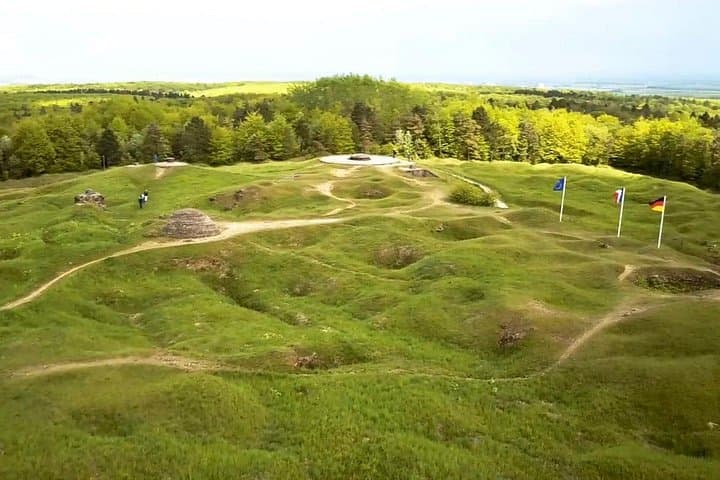


You step from the air‑conditioned van and the landscape opens like a scarred map: low, scrubby ridges, punctured earth and rows of weathered crosses that follow the line of a river you can almost hear. The guide—an historian who moves through names and dates like a cartographer—leads you across paths once packed with soldiers, pointing out a shell hole that still holds rainwater and a line where a trench once threaded the slope.
You step from the air‑conditioned van and the landscape opens like a scarred map: low, scrubby ridges, punctured earth and rows of weathered crosses that follow the line of a river you can almost hear. The guide—an historian who moves through names and dates like a cartographer—leads you across paths once packed with soldiers, pointing out a shell hole that still holds rainwater and a line where a trench once threaded the slope.
The Battle of Verdun (1916) shaped modern Europe; forts, ruined villages and the Douaumont Ossuary mark the scale of loss. Geologically the area is a gently rolling mix of limestone and clay that amplified bombardment and left the ground pocked and uneven. Culturally, Verdun is a place of careful remembrance: memorial ceremonies, bilingual plaques and museums that contextualize both French and German experiences.
Expect a full‑day rhythm—museums and ossuary visits interspersed with outdoor stops at forts, reconstructed trenches and destroyed villages like Fleury. The museum displays uniforms, personal items and maps; outside, terrain demands steady footing and attention to conservation signage. Bring a refillable water bottle, layered clothing and a respectful mindset: photography is allowed but be discreet at memorial sites.
Logistics are straightforward—pickups from Reims or central Verdun, bottled water provided and mostly easy walking, though surfaces are uneven and some short climbs are required. Mornings are quieter for reflection and photography; afternoons work well for indoor exhibits. This tour pairs compelling storytelling with tangible sites—the physical landscape presses the history into your steps, and the ossuary’s silhouette is a final, unavoidable punctuation.