THE ADVENTURE COLLECTIVE® · Independent discovery and booking for outdoor travel

Walk a working Vermont tree farm and the Historic Hinman Settler Trail, where sugarhouse smells and gentle forest paths offer an accessible, self-guided outdoor therapy experience. Expect farm roads, singletrack, and pet-friendly routes with modest elevation and rich local history.
Walk a working Vermont tree farm and the Historic Hinman Settler Trail, where sugarhouse smells and gentle forest paths offer an accessible, self-guided outdoor therapy experience. Expect farm roads, singletrack, and pet-friendly routes with modest elevation and rich local history.
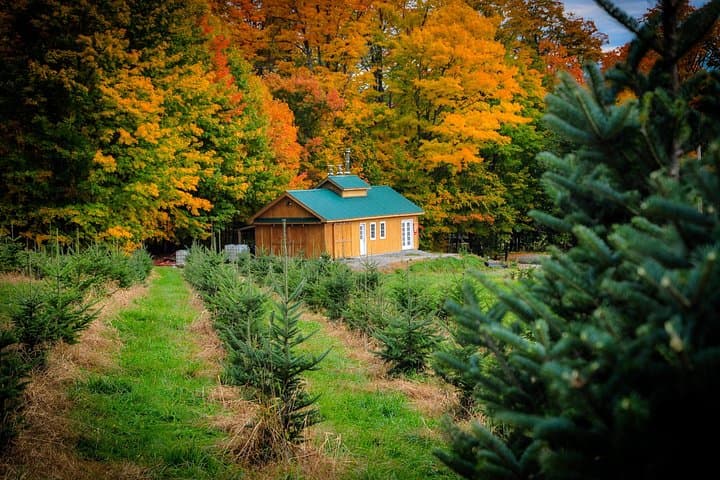
You push open the gated entrance with an access code and the air changes—cold with a sweet edge of balsam that seems to slow your breath. Gravel service roads thread between rows of Christmas trees; old maple taps catch light like tiny copper bells. The farm opens into the Historic Hinman Settler Trail, where soft loam gives underfoot and pines lean as if to point the way.
Verified experiences and guided adventures in the surrounding area.
Operated by Maple Hill Farm - Barton, Vermont · Montpelier, Vermont
You push open the gated entrance with an access code and the air changes—cold with a sweet edge of balsam that seems to slow your breath. Gravel service roads thread between rows of Christmas trees; old maple taps catch light like tiny copper bells. The farm opens into the Historic Hinman Settler Trail, where soft loam gives underfoot and pines lean as if to point the way.
This is rural Vermont at work and at rest: tree farming, maple sugaring and small-scale agriculture shaped by glacial deposits and slow-moving rivers. The Hinman route follows a pattern of settler-era skid roads and stone walls, passing through mixed hardwoods and softwood stands that tell a story of harvest cycles and replanting. Locals regard sugarhouses as community hubs—places where sap becomes syrup and neighbors trade news as readily as bottles.
On this self-guided walk you can expect a calm, interpretive experience rather than a technical hike. Trails are farm tracks and singletrack with gentle grades; elevation changes are modest and visibility opens on occasional ridgelines. Wildlife — deer, red squirrels, and wintering songbirds — may watch from the understory as you pass.
Practical guidance: this experience is pet-friendly but requires an access code for the locked gate; parking is at the sugarhouse entrance. Plan 2–4 hours to explore at a relaxed pace, bring layered clothing for changing weather, waterproof footwear for muddy sections, and tick protection in warmer months. Respect posted boundaries—this is active farmland—and pack out trash. The result is an easy, sensory walk that combines working land history with quiet forested views.
Yes; visitors are given an access code upon booking and payment—arrive within your scheduled window and save the code on your phone.
Yes, the trail is pet-friendly; keep dogs leashed and clean up after them to protect the farm and wildlife.
The experience is self-guided and easy—plan 2–4 hours; route options typically range from short loops to a few miles across farm roads and singletrack, with modest elevation gain.
Full refund if canceled at least 24 hours before the scheduled time; bookings may be canceled in poor weather per the host’s policy.
Maple Hill Farm - Barton, Vermont operates guided outdoor trips and adventures with an emphasis on safety, stewardship, and memorable experiences.
You push open the gated entrance with an access code and the air changes—cold with a sweet edge of balsam that seems to slow your breath. Gravel service roads thread between rows of Christmas trees; old maple taps catch light like tiny copper bells. The farm opens into the Historic Hinman Settler Trail, where soft loam gives underfoot and pines lean as if to point the way.
You push open the gated entrance with an access code and the air changes—cold with a sweet edge of balsam that seems to slow your breath. Gravel service roads thread between rows of Christmas trees; old maple taps catch light like tiny copper bells. The farm opens into the Historic Hinman Settler Trail, where soft loam gives underfoot and pines lean as if to point the way.
This is rural Vermont at work and at rest: tree farming, maple sugaring and small-scale agriculture shaped by glacial deposits and slow-moving rivers. The Hinman route follows a pattern of settler-era skid roads and stone walls, passing through mixed hardwoods and softwood stands that tell a story of harvest cycles and replanting. Locals regard sugarhouses as community hubs—places where sap becomes syrup and neighbors trade news as readily as bottles.
On this self-guided walk you can expect a calm, interpretive experience rather than a technical hike. Trails are farm tracks and singletrack with gentle grades; elevation changes are modest and visibility opens on occasional ridgelines. Wildlife — deer, red squirrels, and wintering songbirds — may watch from the understory as you pass.
Practical guidance: this experience is pet-friendly but requires an access code for the locked gate; parking is at the sugarhouse entrance. Plan 2–4 hours to explore at a relaxed pace, bring layered clothing for changing weather, waterproof footwear for muddy sections, and tick protection in warmer months. Respect posted boundaries—this is active farmland—and pack out trash. The result is an easy, sensory walk that combines working land history with quiet forested views.