THE ADVENTURE COLLECTIVE® · Independent discovery and booking for outdoor travel

Explore Versailles beyond the palace façades: a private guided tour that pairs the grandeur of the Hall of Mirrors with Marie Antoinette’s intimate Petit Trianon and the rustic Queen’s Hamlet. Learn the stories behind the gardens, waterworks, and royal retreats.
Explore Versailles beyond the palace façades: a private guided tour that pairs the grandeur of the Hall of Mirrors with Marie Antoinette’s intimate Petit Trianon and the rustic Queen’s Hamlet. Learn the stories behind the gardens, waterworks, and royal retreats.
The day opens with a low rumble of the city as the ride leaves Paris and the palace rises, stone and gold catching the light. On arrival, the guide leads quietly through vaulted corridors where marble cools the air and the Hall of Mirrors throws back the gardens’ long view. The tour moves from the palace’s ceremonial heart into measured geometry — alleys of lime and plane trees, parterres ruled by sightlines and hydraulic ingenuity.
Verified experiences and guided adventures in the surrounding area.
Operated by Paris Louvre private tour with private guide and fast access: Louvre highlights and hidden gems · Versailles, Île-de-France
The day opens with a low rumble of the city as the ride leaves Paris and the palace rises, stone and gold catching the light. On arrival, the guide leads quietly through vaulted corridors where marble cools the air and the Hall of Mirrors throws back the gardens’ long view. The tour moves from the palace’s ceremonial heart into measured geometry — alleys of lime and plane trees, parterres ruled by sightlines and hydraulic ingenuity.
Versailles is both a royal residence and a landscape engineered for spectacle. Louis XIV’s vanity and statecraft shaped the palace; the waterworks beneath the fountains testify to 17th‑century hydraulic daring. Marie Antoinette’s Petit Trianon and the Queen’s Hamlet offer a contrasting chapter — a deliberate retreat where 18th‑century taste favored rustic facades, small-scale orchards, and an intimate farmyard that softened court life.
Culturally, the estate maps hierarchy: chapels for power, apartments for ceremony, and the hamlet for private rebellion against protocol. Geologically, the gentle slopes and clay soils of the Île‑de‑France allowed broad canals and ornamental lakes to be cut and held.
Practical guidance: expect 4–5 hours total, with mostly paved and compacted gravel surfaces; comfortable walking shoes and a layerable jacket are advisable. Allow time for slow photography in the gardens and an unhurried visit to the Petit Trianon. Bring a refillable water bottle, plan for light security lines despite skip‑the‑line access, and schedule the visit in morning or late afternoon light to avoid peak crowds and to see the fountains at their best.
The tour runs about 4–5 hours, including travel time from Paris, visits to the palace interiors, gardens by golf cart, and the Petit Trianon.
Yes—both transportation and most estate surfaces are accessible; notify the operator at booking to confirm arrangements.
Yes—the tour includes skip‑the‑line admission to the Palace of Versailles, Gardens, and Petit Trianon as specified in the itinerary.
Yes—infants and children can join; strollers are accommodated and infant seats are available in the private transport.
Paris Louvre private tour with private guide and fast access: Louvre highlights and hidden gems operates guided outdoor trips and adventures with an emphasis on safety, stewardship, and memorable experiences.
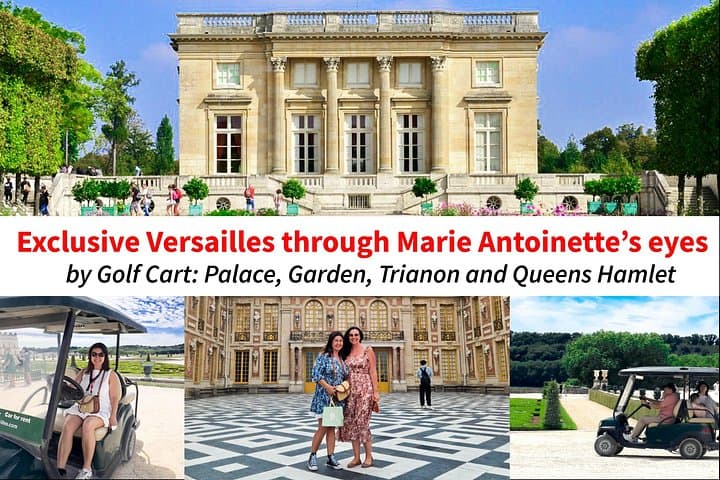


The day opens with a low rumble of the city as the ride leaves Paris and the palace rises, stone and gold catching the light. On arrival, the guide leads quietly through vaulted corridors where marble cools the air and the Hall of Mirrors throws back the gardens’ long view. The tour moves from the palace’s ceremonial heart into measured geometry — alleys of lime and plane trees, parterres ruled by sightlines and hydraulic ingenuity.
The day opens with a low rumble of the city as the ride leaves Paris and the palace rises, stone and gold catching the light. On arrival, the guide leads quietly through vaulted corridors where marble cools the air and the Hall of Mirrors throws back the gardens’ long view. The tour moves from the palace’s ceremonial heart into measured geometry — alleys of lime and plane trees, parterres ruled by sightlines and hydraulic ingenuity.
Versailles is both a royal residence and a landscape engineered for spectacle. Louis XIV’s vanity and statecraft shaped the palace; the waterworks beneath the fountains testify to 17th‑century hydraulic daring. Marie Antoinette’s Petit Trianon and the Queen’s Hamlet offer a contrasting chapter — a deliberate retreat where 18th‑century taste favored rustic facades, small-scale orchards, and an intimate farmyard that softened court life.
Culturally, the estate maps hierarchy: chapels for power, apartments for ceremony, and the hamlet for private rebellion against protocol. Geologically, the gentle slopes and clay soils of the Île‑de‑France allowed broad canals and ornamental lakes to be cut and held.
Practical guidance: expect 4–5 hours total, with mostly paved and compacted gravel surfaces; comfortable walking shoes and a layerable jacket are advisable. Allow time for slow photography in the gardens and an unhurried visit to the Petit Trianon. Bring a refillable water bottle, plan for light security lines despite skip‑the‑line access, and schedule the visit in morning or late afternoon light to avoid peak crowds and to see the fountains at their best.