THE ADVENTURE COLLECTIVE® · Independent discovery and booking for outdoor travel

Use a skip-the-line ticket and smartphone audio guide to move through Versailles on your own terms — from the Hall of Mirrors to the intimate Trianon estate. This guide explains what to expect, timing, and practical tips to make the most of the visit.
Use a skip-the-line ticket and smartphone audio guide to move through Versailles on your own terms — from the Hall of Mirrors to the intimate Trianon estate. This guide explains what to expect, timing, and practical tips to make the most of the visit.
You step through the stone gateway and the vast courtyard opens — sunlight slices across the gleaming mirrors, and the Hall of Mirrors pulls you forward with a dizzying procession of glass and gilt.
Verified experiences and guided adventures in the surrounding area.
You step through the stone gateway and the vast courtyard opens — sunlight slices across the gleaming mirrors, and the Hall of Mirrors pulls you forward with a dizzying procession of glass and gilt.
The Palace of Versailles began as a 17th-century hunting lodge turned royal court under Louis XIV, who reshaped the landscape with formal gardens by André Le Nôtre and grand façades that projected absolute power. Geology matters here: engineers redirected water across low-lying plains to irrigate fountains and create the axial vistas that still command the estate.
Culture and court life are on every plastered wall — salons where diplomats negotiated and rooms where fashion and ritual defined status. The Trianon estate and the Queen’s Hamlet give a quieter counterpoint: smaller-scale buildings where Marie-Antoinette privately escaped court ceremony.
Practically, a skip-the-line ticket with a digital audioguide lets you manage time and focus: pick the Hall of Mirrors, the King’s State Apartments, the gardens, or Trianon based on interest. Expect long miles of walking across marble floors and gravel paths; many visitors spend between two and six hours if they include both gardens and Trianon.
Timing matters — arrive early on weekdays or late afternoon in low season for fewer crowds. Bring a charged smartphone for the audio guide, comfortable shoes for cobblestones and gravel, and a weather layer for open-air terraces and formal gardens. Plan logistical buffer time for security checks and, if visiting fountains, verify scheduled water displays in advance.
No — most skip-the-line tickets work from a QR code or e-ticket on your smartphone; keep your device charged.
Plan 2–4 hours for palace highlights; add 1–2 hours for formal gardens and another 1–2 hours if you include Grand Trianon and Petit Trianon.
Yes — major language options, including English, French, Spanish, German, and Italian, are commonly offered for the digital audioguide.
Yes, but fountain schedules and special fountain or musical garden days may require checking the Versailles calendar and allocating extra time.
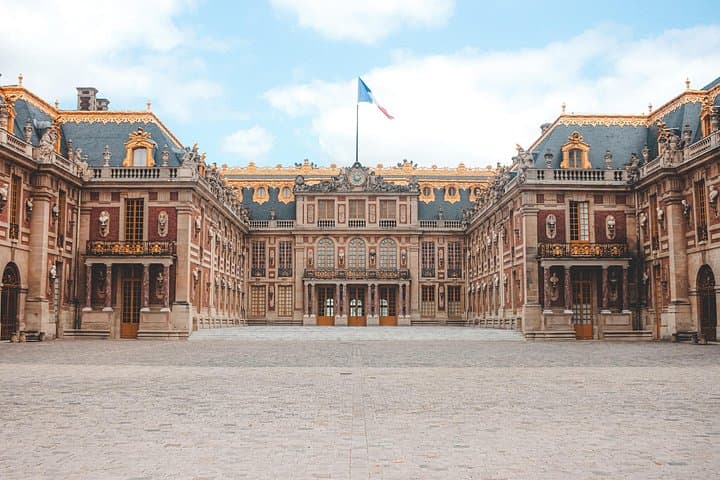
You step through the stone gateway and the vast courtyard opens — sunlight slices across the gleaming mirrors, and the Hall of Mirrors pulls you forward with a dizzying procession of glass and gilt.
You step through the stone gateway and the vast courtyard opens — sunlight slices across the gleaming mirrors, and the Hall of Mirrors pulls you forward with a dizzying procession of glass and gilt.
The Palace of Versailles began as a 17th-century hunting lodge turned royal court under Louis XIV, who reshaped the landscape with formal gardens by André Le Nôtre and grand façades that projected absolute power. Geology matters here: engineers redirected water across low-lying plains to irrigate fountains and create the axial vistas that still command the estate.
Culture and court life are on every plastered wall — salons where diplomats negotiated and rooms where fashion and ritual defined status. The Trianon estate and the Queen’s Hamlet give a quieter counterpoint: smaller-scale buildings where Marie-Antoinette privately escaped court ceremony.
Practically, a skip-the-line ticket with a digital audioguide lets you manage time and focus: pick the Hall of Mirrors, the King’s State Apartments, the gardens, or Trianon based on interest. Expect long miles of walking across marble floors and gravel paths; many visitors spend between two and six hours if they include both gardens and Trianon.
Timing matters — arrive early on weekdays or late afternoon in low season for fewer crowds. Bring a charged smartphone for the audio guide, comfortable shoes for cobblestones and gravel, and a weather layer for open-air terraces and formal gardens. Plan logistical buffer time for security checks and, if visiting fountains, verify scheduled water displays in advance.