THE ADVENTURE COLLECTIVE® · Independent discovery and booking for outdoor travel

Climb to Vesuvius’ full cone with a volcanic expert, then descend to a family winery for a guided tasting and farm-to-table lunch. Expect loose pumice, panoramic coastal views, and a hands-on lesson in volcanology and viticulture.
Climb to Vesuvius’ full cone with a volcanic expert, then descend to a family winery for a guided tasting and farm-to-table lunch. Expect loose pumice, panoramic coastal views, and a hands-on lesson in volcanology and viticulture.
You start below a blackened slope, the air carrying a faint mineral tang and the city noise shrinking behind you. The trail climbs through scrub and pumice; loose rock crunches under boot soles as the cone’s rim grows higher, heat vents hissing like lungs. At the summit the bay of Naples unfurls—sharp blue against the volcanic rim—while the crater’s inner wall exposes bands of older eruptions.
Verified experiences and guided adventures in the surrounding area.
Operated by NAPOLI WINE TOURS · Naples, Campania
You start below a blackened slope, the air carrying a faint mineral tang and the city noise shrinking behind you. The trail climbs through scrub and pumice; loose rock crunches under boot soles as the cone’s rim grows higher, heat vents hissing like lungs. At the summit the bay of Naples unfurls—sharp blue against the volcanic rim—while the crater’s inner wall exposes bands of older eruptions.
Vesuvius is a living classroom. Geologically recent eruptions shaped its steep slopes; in AD 79, ash and pyroclastic flows buried Pompeii and Herculaneum, preserving a moment of Roman life. Cultural traces persist in the vineyards below: centuries of farmers coax rich grapes from volcanic soils, and local winemaking techniques reflect the region’s agrarian history.
The program pairs guided volcanology on the full cone—approaching fumaroles, discussing mineral deposits and eruption mechanics—with a short drive to a family-run Sorrentino winery. There a sommelier leads a cellar tour and a tasting of multiple vintages, paired with a low-carb farm-to-table lunch.
Practical edge: the hike is roughly 5 km with about 800 m elevation gain, over loose, rocky terrain; expect steep switchbacks and exposed sections. Bring sturdy hiking boots, layered clothing for wind at the rim, 1.5–2 liters of water, and sun protection. The full experience takes about 7–8 hours including transit and tasting. Travelers with cardiovascular or spinal issues, or pregnant visitors, should avoid the summit approach. Otherwise, this is a direct way to read volcanic history underfoot and finish the day with wine born from the very soils you climbed.
Yes—this program grants access to the full cone and highest point of Vesuvius under the supervision of a specialized volcanic guide.
A moderate fitness level is needed for an ~800 m ascent over loose volcanic terrain; regular hikers should manage it with steady pacing.
Included are a professional volcanic guide, transport in an air-conditioned vehicle, a sommelier-led winery visit, wine tastings, and a farm-to-table lunch; fees and taxes are covered.
For a full refund cancel at least 24 hours before the scheduled departure time; cancellations inside 24 hours are non-refundable.
NAPOLI WINE TOURS operates guided outdoor trips and adventures with an emphasis on safety, stewardship, and memorable experiences.
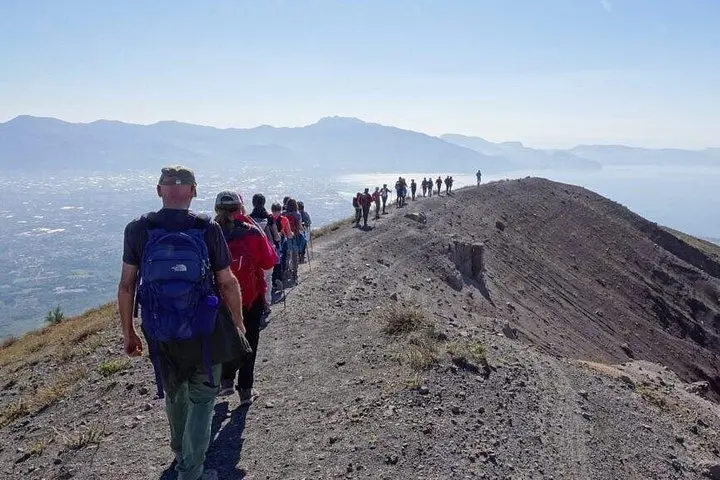
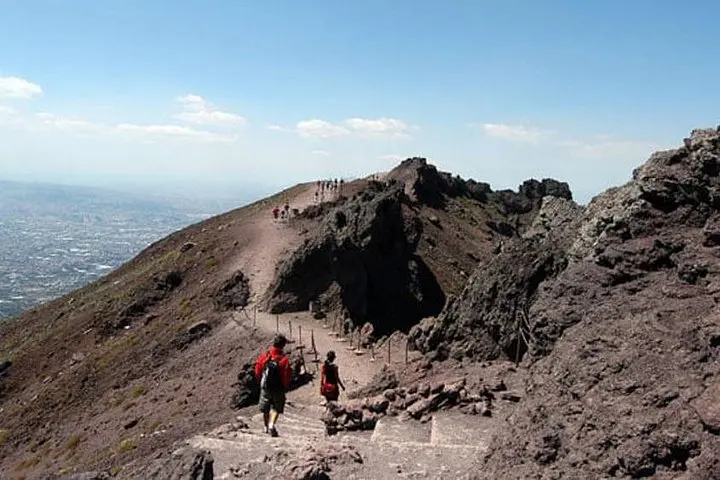
You start below a blackened slope, the air carrying a faint mineral tang and the city noise shrinking behind you. The trail climbs through scrub and pumice; loose rock crunches under boot soles as the cone’s rim grows higher, heat vents hissing like lungs. At the summit the bay of Naples unfurls—sharp blue against the volcanic rim—while the crater’s inner wall exposes bands of older eruptions.
You start below a blackened slope, the air carrying a faint mineral tang and the city noise shrinking behind you. The trail climbs through scrub and pumice; loose rock crunches under boot soles as the cone’s rim grows higher, heat vents hissing like lungs. At the summit the bay of Naples unfurls—sharp blue against the volcanic rim—while the crater’s inner wall exposes bands of older eruptions.
Vesuvius is a living classroom. Geologically recent eruptions shaped its steep slopes; in AD 79, ash and pyroclastic flows buried Pompeii and Herculaneum, preserving a moment of Roman life. Cultural traces persist in the vineyards below: centuries of farmers coax rich grapes from volcanic soils, and local winemaking techniques reflect the region’s agrarian history.
The program pairs guided volcanology on the full cone—approaching fumaroles, discussing mineral deposits and eruption mechanics—with a short drive to a family-run Sorrentino winery. There a sommelier leads a cellar tour and a tasting of multiple vintages, paired with a low-carb farm-to-table lunch.
Practical edge: the hike is roughly 5 km with about 800 m elevation gain, over loose, rocky terrain; expect steep switchbacks and exposed sections. Bring sturdy hiking boots, layered clothing for wind at the rim, 1.5–2 liters of water, and sun protection. The full experience takes about 7–8 hours including transit and tasting. Travelers with cardiovascular or spinal issues, or pregnant visitors, should avoid the summit approach. Otherwise, this is a direct way to read volcanic history underfoot and finish the day with wine born from the very soils you climbed.