THE ADVENTURE COLLECTIVE® · Independent discovery and booking for outdoor travel

Clip into the steel cable and follow iron rungs along Crete’s only via ferrata, where exposed limestone ledges drop to the Libyan Sea. This four-hour guided route in the Asterousia mountains mixes scrambling, ladders and sweeping coastal views.
Clip into the steel cable and follow iron rungs along Crete’s only via ferrata, where exposed limestone ledges drop to the Libyan Sea. This four-hour guided route in the Asterousia mountains mixes scrambling, ladders and sweeping coastal views.
The cliff narrows and the Libyan Sea unrolls below like a blue fault line; you clip in, feel the wire take your weight, and begin a slow, confident ascent along metal rungs bored into limestone. The Via Ferrata at Kapetaniana runs along the southern escarpment of the Asterousia range, where wind-scoured rock meets open sky and the path forces a direct conversation between climber and coast.
Verified experiences and guided adventures in the surrounding area.
Operated by Peripetia365 · Kapetaniana, Crete
The cliff narrows and the Libyan Sea unrolls below like a blue fault line; you clip in, feel the wire take your weight, and begin a slow, confident ascent along metal rungs bored into limestone. The Via Ferrata at Kapetaniana runs along the southern escarpment of the Asterousia range, where wind-scoured rock meets open sky and the path forces a direct conversation between climber and coast.
Asterousia’s ridgelines are recent in geological terms — sedimentary limestone folded and uplifted, then carved by sea-spray and seasonal torrents. For centuries local shepherds and olive growers moved along these slopes; small stone houses and terraced fields still hold that working landscape. The route itself is modern: steel cable, ladders and bridges rated for recreational via ferrata usage (grade B, moderately difficult), offering sustained exposure and uninterrupted views to the Libyan Sea.
Practical guidance: the guided tour runs about four hours and requires steady footing and a head for heights. Expect mixed scrambling on exposed limestone, short vertical pitches aided by iron rungs, and sections of narrow ledge-walking. Sun and wind are constant variables — start early in summer and bring layered sun protection. Hydrate well; there are no potable sources on the route.
Groups are usually small and equipment (helmet, harness, lanyards, gloves) is provided, but comfortable, grippy hiking shoes and a light daypack are essential. The experience balances alpine technique with accessible adventure: it rewards focus, calm movement, and a willingness to look down.
No formal climbing experience is required; the route is grade B and guide-led, but you should be comfortable on exposed terrain and able to follow rope-clipping procedures.
Yes — helmets, harnesses and lanyards are included in the tour price; guides fit and instruct on proper use before the climb.
Operators monitor conditions and will cancel for high winds or rain; the cancellation policy typically allows full refunds if canceled 24 hours before departure or by the operator for bad weather.
Most travelers stay in Agia Galini or Matala and drive or join a transfer to the village of Kapetaniana; allow time on winding mountain roads and confirm meeting details with the operator.
Peripetia365 operates guided outdoor trips and adventures with an emphasis on safety, stewardship, and memorable experiences.
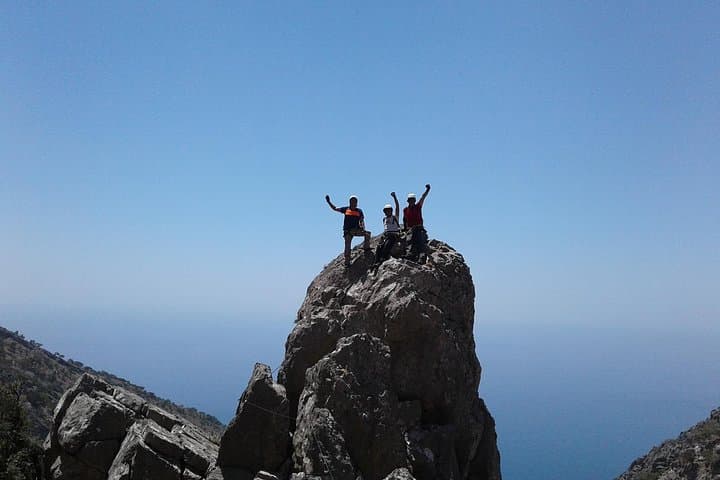
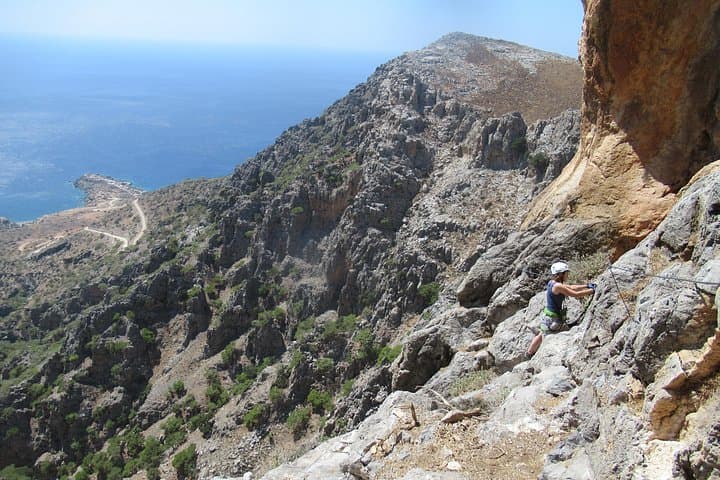
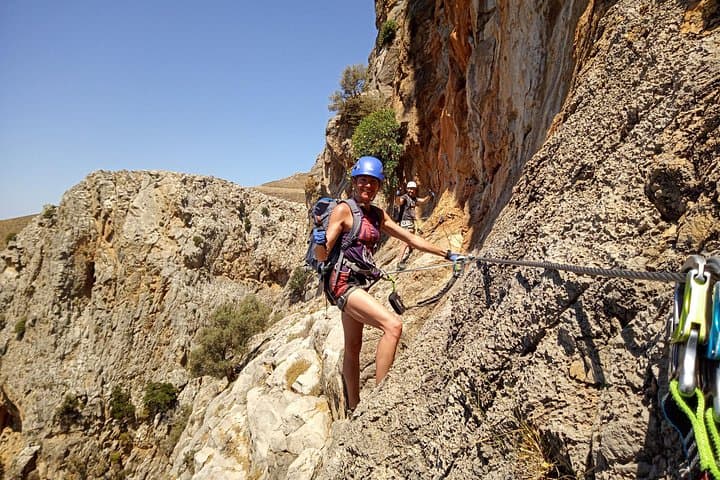

The cliff narrows and the Libyan Sea unrolls below like a blue fault line; you clip in, feel the wire take your weight, and begin a slow, confident ascent along metal rungs bored into limestone. The Via Ferrata at Kapetaniana runs along the southern escarpment of the Asterousia range, where wind-scoured rock meets open sky and the path forces a direct conversation between climber and coast.
The cliff narrows and the Libyan Sea unrolls below like a blue fault line; you clip in, feel the wire take your weight, and begin a slow, confident ascent along metal rungs bored into limestone. The Via Ferrata at Kapetaniana runs along the southern escarpment of the Asterousia range, where wind-scoured rock meets open sky and the path forces a direct conversation between climber and coast.
Asterousia’s ridgelines are recent in geological terms — sedimentary limestone folded and uplifted, then carved by sea-spray and seasonal torrents. For centuries local shepherds and olive growers moved along these slopes; small stone houses and terraced fields still hold that working landscape. The route itself is modern: steel cable, ladders and bridges rated for recreational via ferrata usage (grade B, moderately difficult), offering sustained exposure and uninterrupted views to the Libyan Sea.
Practical guidance: the guided tour runs about four hours and requires steady footing and a head for heights. Expect mixed scrambling on exposed limestone, short vertical pitches aided by iron rungs, and sections of narrow ledge-walking. Sun and wind are constant variables — start early in summer and bring layered sun protection. Hydrate well; there are no potable sources on the route.
Groups are usually small and equipment (helmet, harness, lanyards, gloves) is provided, but comfortable, grippy hiking shoes and a light daypack are essential. The experience balances alpine technique with accessible adventure: it rewards focus, calm movement, and a willingness to look down.