THE ADVENTURE COLLECTIVE® · Independent discovery and booking for outdoor travel

Clip in and trade Barcelona’s bustle for vertical limestone and a rope bridge—Baumes Corcades is a guided, 5‑hour via ferrata that tests balance and rewards sweeping lowland views. This guide covers what to expect, how to prepare and what the route demands.
Clip in and trade Barcelona’s bustle for vertical limestone and a rope bridge—Baumes Corcades is a guided, 5‑hour via ferrata that tests balance and rewards sweeping lowland views. This guide covers what to expect, how to prepare and what the route demands.
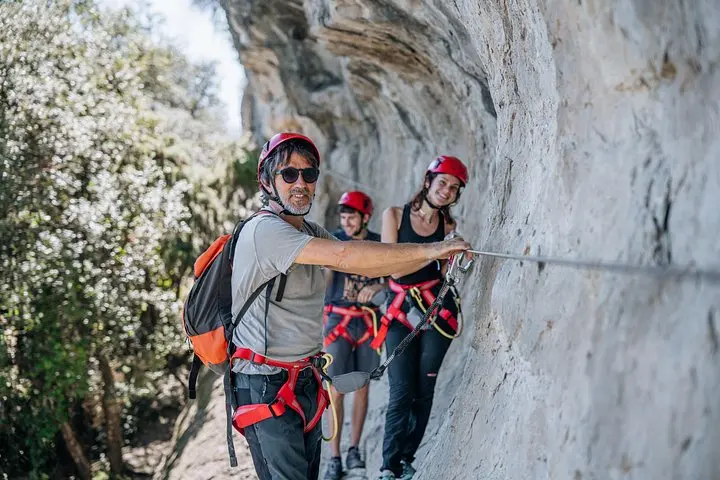
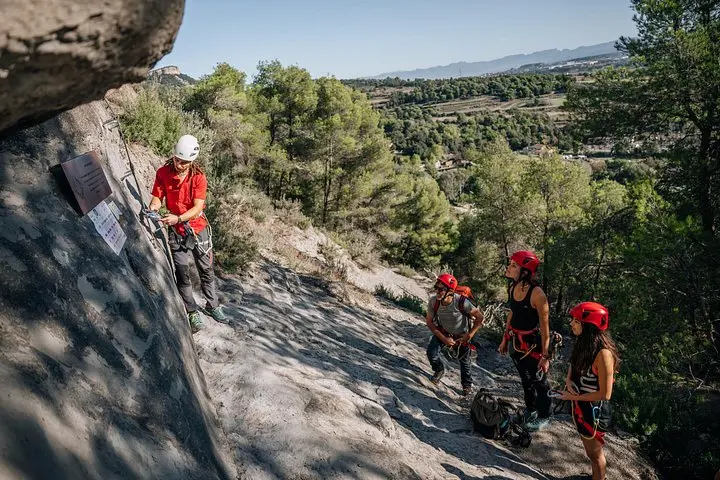
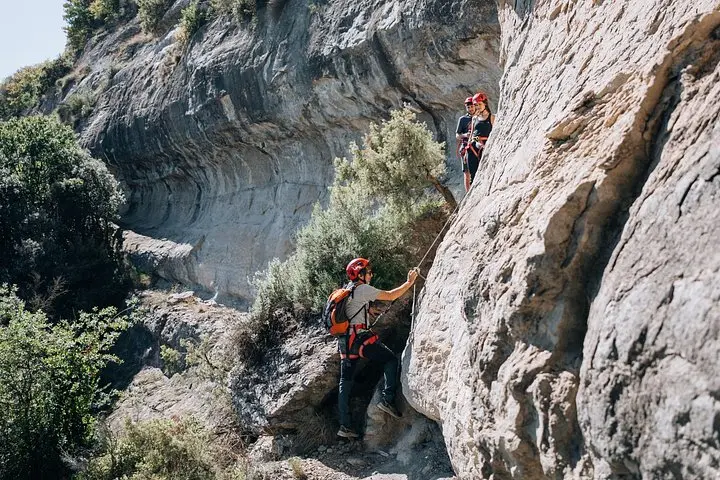
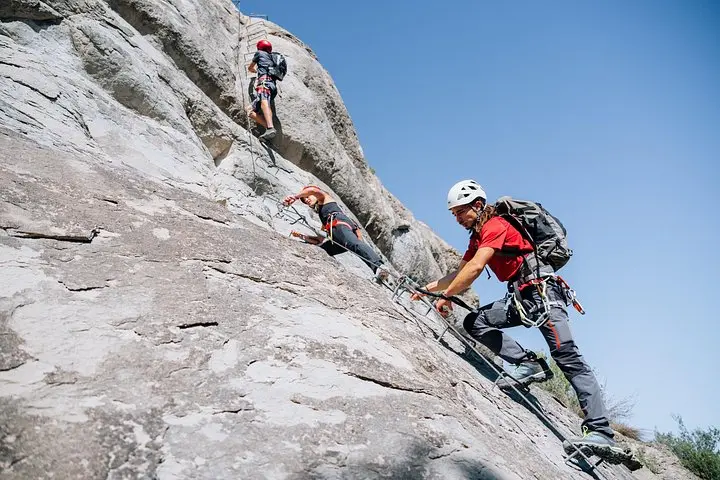
You step out of the van and the rock takes over: warm limestone faces rising in clean, serrated ribs, steel rungs and a rope bridge threading a vertical bowl. The guide clips each climber to the safety cable and the cliff becomes a route—hands searching texture, boots finding edges, wind pulling at your balance. Views across the Catalan lowlands open between towers; the city hums thirty‑five minutes away while the mountain insists on attention.
Verified experiences and guided adventures in the surrounding area.
Operated by Guies de Núria · Barcelona, Catalonia
You step out of the van and the rock takes over: warm limestone faces rising in clean, serrated ribs, steel rungs and a rope bridge threading a vertical bowl. The guide clips each climber to the safety cable and the cliff becomes a route—hands searching texture, boots finding edges, wind pulling at your balance. Views across the Catalan lowlands open between towers; the city hums thirty‑five minutes away while the mountain insists on attention.
The via ferrata tradition in Spain borrows Alpine techniques—iron steps, fixed cables and short exposed traverses—adapted to the region’s limestone crags. Geologically these cliffs are ancient marine deposits, now folded and weathered into pockets and ledges that make for technical but accessible climbing. Locally, routes like Baumes Corcades have grown in popularity with guided groups, blending modern safety systems with the long history of Catalan mountaineering.
Expect a mix of vertical sections, a suspended bridge and short exposed traverses; the route emphasizes movement and route‑finding more than technical rope work. Guides supply harnesses, helmets and via‑ferrata dissipators and give a safety briefing before you go.
Practical guidance: wear grippy approach shoes or light boots, bring 1–2 liters of water, gloves for the iron rungs and a small pack for layers. Start early to avoid heat in summer, and tell the operator about any medical issues—this activity requires a steady head for exposure and moderate to strong cardiovascular fitness. Weather can close the route; check cancellation and insurance details when you book. In five focused hours you’ll move from confident stepping to summit‑edge views, then back to terra firma with photos and a clearer sense of the cliff’s personality.
Yes—guides supply a harness, helmet, via‑ferrata dissipator and a safety briefing as part of the booking.
Participants should have a moderate to good level of fitness and be comfortable with exposure; the route involves sustained vertical movement rather than technical ropework.
Operators typically ask for age and weight during booking to confirm suitability—check the provider’s terms for any minimum age or weight restrictions.
The route is closed for safety in rain, high winds or electrical storms; operators will cancel in unsafe conditions and follow their stated cancellation policy.
Guies de Núria operates guided outdoor trips and adventures with an emphasis on safety, stewardship, and memorable experiences.
You step out of the van and the rock takes over: warm limestone faces rising in clean, serrated ribs, steel rungs and a rope bridge threading a vertical bowl. The guide clips each climber to the safety cable and the cliff becomes a route—hands searching texture, boots finding edges, wind pulling at your balance. Views across the Catalan lowlands open between towers; the city hums thirty‑five minutes away while the mountain insists on attention.
You step out of the van and the rock takes over: warm limestone faces rising in clean, serrated ribs, steel rungs and a rope bridge threading a vertical bowl. The guide clips each climber to the safety cable and the cliff becomes a route—hands searching texture, boots finding edges, wind pulling at your balance. Views across the Catalan lowlands open between towers; the city hums thirty‑five minutes away while the mountain insists on attention.
The via ferrata tradition in Spain borrows Alpine techniques—iron steps, fixed cables and short exposed traverses—adapted to the region’s limestone crags. Geologically these cliffs are ancient marine deposits, now folded and weathered into pockets and ledges that make for technical but accessible climbing. Locally, routes like Baumes Corcades have grown in popularity with guided groups, blending modern safety systems with the long history of Catalan mountaineering.
Expect a mix of vertical sections, a suspended bridge and short exposed traverses; the route emphasizes movement and route‑finding more than technical rope work. Guides supply harnesses, helmets and via‑ferrata dissipators and give a safety briefing before you go.
Practical guidance: wear grippy approach shoes or light boots, bring 1–2 liters of water, gloves for the iron rungs and a small pack for layers. Start early to avoid heat in summer, and tell the operator about any medical issues—this activity requires a steady head for exposure and moderate to strong cardiovascular fitness. Weather can close the route; check cancellation and insurance details when you book. In five focused hours you’ll move from confident stepping to summit‑edge views, then back to terra firma with photos and a clearer sense of the cliff’s personality.