THE ADVENTURE COLLECTIVE® · Independent discovery and booking for outdoor travel

Climb protected routes on limestone crags near Barcelona with a professional guide. This adaptable via ferrata includes exposed rungs, cable bridges and an optional 70‑m Nepali bridge for a memorable, guide‑led experience.
Climb protected routes on limestone crags near Barcelona with a professional guide. This adaptable via ferrata includes exposed rungs, cable bridges and an optional 70‑m Nepali bridge for a memorable, guide‑led experience.
You begin on a narrow trail beneath sheer limestone walls, the guide’s voice clipped and clear as the route unfurls above you. Wind moves through scrub pines and rock ribs; the air tastes of dust and citrus orchards below. In minutes you clip into a continuous safety line and the climb becomes a rhythm of foot, iron rung, and breath.
Verified experiences and guided adventures in the surrounding area.
Operated by Marc Vilaplana Climbing Guide · Montserrat, Catalonia
You begin on a narrow trail beneath sheer limestone walls, the guide’s voice clipped and clear as the route unfurls above you. Wind moves through scrub pines and rock ribs; the air tastes of dust and citrus orchards below. In minutes you clip into a continuous safety line and the climb becomes a rhythm of foot, iron rung, and breath.
The route combines engineered aids—rungs, chains and a suspension cable—with natural rock steps. Via ferrata in Catalonia grew from alpine climbing traditions adapted to local limestone outcrops; these routes let non-technical climbers experience exposure safely under a professional guide. Geologically, the crag is folded Mesozoic limestone carved by ancient seas, producing pockets and ledges that make the route varied and engaging.
Culturally, the climb passes near small agricultural terraces and stone tracks still used by farmers; you’ll often see farmhouses and olive groves framing wider views toward the Pyrenees on clear days.
Practical guidance: the via ferrata section takes about 3–4 hours with a 15‑minute approach and a 30‑minute return to the vehicle. Expect a mix of sustained, exposed pitches and easier resting sections; an optional 70‑meter Nepali (suspension) bridge raises the technical excitement. Guides supply harness, helmet, lanyards, resting sling and gloves, and provide a safety briefing and hands‑on coaching. Moderate fitness and comfort with heights make the day more enjoyable.
Timing matters — morning light reduces heat on summer rock, and steady footwear with good grip makes transitions between metal and stone secure. Bring water, a wind layer, and a light snack; the route is open year‑round but weather governs safety and cancellations.
No technical climbing experience is required; the guide teaches techniques and the route is designed for adaptable skill levels.
Closed-toe shoes with good grip, comfortable active clothing, a wind layer, and gloves if you prefer added hand protection (gloves are also provided).
Expect moderate exertion—several sustained exposed sections with opportunities to rest; a moderate fitness level and comfort with heights are ideal.
The operator cancels in unsafe weather; you’ll get full refund if you cancel at least 24 hours beforehand or if the provider cancels due to conditions.
Marc Vilaplana Climbing Guide operates guided outdoor trips and adventures with an emphasis on safety, stewardship, and memorable experiences.
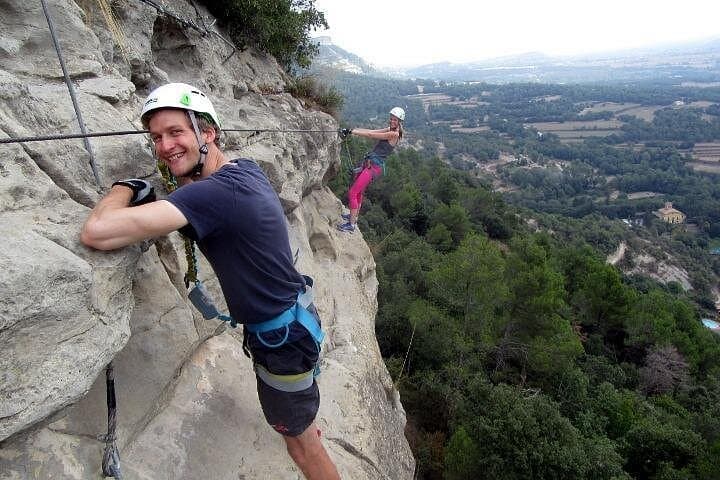
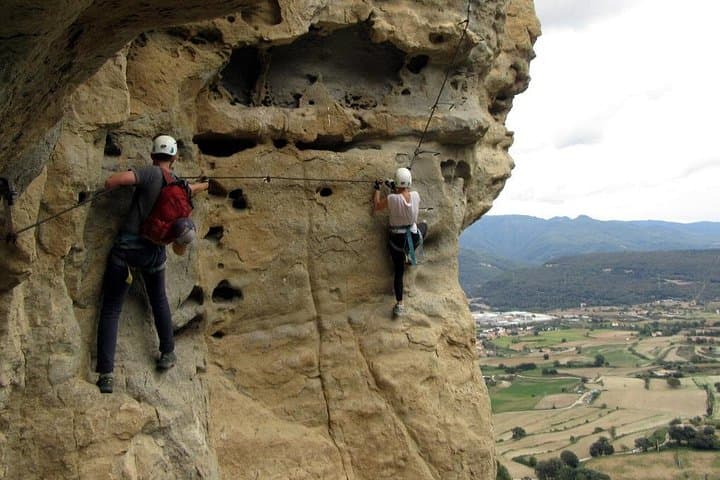
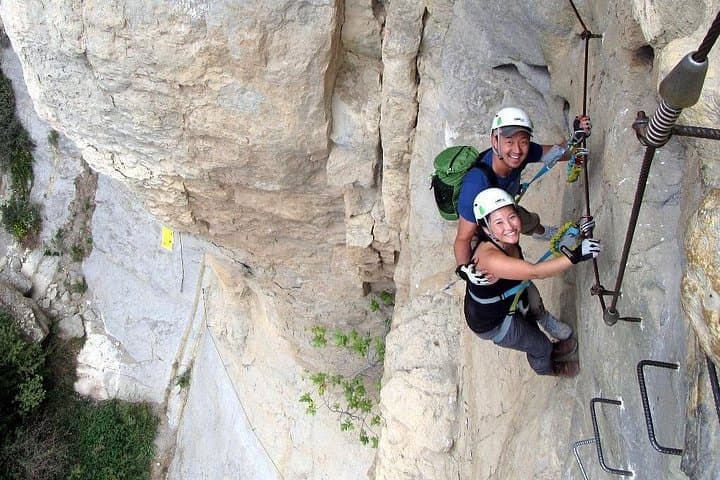
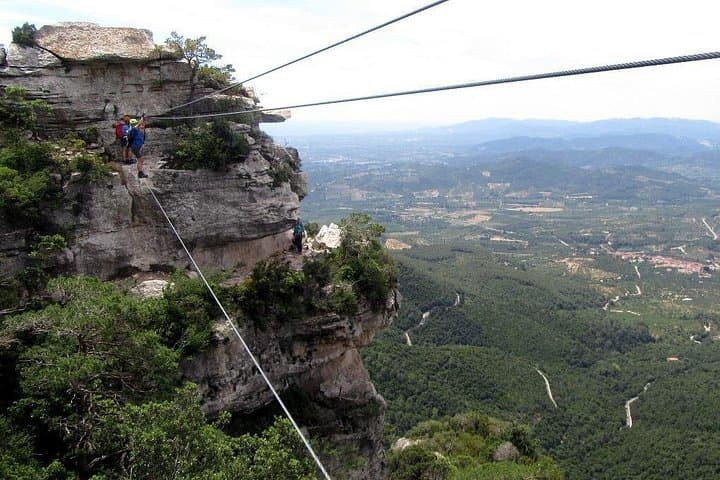
You begin on a narrow trail beneath sheer limestone walls, the guide’s voice clipped and clear as the route unfurls above you. Wind moves through scrub pines and rock ribs; the air tastes of dust and citrus orchards below. In minutes you clip into a continuous safety line and the climb becomes a rhythm of foot, iron rung, and breath.
You begin on a narrow trail beneath sheer limestone walls, the guide’s voice clipped and clear as the route unfurls above you. Wind moves through scrub pines and rock ribs; the air tastes of dust and citrus orchards below. In minutes you clip into a continuous safety line and the climb becomes a rhythm of foot, iron rung, and breath.
The route combines engineered aids—rungs, chains and a suspension cable—with natural rock steps. Via ferrata in Catalonia grew from alpine climbing traditions adapted to local limestone outcrops; these routes let non-technical climbers experience exposure safely under a professional guide. Geologically, the crag is folded Mesozoic limestone carved by ancient seas, producing pockets and ledges that make the route varied and engaging.
Culturally, the climb passes near small agricultural terraces and stone tracks still used by farmers; you’ll often see farmhouses and olive groves framing wider views toward the Pyrenees on clear days.
Practical guidance: the via ferrata section takes about 3–4 hours with a 15‑minute approach and a 30‑minute return to the vehicle. Expect a mix of sustained, exposed pitches and easier resting sections; an optional 70‑meter Nepali (suspension) bridge raises the technical excitement. Guides supply harness, helmet, lanyards, resting sling and gloves, and provide a safety briefing and hands‑on coaching. Moderate fitness and comfort with heights make the day more enjoyable.
Timing matters — morning light reduces heat on summer rock, and steady footwear with good grip makes transitions between metal and stone secure. Bring water, a wind layer, and a light snack; the route is open year‑round but weather governs safety and cancellations.