THE ADVENTURE COLLECTIVE® · Independent discovery and booking for outdoor travel

Climb iron rungs above the Guadalevín in the Tajo de Ronda on a guided via ferrata from Marbella. Expect 50 meters of vertical exposure, expert instruction, and sweeping views of Ronda's Puente Nuevo.
Climb iron rungs above the Guadalevín in the Tajo de Ronda on a guided via ferrata from Marbella. Expect 50 meters of vertical exposure, expert instruction, and sweeping views of Ronda's Puente Nuevo.
You step onto the lip of El Tajo and the gorge answers immediately: wind threads through the canyon and the rock face seems to challenge you to move. The Via Ferrata on the Tajo de Ronda runs a compact, vertical line of iron rungs and cables that climbs roughly 50 meters above the Guadalevín river, with the New Bridge and Ronda's white houses framed across the abyss.
Verified experiences and guided adventures in the surrounding area.
Operated by South Coast Aventuras · Ronda, Andalusia
You step onto the lip of El Tajo and the gorge answers immediately: wind threads through the canyon and the rock face seems to challenge you to move. The Via Ferrata on the Tajo de Ronda runs a compact, vertical line of iron rungs and cables that climbs roughly 50 meters above the Guadalevín river, with the New Bridge and Ronda's white houses framed across the abyss.
This stretch of limestone was carved by water and time; the Puente Nuevo dates to the 18th century and the town grew around the gorge that split it. Geologically the cliffs are steep, weathered limestone with ledges and pockets that make the route technical in places. Culturally Ronda has been a crossroads of Romans, Moors and Andalusian ranchers, and the guides here mix local history into the safety brief.
Practicalities are straightforward: expect 2–3 hours including briefing. The route focuses on exposure management rather than long approaches — operators provide harnesses, helmets and two-point safety lanyards. Fitness needs are moderate: steady legs, a head for heights and the ability to follow short technical steps. Bring sturdy approach shoes, gloves, layered clothing and water; snacks are typically included but carry what you need.
Timing matters — climb in the morning or late afternoon to avoid midsummer heat and for softer light on the gorge. Photographers will find dramatic angles from the cable line and from the bridge rim. For a half-day of adrenaline, history and raw vertical landscape, the Via Ferrata at Ronda delivers a compact dose of cliff-side adventure with clear, practical support.
No prior via ferrata experience is required; guides provide instruction, but you must be comfortable with exposure and basic movement on rock and rungs.
Approach time is short—most groups reach the ferrata in a few minutes from the meeting point; the full activity including briefing and descent is typically 2–3 hours.
Yes — operators supply harnesses, helmets and via ferrata lanyards; you should bring suitable footwear and personal sun/water supplies.
Operators cancel climbs in rain or high winds because wet limestone and cables are unsafe; most offer refunds if canceled at least 24 hours beforehand.
South Coast Aventuras operates guided outdoor trips and adventures with an emphasis on safety, stewardship, and memorable experiences.
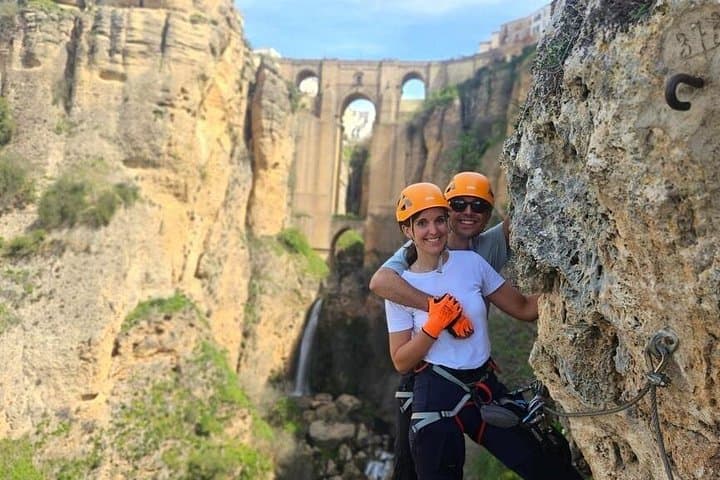
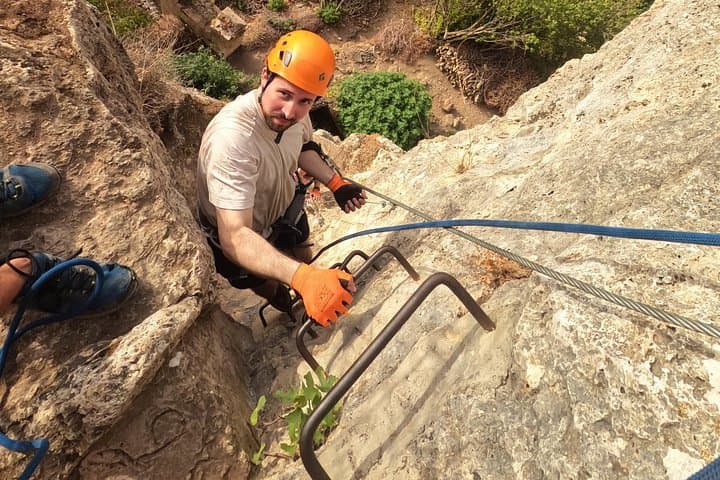
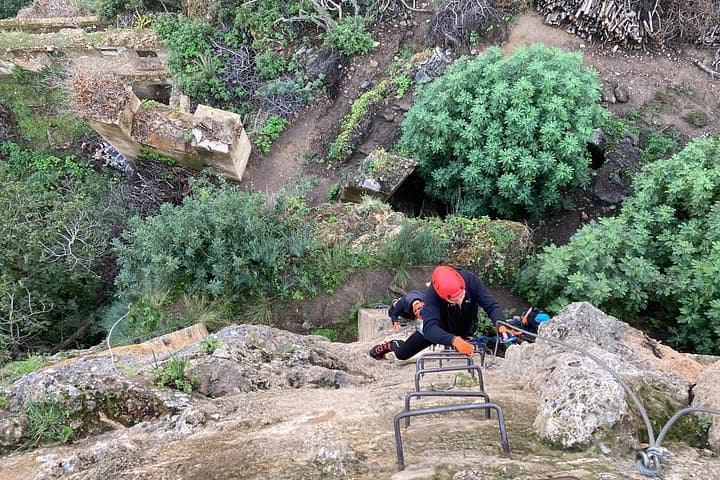
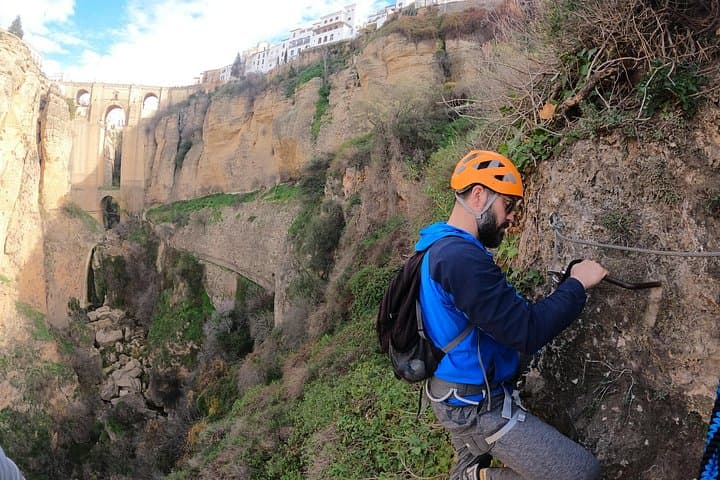
You step onto the lip of El Tajo and the gorge answers immediately: wind threads through the canyon and the rock face seems to challenge you to move. The Via Ferrata on the Tajo de Ronda runs a compact, vertical line of iron rungs and cables that climbs roughly 50 meters above the Guadalevín river, with the New Bridge and Ronda's white houses framed across the abyss.
You step onto the lip of El Tajo and the gorge answers immediately: wind threads through the canyon and the rock face seems to challenge you to move. The Via Ferrata on the Tajo de Ronda runs a compact, vertical line of iron rungs and cables that climbs roughly 50 meters above the Guadalevín river, with the New Bridge and Ronda's white houses framed across the abyss.
This stretch of limestone was carved by water and time; the Puente Nuevo dates to the 18th century and the town grew around the gorge that split it. Geologically the cliffs are steep, weathered limestone with ledges and pockets that make the route technical in places. Culturally Ronda has been a crossroads of Romans, Moors and Andalusian ranchers, and the guides here mix local history into the safety brief.
Practicalities are straightforward: expect 2–3 hours including briefing. The route focuses on exposure management rather than long approaches — operators provide harnesses, helmets and two-point safety lanyards. Fitness needs are moderate: steady legs, a head for heights and the ability to follow short technical steps. Bring sturdy approach shoes, gloves, layered clothing and water; snacks are typically included but carry what you need.
Timing matters — climb in the morning or late afternoon to avoid midsummer heat and for softer light on the gorge. Photographers will find dramatic angles from the cable line and from the bridge rim. For a half-day of adrenaline, history and raw vertical landscape, the Via Ferrata at Ronda delivers a compact dose of cliff-side adventure with clear, practical support.