THE ADVENTURE COLLECTIVE® · Independent discovery and booking for outdoor travel

Walk the Granite Island Causeway and the historic streets of Victor Harbor with a local guide who layers coastal geology, colonial history, and family stories into a 90-minute stroll. Expect easy terrain, scenic viewpoints over Encounter Bay, and chances to spot dolphins or seals.
Walk the Granite Island Causeway and the historic streets of Victor Harbor with a local guide who layers coastal geology, colonial history, and family stories into a 90-minute stroll. Expect easy terrain, scenic viewpoints over Encounter Bay, and chances to spot dolphins or seals.
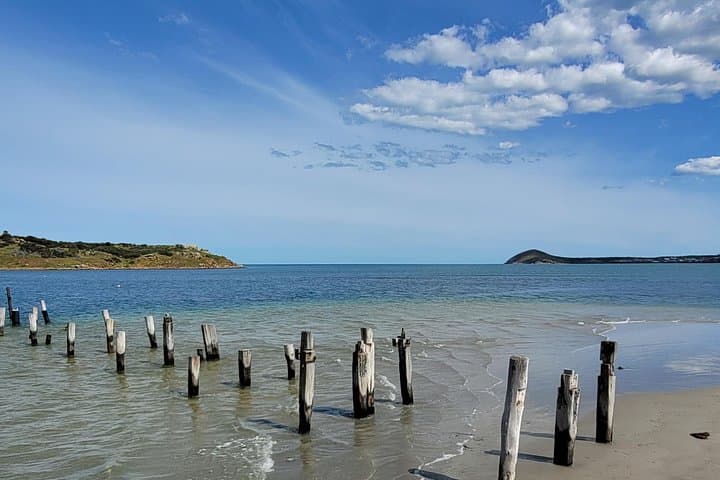
The causeway is a thin spine of stone that pushes out into Encounter Bay, and on a quiet morning the sea plays the lead: waves inch close enough to splash your shoes if the tide is high, while gulls wheel above the horse-drawn tram. Starting at the Granite Island Causeway, your small group peels away from the town’s main drag and into 90 minutes of coastal history—salt in the air, slate roofs glinting, and a guide who moves like someone reading the town’s margins aloud.
Verified experiences and guided adventures in the surrounding area.
Operated by Victor Harbor Walking Tours · Victor Harbor, South Australia
The causeway is a thin spine of stone that pushes out into Encounter Bay, and on a quiet morning the sea plays the lead: waves inch close enough to splash your shoes if the tide is high, while gulls wheel above the horse-drawn tram. Starting at the Granite Island Causeway, your small group peels away from the town’s main drag and into 90 minutes of coastal history—salt in the air, slate roofs glinting, and a guide who moves like someone reading the town’s margins aloud.
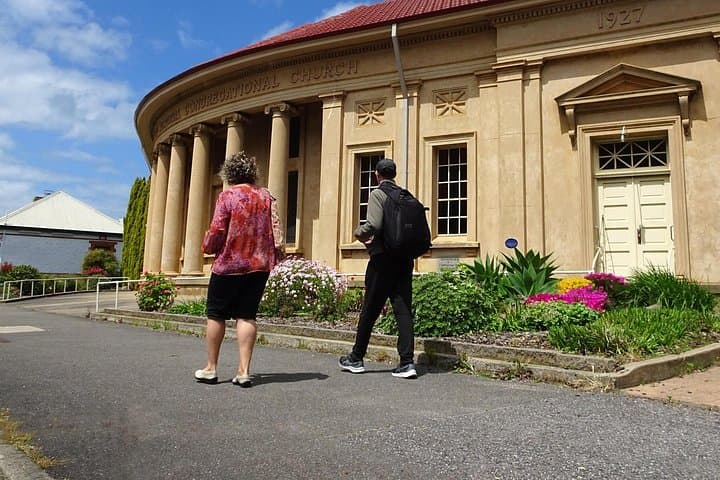
Victor Harbor’s story is compact but layered. It’s where Matthew Flinders and Nicolas Baudin met in the early 1800s, a meeting point that would mark this stretch of South Australian coast as both navigational landmark and contested colonial space. Geologically, the granite shelves that give the island its name are old reef remnants scoured by wind and surf; the causeway itself is a human answer to a stubborn shoreline. The town’s growth—once a pick-up point for wool and timber bound for the Northern Hemisphere—left a grid of Victorian facades and civic buildings you’ll pass on foot.
As the guide points to the original Town Hall and the Coral Art Centre, you’ll hear characters’ names and municipal arguments that shaped public life here. Warland Reserve gives a pause in the route: a place to look back at Victor’s bay and forward to the offshore islands. Keep an eye on the water—bottlenose dolphins and the odd Australian fur seal patrol these waters, and the little penguin colony on Granite Island remains a quiet local claim to fame.
Practical guide: this is an easy 1.5-hour loop focused on storytelling and short stops rather than sweeping hikes. The terrain is flat—paved causeway, boardwalks, town streets—so it’s accessible to most travelers and suitable for strollers and wheelchairs. Tours run year-round; mornings are cooler and quieter, late afternoons offer softer light for photos. Groups are capped (approximately 12), so booking ahead during summer holiday weekends is wise.
What to bring: a windproof jacket, sturdy walking shoes, water bottle, and a compact camera or phone with spare battery—there are wide views but limited shade. If you hope to spot wildlife, stand quietly at the causeway edge and scan the line where the swell meets the horizon; animals often reveal themselves in the pauses between waves.
Logistics: meet opposite the horse-drawn tramway shop at the Granite Island Causeway. The tour finishes at the Coral Art Centre. Cancelations are refundable up to 24 hours prior. For families, history buffs, and anyone who likes their coastal walks laced with narrative, this guided stroll is a practical, intimate way to read Victor Harbor on foot.
The tour lasts 90 minutes and covers a short loop primarily on paved causeway and town streets—expect 2–3 kilometers of easy walking.
Yes. The itinerary notes wheelchair and stroller accessibility with mostly flat, accessible surfaces along the causeway and town.
Wildlife sightings are common but not guaranteed; bottlenose dolphins and seals are often seen in the bay, and little penguins inhabit Granite Island though sightings depend on season and time of day.
Meet at the start of the Granite Island Causeway opposite the horse-drawn tramway shop. The tour finishes at the Coral Art Centre in Victor Harbor.
Yes. The walk is family-friendly—strollers are permitted and guides tailor the pace for mixed groups.
Full refunds are available if you cancel at least 24 hours before departure; tours may be canceled for bad weather and will be refunded accordingly.
Victor Harbor Walking Tours operates guided outdoor trips and adventures with an emphasis on safety, stewardship, and memorable experiences.
The causeway is a thin spine of stone that pushes out into Encounter Bay, and on a quiet morning the sea plays the lead: waves inch close enough to splash your shoes if the tide is high, while gulls wheel above the horse-drawn tram. Starting at the Granite Island Causeway, your small group peels away from the town’s main drag and into 90 minutes of coastal history—salt in the air, slate roofs glinting, and a guide who moves like someone reading the town’s margins aloud.
The causeway is a thin spine of stone that pushes out into Encounter Bay, and on a quiet morning the sea plays the lead: waves inch close enough to splash your shoes if the tide is high, while gulls wheel above the horse-drawn tram. Starting at the Granite Island Causeway, your small group peels away from the town’s main drag and into 90 minutes of coastal history—salt in the air, slate roofs glinting, and a guide who moves like someone reading the town’s margins aloud.
Victor Harbor’s story is compact but layered. It’s where Matthew Flinders and Nicolas Baudin met in the early 1800s, a meeting point that would mark this stretch of South Australian coast as both navigational landmark and contested colonial space. Geologically, the granite shelves that give the island its name are old reef remnants scoured by wind and surf; the causeway itself is a human answer to a stubborn shoreline. The town’s growth—once a pick-up point for wool and timber bound for the Northern Hemisphere—left a grid of Victorian facades and civic buildings you’ll pass on foot.
As the guide points to the original Town Hall and the Coral Art Centre, you’ll hear characters’ names and municipal arguments that shaped public life here. Warland Reserve gives a pause in the route: a place to look back at Victor’s bay and forward to the offshore islands. Keep an eye on the water—bottlenose dolphins and the odd Australian fur seal patrol these waters, and the little penguin colony on Granite Island remains a quiet local claim to fame.
Practical guide: this is an easy 1.5-hour loop focused on storytelling and short stops rather than sweeping hikes. The terrain is flat—paved causeway, boardwalks, town streets—so it’s accessible to most travelers and suitable for strollers and wheelchairs. Tours run year-round; mornings are cooler and quieter, late afternoons offer softer light for photos. Groups are capped (approximately 12), so booking ahead during summer holiday weekends is wise.
What to bring: a windproof jacket, sturdy walking shoes, water bottle, and a compact camera or phone with spare battery—there are wide views but limited shade. If you hope to spot wildlife, stand quietly at the causeway edge and scan the line where the swell meets the horizon; animals often reveal themselves in the pauses between waves.
Logistics: meet opposite the horse-drawn tramway shop at the Granite Island Causeway. The tour finishes at the Coral Art Centre. Cancelations are refundable up to 24 hours prior. For families, history buffs, and anyone who likes their coastal walks laced with narrative, this guided stroll is a practical, intimate way to read Victor Harbor on foot.