THE ADVENTURE COLLECTIVE® · Independent discovery and booking for outdoor travel

Walk the misty rainforest and peer over the largest sheet of falling water on Earth. This combined Zambia–Zimbabwe guided tour delivers high-impact viewpoints, cultural context and practical staging for a half-day visit.
Walk the misty rainforest and peer over the largest sheet of falling water on Earth. This combined Zambia–Zimbabwe guided tour delivers high-impact viewpoints, cultural context and practical staging for a half-day visit.
Fog hangs low over the river as guides lead a slow circuit through the rainforest, spray catching the sun in thin, glittering sheets. Walkways curve close to abyssal chasms where water throws itself outward, and the ground hums with the steady, distant roar of falling water.
Verified experiences and guided adventures in the surrounding area.
Operated by Southern Dynasty Safaris · Livingstone, Southern Province
Fog hangs low over the river as guides lead a slow circuit through the rainforest, spray catching the sun in thin, glittering sheets. Walkways curve close to abyssal chasms where water throws itself outward, and the ground hums with the steady, distant roar of falling water.
Visitors arrive to a site shaped by basalt bedrock and a split in the Zambezi that funnels a continental river into the world’s largest sheet of falling water. David Livingstone recorded the falls for European maps in 1855; the local name, Mosi-oa-Tunya — “The Smoke That Thunders” — speaks to how indigenous communities have understood this place for centuries.
Geology here is blunt: ancient basalt rich in columnar joints, carved by river incision during successive wet phases. Cultural life is tied to the river — ferries at Livingstone, craft markets in Victoria Falls town, and boat operators upstream offering quieter perspectives.
Practical guidance is straightforward. The main circuit on both sides is a 2–3 hour walk with wet, uneven surfaces; waterproof layers and closed shoes are essential. Expect border formalities if crossing between Zambia and Zimbabwe — carry passports and local currency or cards. Guides time visits for viewpoints with best visibility; the dry season (roughly Sept–Dec) exposes more cliff length, while the wet season thickens the curtain of spray and rainbows.
Photography is rewarding but humid: keep equipment protected. Respect park rules, stay on paths, and give wildlife space — elephants and riverine birds are common near the river. With basic preparation, the combined guided tour delivers a concentrated, accessible experience of one of Africa’s most elemental landscapes.
Visa requirements depend on your nationality; many visitors can obtain visas on arrival but check current embassy guidance and carry passports and any necessary fees.
The combined tour lasts about 4–5 hours with roughly 2–3 hours spent walking viewpoints on both sides of the falls over paved and natural paths.
Yes, the park is open year-round; dry season (approx. Sept–Dec) exposes more cliff face while wet season (Dec–Apr) brings maximum spray and dramatic flow.
This tour’s inclusions list entrance and national park fees, but confirm at booking as policies can change.
Southern Dynasty Safaris operates guided outdoor trips and adventures with an emphasis on safety, stewardship, and memorable experiences.
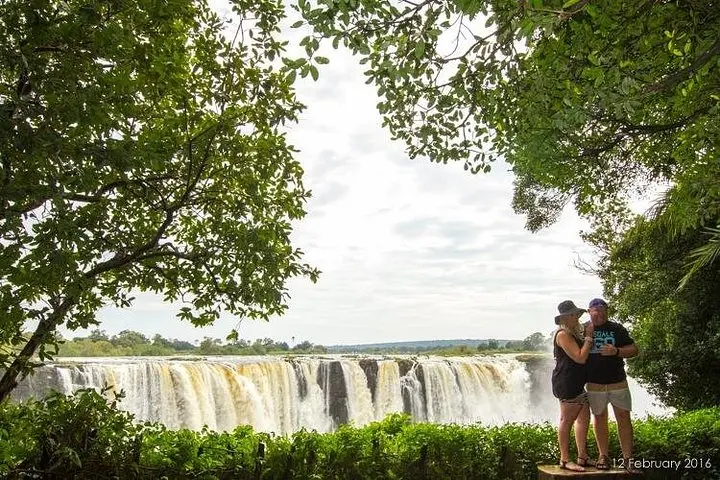
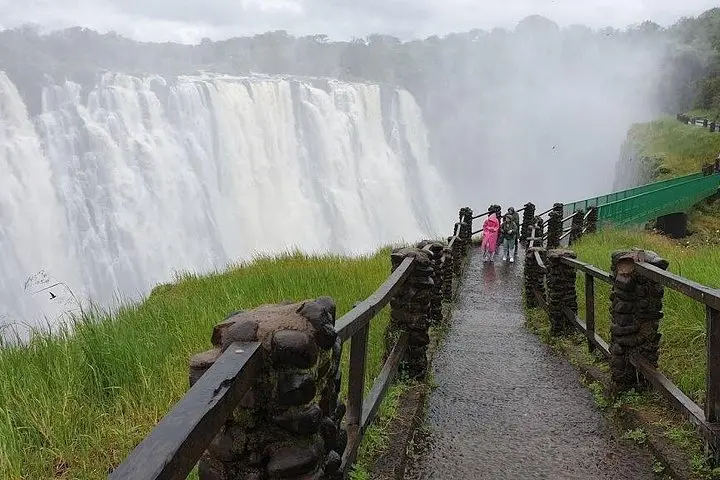
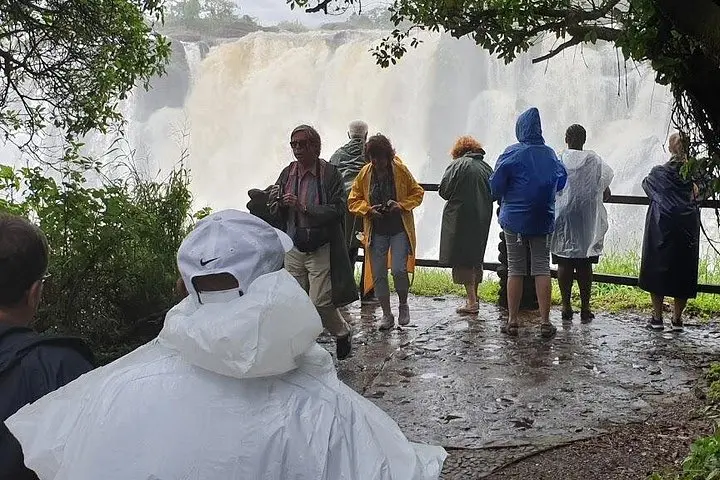
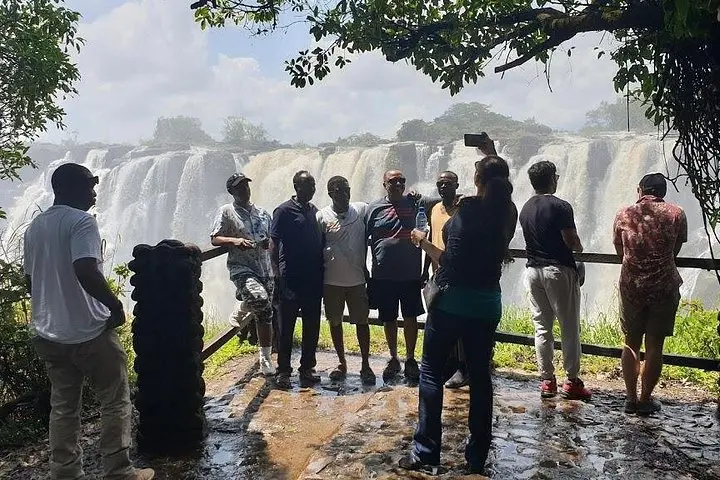
Fog hangs low over the river as guides lead a slow circuit through the rainforest, spray catching the sun in thin, glittering sheets. Walkways curve close to abyssal chasms where water throws itself outward, and the ground hums with the steady, distant roar of falling water.
Fog hangs low over the river as guides lead a slow circuit through the rainforest, spray catching the sun in thin, glittering sheets. Walkways curve close to abyssal chasms where water throws itself outward, and the ground hums with the steady, distant roar of falling water.
Visitors arrive to a site shaped by basalt bedrock and a split in the Zambezi that funnels a continental river into the world’s largest sheet of falling water. David Livingstone recorded the falls for European maps in 1855; the local name, Mosi-oa-Tunya — “The Smoke That Thunders” — speaks to how indigenous communities have understood this place for centuries.
Geology here is blunt: ancient basalt rich in columnar joints, carved by river incision during successive wet phases. Cultural life is tied to the river — ferries at Livingstone, craft markets in Victoria Falls town, and boat operators upstream offering quieter perspectives.
Practical guidance is straightforward. The main circuit on both sides is a 2–3 hour walk with wet, uneven surfaces; waterproof layers and closed shoes are essential. Expect border formalities if crossing between Zambia and Zimbabwe — carry passports and local currency or cards. Guides time visits for viewpoints with best visibility; the dry season (roughly Sept–Dec) exposes more cliff length, while the wet season thickens the curtain of spray and rainbows.
Photography is rewarding but humid: keep equipment protected. Respect park rules, stay on paths, and give wildlife space — elephants and riverine birds are common near the river. With basic preparation, the combined guided tour delivers a concentrated, accessible experience of one of Africa’s most elemental landscapes.