THE ADVENTURE COLLECTIVE® · Independent discovery and booking for outdoor travel

Walk the maintained viewpoints of Victoria Falls with a guide who explains the geology, history and seasonal behavior of the Zambezi. Expect heavy spray, dramatic viewpoints and a compact 2–3 hour circuit suitable for most visitors.
Walk the maintained viewpoints of Victoria Falls with a guide who explains the geology, history and seasonal behavior of the Zambezi. Expect heavy spray, dramatic viewpoints and a compact 2–3 hour circuit suitable for most visitors.
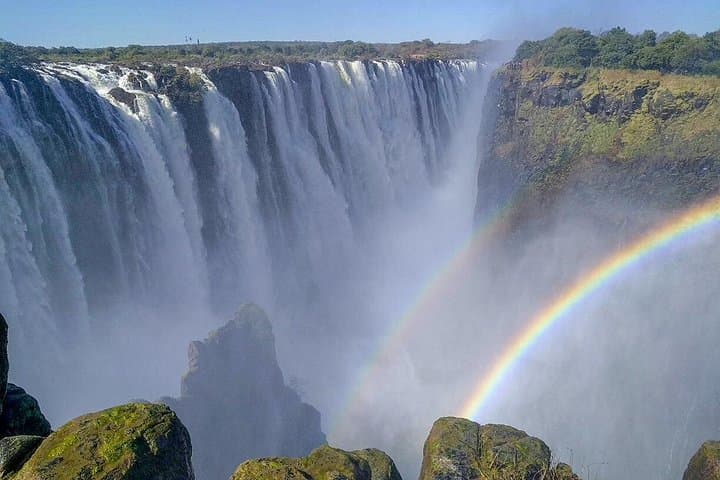
The midday roar hits before you see the full arc of water — a curtain of spray and light that commands the gorge. On a guided tour of Victoria Falls (Mosi-oa-Tunya) in Livingstone, visitors move along well-formed paths and rocky viewpoints as the Zambezi River hurls itself over the basalt lip and vanishes into mist.
Verified experiences and guided adventures in the surrounding area.
Operated by AdorableTravel · Livingstone, Southern Province
The midday roar hits before you see the full arc of water — a curtain of spray and light that commands the gorge. On a guided tour of Victoria Falls (Mosi-oa-Tunya) in Livingstone, visitors move along well-formed paths and rocky viewpoints as the Zambezi River hurls itself over the basalt lip and vanishes into mist.
Geology and history come into focus between viewpoints: the falls cut through a band of hard basalt, fracturing the river into distinct cataracts and deep gorges. European explorers publicized the site in the 19th century, but local Tonga and Lozi communities long regarded the place as sacred and central to river-based life. Guides typically point out formation features such as Devil’s Cataract and the Main Falls while explaining seasonal flow changes and colonial-era exploration.
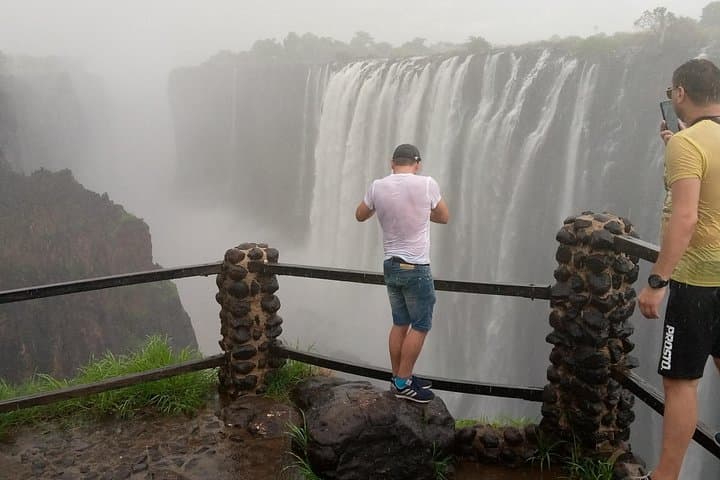
Expect strong spray, sudden rainbows, and distant thunderous sound. The circuit is compact but uneven in places; interpretive signs and railings mark the prime outlooks. Cultural notes — local vendors, bronze-works, and museum exhibits in Livingstone — offer context before or after the walk.
Practical guidance: tours last about 2–3 hours, often include bottled water and return transport to hotels. Visit in the dry months for clearer views and safer walking surfaces; arrive early or late afternoon for softer light and fewer crowds. Bring a lightweight waterproof layer for mist, a secure camera or waterproof case, sturdy shoes, sun protection and modest cash for local crafts. Respect fenced areas and follow guide instructions: the river is powerful and unpredictable.
Yes — the tour notes indicate wheelchair-accessible paths and transport; contact your operator ahead to confirm accessible pickup and any special arrangements.
Policies vary by operator; check your booking confirmation — some tours include the national park fee, while others require payment at the gate.
The dry season (May–October) usually offers clearer viewpoints and easier walking surfaces; the wet season brings higher flows and more spray, which can obscure some outlooks.
No — swimming at the edge of Victoria Falls is extremely dangerous and not permitted on the Zambian side; the famous Devil’s Pool is a controlled activity on the Zimbabwe side during low water and only on specific tours.
AdorableTravel operates guided outdoor trips and adventures with an emphasis on safety, stewardship, and memorable experiences.


The midday roar hits before you see the full arc of water — a curtain of spray and light that commands the gorge. On a guided tour of Victoria Falls (Mosi-oa-Tunya) in Livingstone, visitors move along well-formed paths and rocky viewpoints as the Zambezi River hurls itself over the basalt lip and vanishes into mist.
The midday roar hits before you see the full arc of water — a curtain of spray and light that commands the gorge. On a guided tour of Victoria Falls (Mosi-oa-Tunya) in Livingstone, visitors move along well-formed paths and rocky viewpoints as the Zambezi River hurls itself over the basalt lip and vanishes into mist.
Geology and history come into focus between viewpoints: the falls cut through a band of hard basalt, fracturing the river into distinct cataracts and deep gorges. European explorers publicized the site in the 19th century, but local Tonga and Lozi communities long regarded the place as sacred and central to river-based life. Guides typically point out formation features such as Devil’s Cataract and the Main Falls while explaining seasonal flow changes and colonial-era exploration.
Expect strong spray, sudden rainbows, and distant thunderous sound. The circuit is compact but uneven in places; interpretive signs and railings mark the prime outlooks. Cultural notes — local vendors, bronze-works, and museum exhibits in Livingstone — offer context before or after the walk.
Practical guidance: tours last about 2–3 hours, often include bottled water and return transport to hotels. Visit in the dry months for clearer views and safer walking surfaces; arrive early or late afternoon for softer light and fewer crowds. Bring a lightweight waterproof layer for mist, a secure camera or waterproof case, sturdy shoes, sun protection and modest cash for local crafts. Respect fenced areas and follow guide instructions: the river is powerful and unpredictable.