THE ADVENTURE COLLECTIVE® · Independent discovery and booking for outdoor travel

See Victoria Falls from the air on a concentrated 12–13 minute helicopter circuit that reveals the full scale of the Zambezi’s drop, the Batoka Gorge and the spray forest. Ideal for travelers short on time who want a dramatic, photo-ready view of one of Africa’s great natural spectacles.
See Victoria Falls from the air on a concentrated 12–13 minute helicopter circuit that reveals the full scale of the Zambezi’s drop, the Batoka Gorge and the spray forest. Ideal for travelers short on time who want a dramatic, photo-ready view of one of Africa’s great natural spectacles.
You lift off from the small airstrip and the Zambezi opens out beneath you—bronze river braided with islands, then the wall of mist rising where the water drops. From the helicopter the falls stop feeling like a place you visit and start feeling like a force that moves the land: curtains of water pushing air into spray, basalt gorges cutting the canyon into sections you can trace from the air.
Verified experiences and guided adventures in the surrounding area.
Operated by The Shrub Lodge · Victoria Falls, Matabeleland North
You lift off from the small airstrip and the Zambezi opens out beneath you—bronze river braided with islands, then the wall of mist rising where the water drops. From the helicopter the falls stop feeling like a place you visit and start feeling like a force that moves the land: curtains of water pushing air into spray, basalt gorges cutting the canyon into sections you can trace from the air.
Europeans first wrote about the falls in the mid-19th century, though the Tonga and other local peoples have long known and lived with the Zambezi’s rhythms. Geologically, the falls trace a faulted basalt plateau; the river finds weak points, scouring gorges like the Batoka below. The surrounding rainforest survives on constant spray, mosses and figs taking hold where few plants can elsewhere.
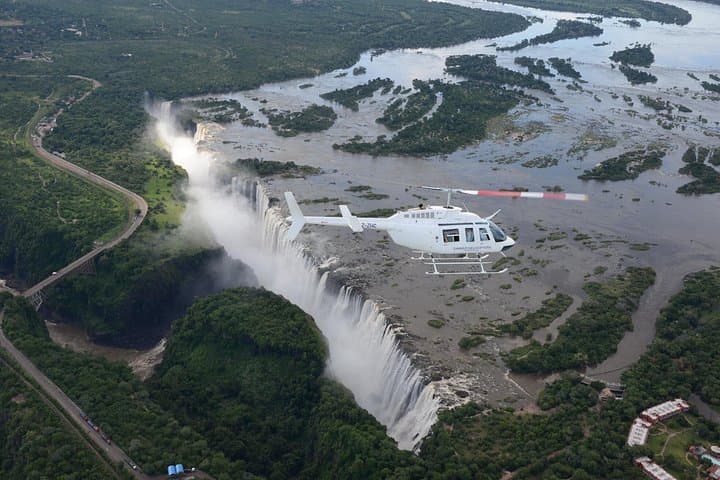
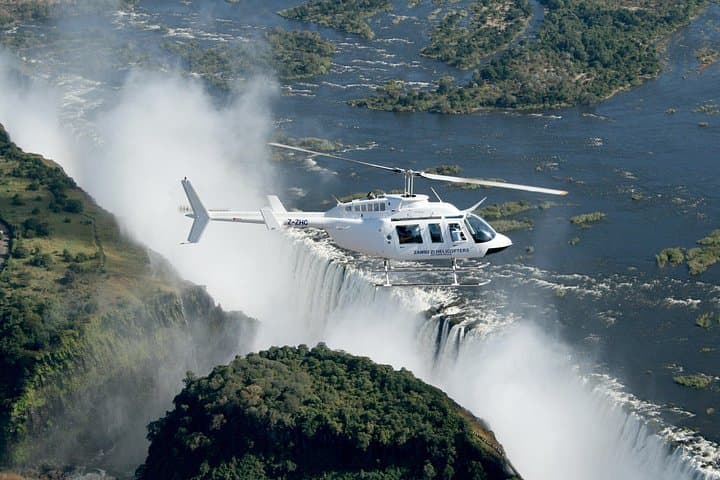
On a 12–13 minute circuit you’ll see the main cataract, the spray plume, the split channels and the sequence of gorges downstream—views not possible from the rim. Pilots typically point out wildlife along the banks: elephant herds, hippos in the river, and hippo paths leading to quiet pools.
Practical notes: flights are weather-dependent—thunderstorms and heavy mist can cancel. Expect a safety briefing, headset for commentary and photo-friendly windows; secure loose items and use a wrist strap for cameras. Morning slots give cleaner air and softer light; late afternoons can show dramatic shadows in the gorge. Transfers are often included; wear a light jacket—spray and wind at altitude can be cool. This short flight is an efficient, high-impact way to see Victoria Falls’ scale and geology from the one perspective that makes the whole landscape read as a single moving system.
The airborne portion is about 12–13 minutes, while the total experience including transfers and briefing is roughly 45–60 minutes.
Operators follow strict safety protocols; flights are cancelled in heavy mist, thunderstorms or unsafe wind conditions—refunds or rebooking policies apply.
Many operators and transfer vehicles are wheelchair accessible and the activity is rated suitable for most fitness levels, but check pickup-point accessibility when booking.
Yes—headsets are provided for pilot commentary and to protect hearing, so you’ll get live navigation of visible features and photography tips.
The Shrub Lodge operates guided outdoor trips and adventures with an emphasis on safety, stewardship, and memorable experiences.
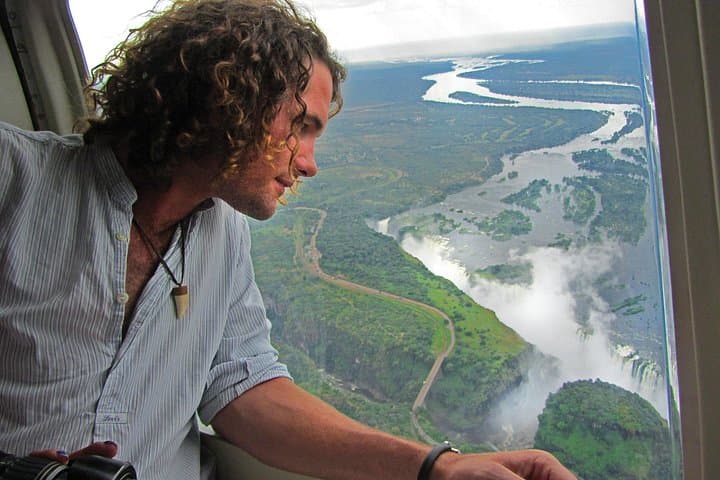
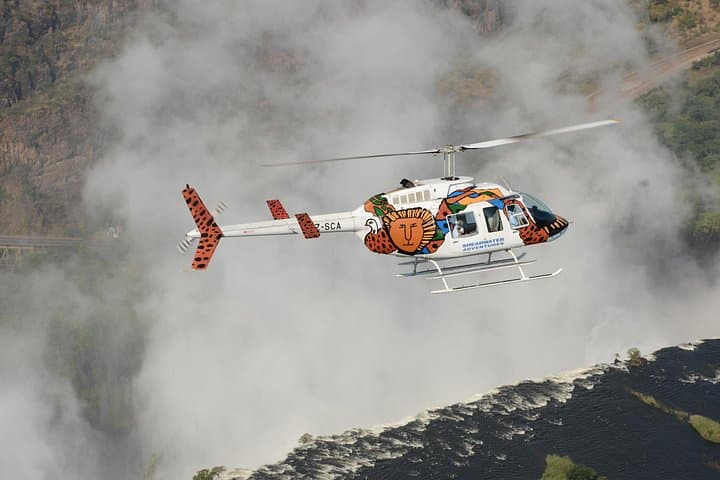
You lift off from the small airstrip and the Zambezi opens out beneath you—bronze river braided with islands, then the wall of mist rising where the water drops. From the helicopter the falls stop feeling like a place you visit and start feeling like a force that moves the land: curtains of water pushing air into spray, basalt gorges cutting the canyon into sections you can trace from the air.
You lift off from the small airstrip and the Zambezi opens out beneath you—bronze river braided with islands, then the wall of mist rising where the water drops. From the helicopter the falls stop feeling like a place you visit and start feeling like a force that moves the land: curtains of water pushing air into spray, basalt gorges cutting the canyon into sections you can trace from the air.
Europeans first wrote about the falls in the mid-19th century, though the Tonga and other local peoples have long known and lived with the Zambezi’s rhythms. Geologically, the falls trace a faulted basalt plateau; the river finds weak points, scouring gorges like the Batoka below. The surrounding rainforest survives on constant spray, mosses and figs taking hold where few plants can elsewhere.
On a 12–13 minute circuit you’ll see the main cataract, the spray plume, the split channels and the sequence of gorges downstream—views not possible from the rim. Pilots typically point out wildlife along the banks: elephant herds, hippos in the river, and hippo paths leading to quiet pools.
Practical notes: flights are weather-dependent—thunderstorms and heavy mist can cancel. Expect a safety briefing, headset for commentary and photo-friendly windows; secure loose items and use a wrist strap for cameras. Morning slots give cleaner air and softer light; late afternoons can show dramatic shadows in the gorge. Transfers are often included; wear a light jacket—spray and wind at altitude can be cool. This short flight is an efficient, high-impact way to see Victoria Falls’ scale and geology from the one perspective that makes the whole landscape read as a single moving system.