THE ADVENTURE COLLECTIVE® · Independent discovery and booking for outdoor travel

See Victoria Falls from overhead on a 15-minute helicopter flight that traces the Zambezi, the Victoria Falls Bridge, and the narrow Batoka Gorge. Quick, dramatic, and panoramic—this flight compresses the region’s geology, history, and wildlife into an unforgettable aerial snapshot.
See Victoria Falls from overhead on a 15-minute helicopter flight that traces the Zambezi, the Victoria Falls Bridge, and the narrow Batoka Gorge. Quick, dramatic, and panoramic—this flight compresses the region’s geology, history, and wildlife into an unforgettable aerial snapshot.
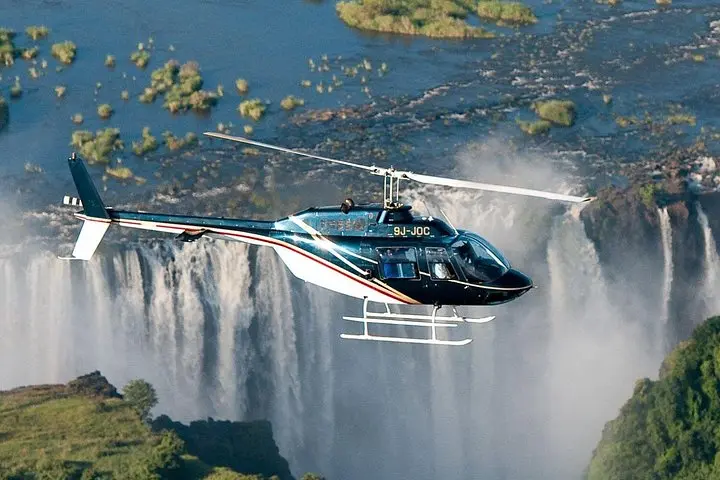
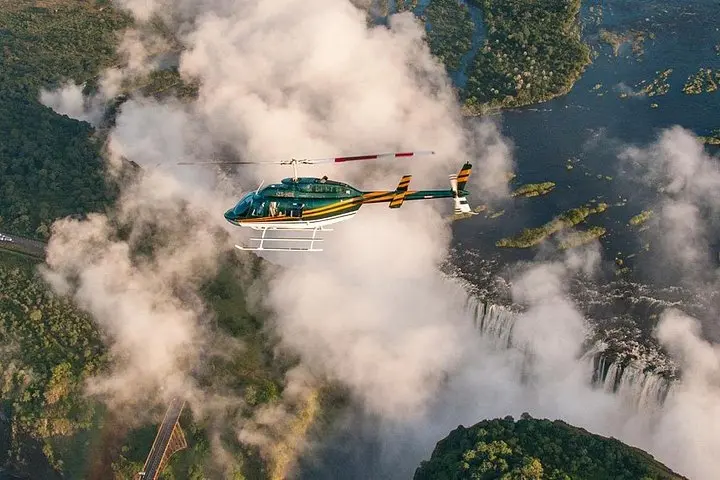
You lift off from a small pad near Victoria Falls and the world immediately rearranges: the spray becomes a white ribbon slicing the deep green of the Zambezi, the falls turn from a thunder you feel to a white seam you can follow, and the Batoka Gorge curls like a black scar downstream. The helicopter banks and the Victoria Falls Bridge—straddling Zimbabwe and Zambia—shrinks into an architectural stitch across a vast river.
Verified experiences and guided adventures in the surrounding area.
Operated by Zambezi Expedition · Victoria Falls, Matabeleland North
You lift off from a small pad near Victoria Falls and the world immediately rearranges: the spray becomes a white ribbon slicing the deep green of the Zambezi, the falls turn from a thunder you feel to a white seam you can follow, and the Batoka Gorge curls like a black scar downstream. The helicopter banks and the Victoria Falls Bridge—straddling Zimbabwe and Zambia—shrinks into an architectural stitch across a vast river.
This short but intense flight puts 19th-century exploration and millennia of geology into perspective. David Livingstone made the falls internationally known in the 1850s; the basalt cliffs you fly over were carved by the Zambezi’s persistent incision, creating the long, narrow Batoka Gorge where modern rafters test the river’s temperament. Local Tonga and Lozi communities have long-standing cultural ties to the river and its islands, and from the air you can pick out habitation patterns and floodplain agriculture.
Expect tight windows for the best light—early mornings and late afternoons show the falls’ spray and rainbows at their most dramatic. The pilot will aim for photo-friendly passes over the gorge, the bridge, and stretches of the river dotted with islands where hippos often warm themselves. Flights are short (about 15 minutes) but sensory-rich: rotor wash pushes at your jacket and the river dares you to follow its course.
Practical guidance: book a morning slot, bring a zoom lens, and dress in layers—temperatures vary with altitude and wind. Operators typically provide briefings, accessible boarding, and strict weather-based cancellation policies; follow the crew’s safety instructions and keep camera straps secure.
The advertised flight is approximately 15 minutes, long enough to cover the falls, the Victoria Falls Bridge, and sections of the Batoka Gorge.
Many operators offer wheelchair- and stroller-accessible options and can provide infant seats; confirm specifics and pickup needs when booking.
Flights are typically canceled for poor visibility or high winds; operators usually offer a full refund if canceled at least 24 hours in advance or for weather-based cancellations.
For safety most flights keep doors closed or limit open-door opportunities—follow the pilot’s instructions and use straps for all gear.
Zambezi Expedition operates guided outdoor trips and adventures with an emphasis on safety, stewardship, and memorable experiences.
You lift off from a small pad near Victoria Falls and the world immediately rearranges: the spray becomes a white ribbon slicing the deep green of the Zambezi, the falls turn from a thunder you feel to a white seam you can follow, and the Batoka Gorge curls like a black scar downstream. The helicopter banks and the Victoria Falls Bridge—straddling Zimbabwe and Zambia—shrinks into an architectural stitch across a vast river.
You lift off from a small pad near Victoria Falls and the world immediately rearranges: the spray becomes a white ribbon slicing the deep green of the Zambezi, the falls turn from a thunder you feel to a white seam you can follow, and the Batoka Gorge curls like a black scar downstream. The helicopter banks and the Victoria Falls Bridge—straddling Zimbabwe and Zambia—shrinks into an architectural stitch across a vast river.
This short but intense flight puts 19th-century exploration and millennia of geology into perspective. David Livingstone made the falls internationally known in the 1850s; the basalt cliffs you fly over were carved by the Zambezi’s persistent incision, creating the long, narrow Batoka Gorge where modern rafters test the river’s temperament. Local Tonga and Lozi communities have long-standing cultural ties to the river and its islands, and from the air you can pick out habitation patterns and floodplain agriculture.
Expect tight windows for the best light—early mornings and late afternoons show the falls’ spray and rainbows at their most dramatic. The pilot will aim for photo-friendly passes over the gorge, the bridge, and stretches of the river dotted with islands where hippos often warm themselves. Flights are short (about 15 minutes) but sensory-rich: rotor wash pushes at your jacket and the river dares you to follow its course.
Practical guidance: book a morning slot, bring a zoom lens, and dress in layers—temperatures vary with altitude and wind. Operators typically provide briefings, accessible boarding, and strict weather-based cancellation policies; follow the crew’s safety instructions and keep camera straps secure.