THE ADVENTURE COLLECTIVE® · Independent discovery and booking for outdoor travel

A compact, high-impact helicopter flight that delivers sweeping aerial views of Victoria Falls, the Zambezi River and Batoka Gorge. Perfect for travelers wanting a quick, dramatic perspective on one of Africa’s grandest waterfalls.
A compact, high-impact helicopter flight that delivers sweeping aerial views of Victoria Falls, the Zambezi River and Batoka Gorge. Perfect for travelers wanting a quick, dramatic perspective on one of Africa’s grandest waterfalls.
You lift off from a low helipad in Zambezi National Park and the river below immediately asserts itself—broad, fast, and streaked with spray that dares the aircraft to come closer. The helicopter banks gently and the falls reveal their drama: a thunderous curtain, the Batoka Gorge carved like a knife, and the Zambezi threading green floodplain and islands beyond.
Verified experiences and guided adventures in the surrounding area.
Operated by Chikopokopo Helicopters · Victoria Falls, Matabeleland North
You lift off from a low helipad in Zambezi National Park and the river below immediately asserts itself—broad, fast, and streaked with spray that dares the aircraft to come closer. The helicopter banks gently and the falls reveal their drama: a thunderous curtain, the Batoka Gorge carved like a knife, and the Zambezi threading green floodplain and islands beyond.
Human history here runs alongside geological time. The falls are the product of a basalt plateau fractured by tectonics; ancient lava flows and subsequent uplift forced the Zambezi to plunge. Local Kavango and Tonga communities have deep cultural connections to the river—stories and place names that predate colonial tourism. From the air you see both the geological fault-lines and the edges of protected parks that preserve big game and riverine forests.
Practically, expect a compact, intense viewpoint rather than a long sightseeing loop. The advertised airborne window is roughly 12–13 minutes of viewing, with the full experience including transfer, safety briefing and boarding taking about 45 minutes. The pilot will orbit the falls for optimal photographic angles; bubble-style windows mean unobstructed sightlines but also bright reflections—use a polarizing lens if you have one.
Timing affects what you see: peak flow months bring more spray and dramatic plumes, low-water months reveal the gorge and rock formations. Operators typically provide hotel pickup and briefings; weight and safety checks are standard. Bring sun protection, secure camera gear, and plan for short-notice changes if weather raises the spray or visibility concerns. The flight is physically undemanding, but it delivers a concentrated, airborne perspective of one of Africa’s most powerful landscapes.
The airborne portion over the falls is roughly 12–13 minutes; the full activity including pickup and briefing is approximately 45 minutes.
Most operators offer short hotel transfers to the helipad and list wheelchair-accessible options; confirm specific pickup points when booking.
Pilots typically orbit at safe distances that maximize views while accounting for spray and air currents; visibility depends on water flow and wind.
Infants can usually fly but must sit on an adult’s lap; specialized infant seats may be available—check age and weight policies with the operator.
Chikopokopo Helicopters operates guided outdoor trips and adventures with an emphasis on safety, stewardship, and memorable experiences.
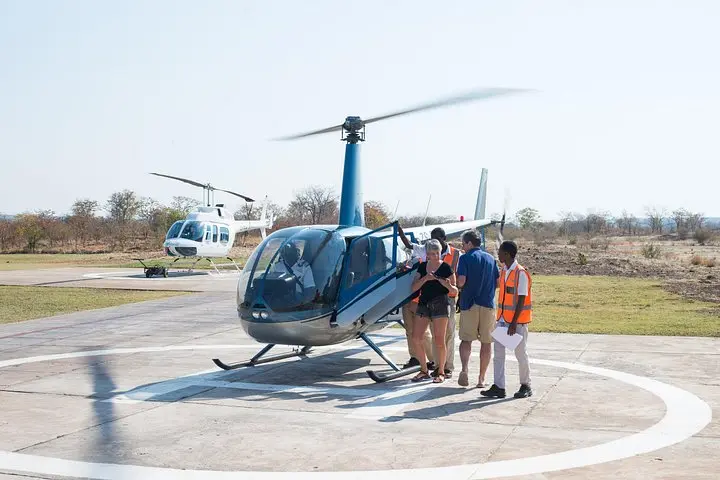
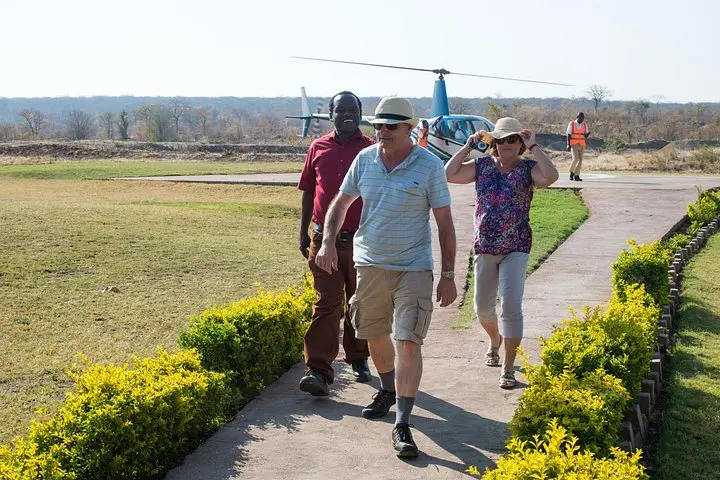

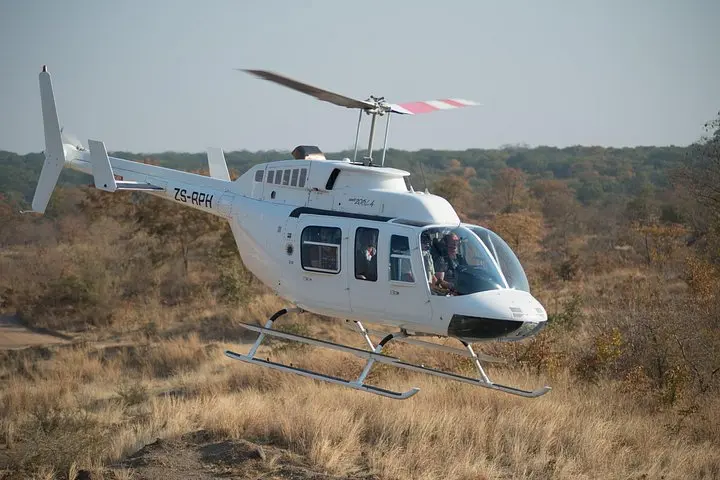
You lift off from a low helipad in Zambezi National Park and the river below immediately asserts itself—broad, fast, and streaked with spray that dares the aircraft to come closer. The helicopter banks gently and the falls reveal their drama: a thunderous curtain, the Batoka Gorge carved like a knife, and the Zambezi threading green floodplain and islands beyond.
You lift off from a low helipad in Zambezi National Park and the river below immediately asserts itself—broad, fast, and streaked with spray that dares the aircraft to come closer. The helicopter banks gently and the falls reveal their drama: a thunderous curtain, the Batoka Gorge carved like a knife, and the Zambezi threading green floodplain and islands beyond.
Human history here runs alongside geological time. The falls are the product of a basalt plateau fractured by tectonics; ancient lava flows and subsequent uplift forced the Zambezi to plunge. Local Kavango and Tonga communities have deep cultural connections to the river—stories and place names that predate colonial tourism. From the air you see both the geological fault-lines and the edges of protected parks that preserve big game and riverine forests.
Practically, expect a compact, intense viewpoint rather than a long sightseeing loop. The advertised airborne window is roughly 12–13 minutes of viewing, with the full experience including transfer, safety briefing and boarding taking about 45 minutes. The pilot will orbit the falls for optimal photographic angles; bubble-style windows mean unobstructed sightlines but also bright reflections—use a polarizing lens if you have one.
Timing affects what you see: peak flow months bring more spray and dramatic plumes, low-water months reveal the gorge and rock formations. Operators typically provide hotel pickup and briefings; weight and safety checks are standard. Bring sun protection, secure camera gear, and plan for short-notice changes if weather raises the spray or visibility concerns. The flight is physically undemanding, but it delivers a concentrated, airborne perspective of one of Africa’s most powerful landscapes.