THE ADVENTURE COLLECTIVE® · Independent discovery and booking for outdoor travel

Spend two hours inside a working Lesedi homestead just outside Victoria Falls, meeting villagers, tasting food and learning customs first-hand. This private cultural experience emphasizes authentic exchange, community benefit and accessible transport.
Spend two hours inside a working Lesedi homestead just outside Victoria Falls, meeting villagers, tasting food and learning customs first-hand. This private cultural experience emphasizes authentic exchange, community benefit and accessible transport.
You step off the shaded minivan and the scrub seems to breathe — the dry heat of the Zambezi plain pressing lightly against the skin while voices from the homestead call you forward.
Verified experiences and guided adventures in the surrounding area.
Operated by Tendai Moyo · Victoria Falls, Matabeleland North
You step off the shaded minivan and the scrub seems to breathe — the dry heat of the Zambezi plain pressing lightly against the skin while voices from the homestead call you forward.
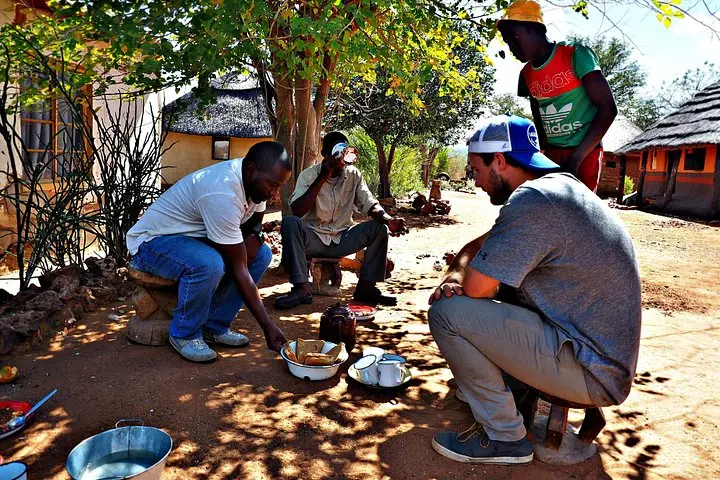
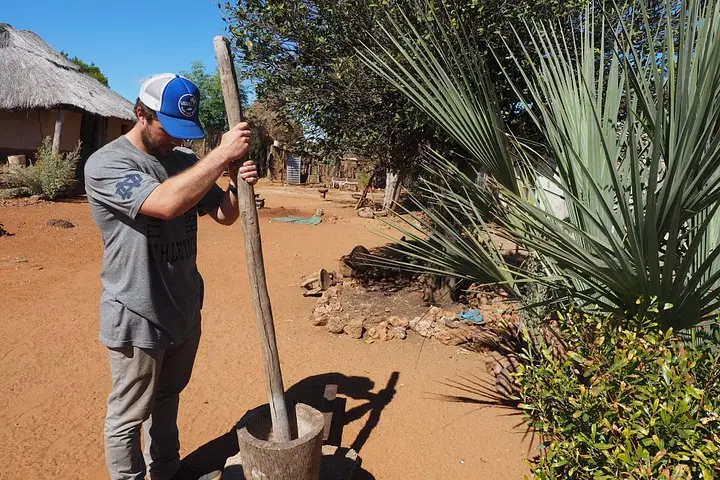
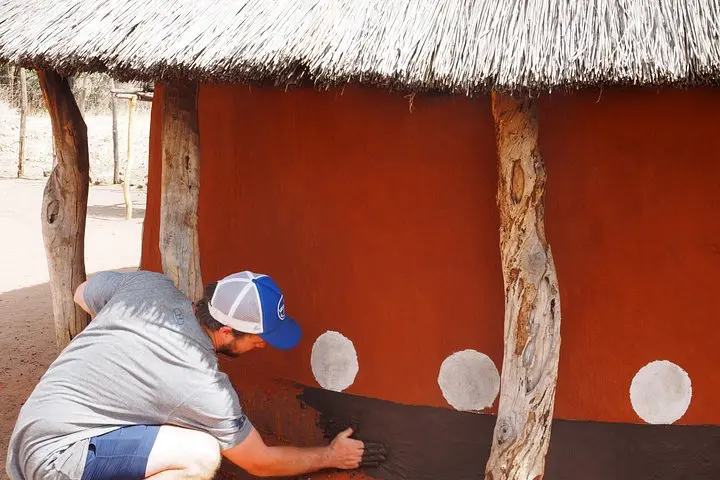
This two-hour Lesedi village visit, roughly 15 km from Victoria Falls town, places you inside an active homestead where daily life is public and participatory. Guides from the community lead introductions, and conversations range from household routines to customs around marriage, food and storytelling. The buildings are simple but intentional, built with local materials and practical knowledge handed down through generations.
The region sits on the basalt flows of the Zimbabwe plateau; soils are sandy and available water, often seasonal, shapes activity rhythms. Historically this area is tied to the Lozi and Tonga peoples whose livelihoods have long combined small-scale farming, fishing on nearby tributaries and artisanal crafts. Cultural exchange here is direct: you may see cooking on open fires, demonstrations of beadwork or pottery, and be invited to taste nshima or other local dishes.
Practical notes: tours run about two hours, include private transport and an entrance fee, and are accessible to most travelers. Wear sturdy closed shoes for uneven surfaces, bring sun protection and insect repellent, and carry small local cash for handicraft purchases or tips. Respect local customs—ask before photographing people, accept invitations with humility, and follow your guide’s lead. This visit is best scheduled in cooler morning hours or late afternoon, when the light flatters faces and conversation flows more easily.
The experience is approximately two hours, including private transportation to and from the village.
The listing indicates wheelchair-accessible options, but terrain in homesteads can be uneven; check with the operator about specific mobility needs before booking.
Photography is allowed but ask permission first; some people or ceremonies may be private or require a small fee for posed photos.
You may be offered a taste of local dishes during the visit, but this is not a full catered meal—notify the operator of dietary restrictions in advance.
Tendai Moyo operates guided outdoor trips and adventures with an emphasis on safety, stewardship, and memorable experiences.
You step off the shaded minivan and the scrub seems to breathe — the dry heat of the Zambezi plain pressing lightly against the skin while voices from the homestead call you forward.
You step off the shaded minivan and the scrub seems to breathe — the dry heat of the Zambezi plain pressing lightly against the skin while voices from the homestead call you forward.
This two-hour Lesedi village visit, roughly 15 km from Victoria Falls town, places you inside an active homestead where daily life is public and participatory. Guides from the community lead introductions, and conversations range from household routines to customs around marriage, food and storytelling. The buildings are simple but intentional, built with local materials and practical knowledge handed down through generations.
The region sits on the basalt flows of the Zimbabwe plateau; soils are sandy and available water, often seasonal, shapes activity rhythms. Historically this area is tied to the Lozi and Tonga peoples whose livelihoods have long combined small-scale farming, fishing on nearby tributaries and artisanal crafts. Cultural exchange here is direct: you may see cooking on open fires, demonstrations of beadwork or pottery, and be invited to taste nshima or other local dishes.
Practical notes: tours run about two hours, include private transport and an entrance fee, and are accessible to most travelers. Wear sturdy closed shoes for uneven surfaces, bring sun protection and insect repellent, and carry small local cash for handicraft purchases or tips. Respect local customs—ask before photographing people, accept invitations with humility, and follow your guide’s lead. This visit is best scheduled in cooler morning hours or late afternoon, when the light flatters faces and conversation flows more easily.