THE ADVENTURE COLLECTIVE® · Independent discovery and booking for outdoor travel

A compact 10‑day small‑group tour from Vienna to Dubrovnik or Split, tracing the Danube’s edge, Ottoman bazaars and Austro-Hungarian towns. Expect city walks, wine country stops and a final shuttle to the Croatian coast.
A compact 10‑day small‑group tour from Vienna to Dubrovnik or Split, tracing the Danube’s edge, Ottoman bazaars and Austro-Hungarian towns. Expect city walks, wine country stops and a final shuttle to the Croatian coast.
Morning in Vienna feels architectural and alive: the group gathers at hotel doors, the tour leader checks names, and a minivan slides out into a city that has already begun its day. The first stretch moves across the gently folded Pannonian Basin — vineyards of Burgenland give way to the reed-lined shore of Lake Neusiedl — and the Danube, as ever, pushes travelers eastward toward old empires and new borders.
Verified experiences and guided adventures in the surrounding area.
Operated by Choose Balkans · Vienna, Vienna
Morning in Vienna feels architectural and alive: the group gathers at hotel doors, the tour leader checks names, and a minivan slides out into a city that has already begun its day. The first stretch moves across the gently folded Pannonian Basin — vineyards of Burgenland give way to the reed-lined shore of Lake Neusiedl — and the Danube, as ever, pushes travelers eastward toward old empires and new borders.
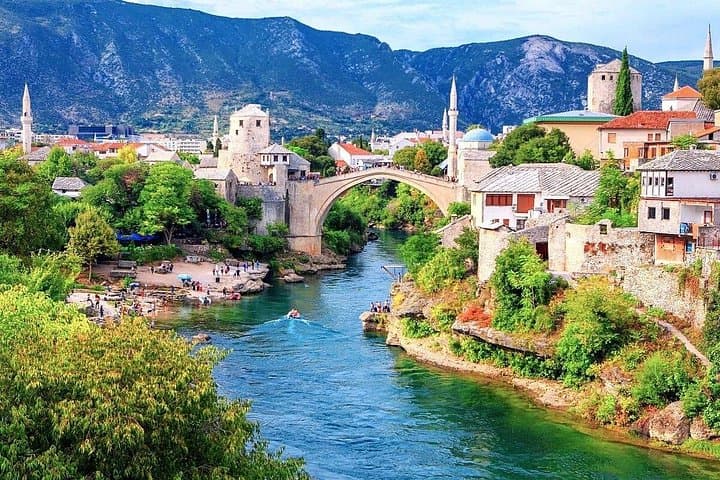
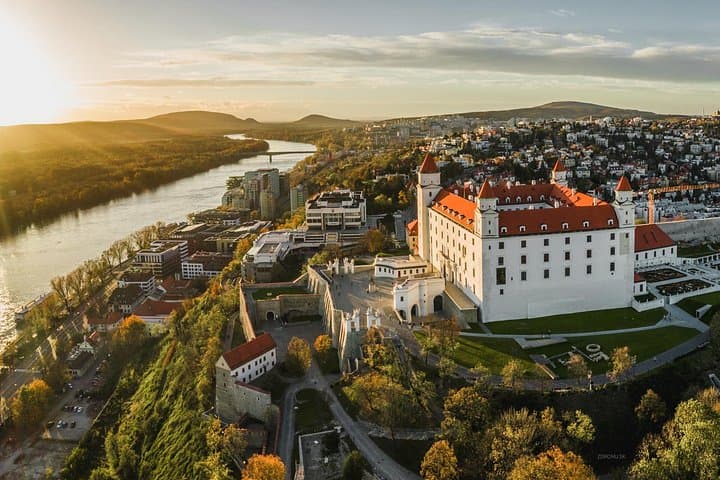
This route threads Austro-Hungarian cities, Ottoman-influenced towns and post‑Yugoslav landscapes. Rust’s baroque facades and wine cellars recall centuries of viticulture; Bratislava Castle perches over the Danube with views carved by geology of river terraces; Sarajevo and Mostar speak louder, their streets holding Ottoman bazaars, Austro-Hungarian boulevards and 20th‑century scars — the Latin Bridge and the rebuilt Stari Most are stops where history is tangible.
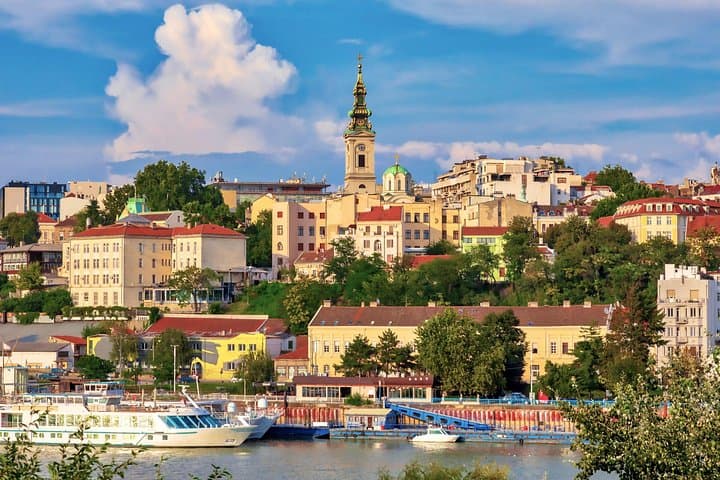
Culture here is tactile: café rituals in Bratislava and Budapest, Serbian and Bosnian barbecue, and small wine towns like Sremski Karlovci where local cellars open their doors. The terrain is mostly paved and easy to drive, with short urban walks that include uneven cobbles and occasional steep castle approaches — plan for moderate walking across variable surfaces.
Practical guidance: the trip suits travelers with moderate fitness and a tolerance for full travel days. Expect daily breakfasts included, 3‑star hotel rooms, and a final shuttle to Dubrovnik or Split; passport, local currency in small notes, comfortable footwear and a rain layer will make transitions smoother. Border formalities and weather can affect timing, so travel with flexibility and a charged adapter for photos.
The tour starts with hotel pickup in Vienna and finishes at the Croatian border with a shuttle to hotels in Dubrovnik or Split.
Moderate — the trip involves daily walking on uneven urban terrain and some stairs; no technical hiking skills required.
Daily breakfast is included; other meals are typically on your own so you can sample local food across regions.
A professional English-speaking tour leader guides the group; local guides or staff may use regional languages at some stops.
Choose Balkans operates guided outdoor trips and adventures with an emphasis on safety, stewardship, and memorable experiences.

Morning in Vienna feels architectural and alive: the group gathers at hotel doors, the tour leader checks names, and a minivan slides out into a city that has already begun its day. The first stretch moves across the gently folded Pannonian Basin — vineyards of Burgenland give way to the reed-lined shore of Lake Neusiedl — and the Danube, as ever, pushes travelers eastward toward old empires and new borders.
Morning in Vienna feels architectural and alive: the group gathers at hotel doors, the tour leader checks names, and a minivan slides out into a city that has already begun its day. The first stretch moves across the gently folded Pannonian Basin — vineyards of Burgenland give way to the reed-lined shore of Lake Neusiedl — and the Danube, as ever, pushes travelers eastward toward old empires and new borders.
This route threads Austro-Hungarian cities, Ottoman-influenced towns and post‑Yugoslav landscapes. Rust’s baroque facades and wine cellars recall centuries of viticulture; Bratislava Castle perches over the Danube with views carved by geology of river terraces; Sarajevo and Mostar speak louder, their streets holding Ottoman bazaars, Austro-Hungarian boulevards and 20th‑century scars — the Latin Bridge and the rebuilt Stari Most are stops where history is tangible.
Culture here is tactile: café rituals in Bratislava and Budapest, Serbian and Bosnian barbecue, and small wine towns like Sremski Karlovci where local cellars open their doors. The terrain is mostly paved and easy to drive, with short urban walks that include uneven cobbles and occasional steep castle approaches — plan for moderate walking across variable surfaces.
Practical guidance: the trip suits travelers with moderate fitness and a tolerance for full travel days. Expect daily breakfasts included, 3‑star hotel rooms, and a final shuttle to Dubrovnik or Split; passport, local currency in small notes, comfortable footwear and a rain layer will make transitions smoother. Border formalities and weather can affect timing, so travel with flexibility and a charged adapter for photos.