THE ADVENTURE COLLECTIVE® · Independent discovery and booking for outdoor travel

Explore Vikos–Aoös Geopark by road and short walks: dramatic limestone gorges, arched stone bridges and traditional shepherd paths. This 6–8 hour private riders tour combines scenic stops with cultural insights into Zagori and Konitsa.
Explore Vikos–Aoös Geopark by road and short walks: dramatic limestone gorges, arched stone bridges and traditional shepherd paths. This 6–8 hour private riders tour combines scenic stops with cultural insights into Zagori and Konitsa.
You step out of the van where the road narrows and the air turns mineral‑cold; the gorge answers with a breath that seems to push you toward the ridge. On a Riders tour through Vikos–Aoös Geopark you follow narrow lanes, pass arched stone bridges and walk the shepherd paths that thread villages like Monodendri, Vradeto and Kipoi.
Verified experiences and guided adventures in the surrounding area.
Operated by Epirus Traveller · Konitsa, Epirus
You step out of the van where the road narrows and the air turns mineral‑cold; the gorge answers with a breath that seems to push you toward the ridge. On a Riders tour through Vikos–Aoös Geopark you follow narrow lanes, pass arched stone bridges and walk the shepherd paths that thread villages like Monodendri, Vradeto and Kipoi.
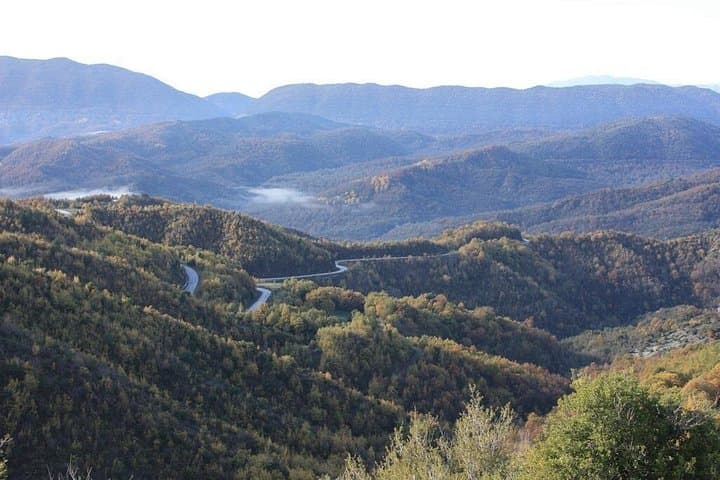
The landscape here is raw and mapped by time: the limestone gorge of Vikos was carved by glacial melt and river incision to become one of Europe’s deepest canyons, while the Aoös River cuts a rugged path toward Konitsa. Human history is visible in stone — 14th–19th century arched bridges, chapels and Ottoman‑era houses — and the Sarakatsanoi pastoral culture still shapes seasonal movement and local crafts.
Expect abrupt viewpoints, dramatic drop‑offs and cold, clear streams daring you to linger. The itinerary commonly pauses at classic photo bridges, a traditional village path used by shepherds and a powerful waterfall whose spray is refreshingly icy.
Practical guidance: the full loop runs 6–8 hours with vehicle transfers and short walks at each stop — mostly easy terrain but with uneven stone steps and switchbacks. Wear grippy shoes, layer for wind and shade, and carry 1–1.5 liters of water. Weather shifts fast in the mountains; aim for morning light for the best views and quieter villages. Bring a camera with a polarizer for steep contrasts and a compact first‑aid kit for scrapes. If you want deeper hikes, ask about added walking segments — guides can tailor the day to include longer trail sections or gentler sightseeing.
The tour lasts about 6–8 hours and includes transportation, bottled water, snacks and a private guide; lunch at a local taverna is typically paid by the guest.
Yes — the itinerary involves short walks and vehicle transfers; participants should be able to manage uneven ground and brief stair sections.
Guides often accommodate adjustments; ask at booking to include longer hikes or extra village time when possible.
Late spring through early fall offers the most stable weather and open mountain roads; spring brings wildflowers while autumn gives crisp air and color.
Epirus Traveller operates guided outdoor trips and adventures with an emphasis on safety, stewardship, and memorable experiences.
You step out of the van where the road narrows and the air turns mineral‑cold; the gorge answers with a breath that seems to push you toward the ridge. On a Riders tour through Vikos–Aoös Geopark you follow narrow lanes, pass arched stone bridges and walk the shepherd paths that thread villages like Monodendri, Vradeto and Kipoi.
You step out of the van where the road narrows and the air turns mineral‑cold; the gorge answers with a breath that seems to push you toward the ridge. On a Riders tour through Vikos–Aoös Geopark you follow narrow lanes, pass arched stone bridges and walk the shepherd paths that thread villages like Monodendri, Vradeto and Kipoi.
The landscape here is raw and mapped by time: the limestone gorge of Vikos was carved by glacial melt and river incision to become one of Europe’s deepest canyons, while the Aoös River cuts a rugged path toward Konitsa. Human history is visible in stone — 14th–19th century arched bridges, chapels and Ottoman‑era houses — and the Sarakatsanoi pastoral culture still shapes seasonal movement and local crafts.
Expect abrupt viewpoints, dramatic drop‑offs and cold, clear streams daring you to linger. The itinerary commonly pauses at classic photo bridges, a traditional village path used by shepherds and a powerful waterfall whose spray is refreshingly icy.
Practical guidance: the full loop runs 6–8 hours with vehicle transfers and short walks at each stop — mostly easy terrain but with uneven stone steps and switchbacks. Wear grippy shoes, layer for wind and shade, and carry 1–1.5 liters of water. Weather shifts fast in the mountains; aim for morning light for the best views and quieter villages. Bring a camera with a polarizer for steep contrasts and a compact first‑aid kit for scrapes. If you want deeper hikes, ask about added walking segments — guides can tailor the day to include longer trail sections or gentler sightseeing.