THE ADVENTURE COLLECTIVE® · Independent discovery and booking for outdoor travel

Walk village lanes around Borobudur to shape clay, press tofu, and meet artisans who keep centuries-old techniques alive. This 2–3 hour private tour blends hands-on craft with local insight—perfect for curious travelers seeking a grounded cultural experience.
Walk village lanes around Borobudur to shape clay, press tofu, and meet artisans who keep centuries-old techniques alive. This 2–3 hour private tour blends hands-on craft with local insight—perfect for curious travelers seeking a grounded cultural experience.
Dawn lifts a pale light off the temple’s silhouette while villagers in the fields go about their morning tasks: a potter shapes wet clay, a family presses soy into tofu, and bicycles hum along packed-earth lanes.
Verified experiences and guided adventures in the surrounding area.
Operated by Jaker Tour Borobudur · Magelang, Central Java
Dawn lifts a pale light off the temple’s silhouette while villagers in the fields go about their morning tasks: a potter shapes wet clay, a family presses soy into tofu, and bicycles hum along packed-earth lanes.
This half-day village tour threads you through the communities that ring Borobudur, where craft and food remain daily rites. The region sits on rich volcanic soils from nearby Mount Merapi; those minerals give clay its pliability and farmers a dense growing season that feeds small tofu workshops. Borobudur itself is a 9th-century Mahayana monument built by the Sailendra dynasty, and the surrounding villages have long supplied artisans and agricultural goods to visiting pilgrims.
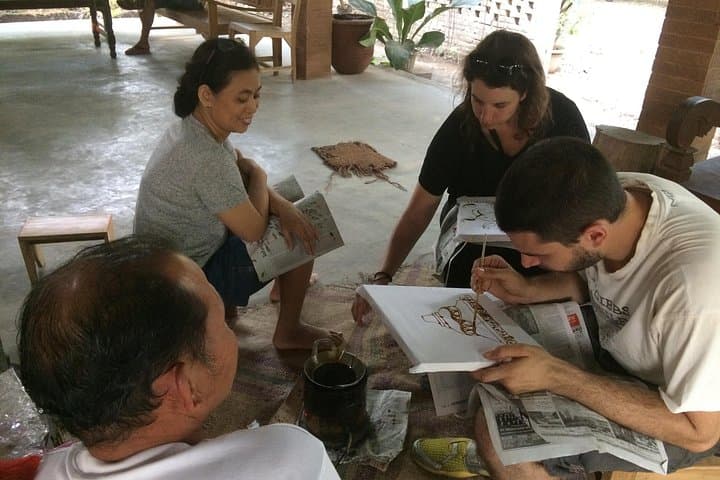
Expect short walks on uneven village paths, hands-on time at a pottery wheel, and a tofu-making demo that covers pressing, cutting, and light frying. You’ll also see batik demonstrations—simple resist techniques used for everyday cloth.
Practical guidance: the tour runs roughly 2–3 hours and is suitable for most fitness levels—no steep climbs, but bring sturdy shoes for dirt lanes and steps into family workshops. Morning departures beat heat and crowds; bottled water is often provided, but a refillable bottle helps reduce plastic waste. Carry small bills for purchases, move respectfully through private homes, and ask before photographing people.
Conclude with a slow walk back to the minivan or a local warung for a tasting. The experience is low-impact but intimate: you’re not just watching craft—you’re briefly joining a rhythm of village life.
The experience lasts about 2–3 hours and is a private tour with hands-on stops for pottery and tofu making.
Yes—activities are family-friendly, though young children should be supervised around hot oil during tofu frying and near pottery wheels.
Bring comfortable shoes, a hat, small cash for purchases, and your camera; bottled water is often provided but a refillable bottle is handy.
Most travelers stay in Yogyakarta (about 45–60 minutes away) or nearby Magelang; pickup options are commonly arranged from Yogyakarta.
Jaker Tour Borobudur operates guided outdoor trips and adventures with an emphasis on safety, stewardship, and memorable experiences.


Dawn lifts a pale light off the temple’s silhouette while villagers in the fields go about their morning tasks: a potter shapes wet clay, a family presses soy into tofu, and bicycles hum along packed-earth lanes.
Dawn lifts a pale light off the temple’s silhouette while villagers in the fields go about their morning tasks: a potter shapes wet clay, a family presses soy into tofu, and bicycles hum along packed-earth lanes.
This half-day village tour threads you through the communities that ring Borobudur, where craft and food remain daily rites. The region sits on rich volcanic soils from nearby Mount Merapi; those minerals give clay its pliability and farmers a dense growing season that feeds small tofu workshops. Borobudur itself is a 9th-century Mahayana monument built by the Sailendra dynasty, and the surrounding villages have long supplied artisans and agricultural goods to visiting pilgrims.
Expect short walks on uneven village paths, hands-on time at a pottery wheel, and a tofu-making demo that covers pressing, cutting, and light frying. You’ll also see batik demonstrations—simple resist techniques used for everyday cloth.
Practical guidance: the tour runs roughly 2–3 hours and is suitable for most fitness levels—no steep climbs, but bring sturdy shoes for dirt lanes and steps into family workshops. Morning departures beat heat and crowds; bottled water is often provided, but a refillable bottle helps reduce plastic waste. Carry small bills for purchases, move respectfully through private homes, and ask before photographing people.
Conclude with a slow walk back to the minivan or a local warung for a tasting. The experience is low-impact but intimate: you’re not just watching craft—you’re briefly joining a rhythm of village life.