THE ADVENTURE COLLECTIVE® · Independent discovery and booking for outdoor travel

Swap temple crowds for a two-hour tuk‑tuk and footwork introduction to rural Cambodian life. Meet farmers, visit a village school and wander rice paddies with a guide who opens conversations and local context.
Swap temple crowds for a two-hour tuk‑tuk and footwork introduction to rural Cambodian life. Meet farmers, visit a village school and wander rice paddies with a guide who opens conversations and local context.
The tuk‑tuk leaves Siem Reap and the city’s hum thins into a lane of palm fronds and flapping laundry. In less than 30 minutes you step out onto a raised dirt path where children wave, water buffalo graze at the field’s edge and the rice paddies stretch in geometric green. The guide leads a measured walk through Treak village—stilt houses, a weathered pagoda and an old temple whose laterite blocks keep the heat of generations.
Verified experiences and guided adventures in the surrounding area.
Operated by Trippest Travel · Siem Reap, Siem Reap Province
The tuk‑tuk leaves Siem Reap and the city’s hum thins into a lane of palm fronds and flapping laundry. In less than 30 minutes you step out onto a raised dirt path where children wave, water buffalo graze at the field’s edge and the rice paddies stretch in geometric green. The guide leads a measured walk through Treak village—stilt houses, a weathered pagoda and an old temple whose laterite blocks keep the heat of generations.
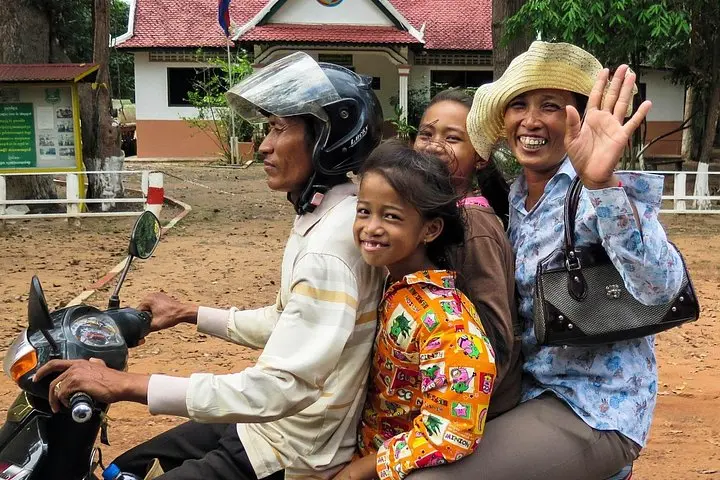
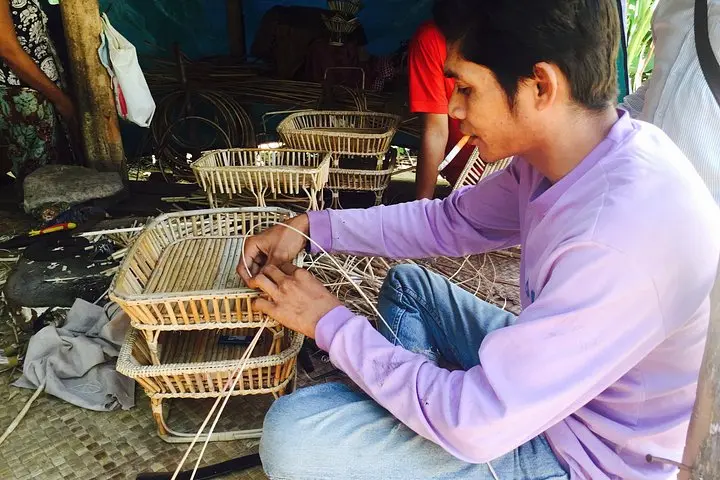
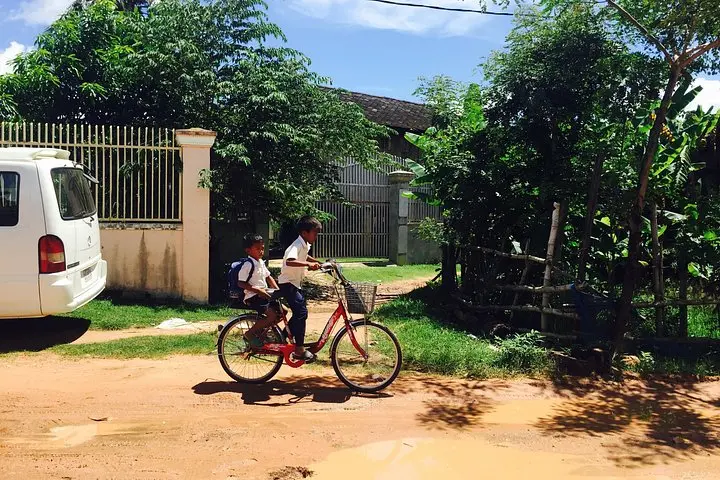
The area’s rice fields reflect a long history: Angkor‑era water management shaped the lowlands, and rice remains the region’s economic and cultural spine. Geology here is flat alluvium, so trails are level but soft after rain. Culture is daily and direct—farmers tending plots, women weaving, schoolchildren practicing English at the HUSK NGO school. Photographers find quiet frames between palm trunks; conversational travelers find stories told over a bowl or a smile.
Practically, the tour is brief and accessible—two hours that prioritize interaction over distance. Expect uneven dirt paths, short stilt steps, and a friendly crowd that may pause to show traditional chores. Bring light footwear, sun protection and a translator-app curiosity; the guide bridges language and etiquette.
This walk is low-impact when done respectfully: ask before photographing, accept invitation to observe rather than intrude, and support the village through purchases or NGOs rather than cash handouts. The return tuk‑tuk is included, making this a compact, meaningful complement to Angkor’s temples for travelers wanting to see how rice, religion and routine shape daily life in rural Cambodia.
Typically 20–30 minutes depending on traffic; the operator arranges round‑trip transport from your hotel.
Yes; the tour is rated easy, but infants must sit on an adult’s lap and children should be supervised around water and livestock.
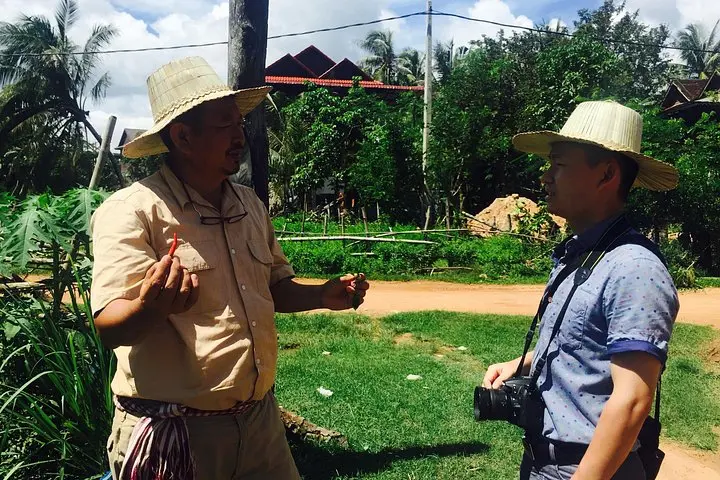
Yes—guides facilitate introductions and translation; villagers often welcome respectful conversation about daily life and farming.
Facilities in the village are basic; plan accordingly and use hotel restrooms before departure if you prefer more comfort.
Trippest Travel operates guided outdoor trips and adventures with an emphasis on safety, stewardship, and memorable experiences.
The tuk‑tuk leaves Siem Reap and the city’s hum thins into a lane of palm fronds and flapping laundry. In less than 30 minutes you step out onto a raised dirt path where children wave, water buffalo graze at the field’s edge and the rice paddies stretch in geometric green. The guide leads a measured walk through Treak village—stilt houses, a weathered pagoda and an old temple whose laterite blocks keep the heat of generations.
The tuk‑tuk leaves Siem Reap and the city’s hum thins into a lane of palm fronds and flapping laundry. In less than 30 minutes you step out onto a raised dirt path where children wave, water buffalo graze at the field’s edge and the rice paddies stretch in geometric green. The guide leads a measured walk through Treak village—stilt houses, a weathered pagoda and an old temple whose laterite blocks keep the heat of generations.
The area’s rice fields reflect a long history: Angkor‑era water management shaped the lowlands, and rice remains the region’s economic and cultural spine. Geology here is flat alluvium, so trails are level but soft after rain. Culture is daily and direct—farmers tending plots, women weaving, schoolchildren practicing English at the HUSK NGO school. Photographers find quiet frames between palm trunks; conversational travelers find stories told over a bowl or a smile.
Practically, the tour is brief and accessible—two hours that prioritize interaction over distance. Expect uneven dirt paths, short stilt steps, and a friendly crowd that may pause to show traditional chores. Bring light footwear, sun protection and a translator-app curiosity; the guide bridges language and etiquette.
This walk is low-impact when done respectfully: ask before photographing, accept invitation to observe rather than intrude, and support the village through purchases or NGOs rather than cash handouts. The return tuk‑tuk is included, making this a compact, meaningful complement to Angkor’s temples for travelers wanting to see how rice, religion and routine shape daily life in rural Cambodia.