THE ADVENTURE COLLECTIVE® · Independent discovery and booking for outdoor travel

Climb Villarrica from Pucón in a single, demanding day—learn glacier techniques, stand on a 2,847m crater rim and, if conditions allow, watch molten activity below. This full-day ascent balances technical instruction with an unforgettable alpine payoff.
Climb Villarrica from Pucón in a single, demanding day—learn glacier techniques, stand on a 2,847m crater rim and, if conditions allow, watch molten activity below. This full-day ascent balances technical instruction with an unforgettable alpine payoff.
Morning light slices across the black flank of Villarrica long before the town of Pucón wakes. You meet at the guide office on the main street, swap the warmth of a café for the clean bite of Andean air and ride toward the volcano as the road unwinds through pine and lenga forests.
Verified experiences and guided adventures in the surrounding area.
Operated by Baum Adventure · Pucón, Araucanía
Morning light slices across the black flank of Villarrica long before the town of Pucón wakes. You meet at the guide office on the main street, swap the warmth of a café for the clean bite of Andean air and ride toward the volcano as the road unwinds through pine and lenga forests.
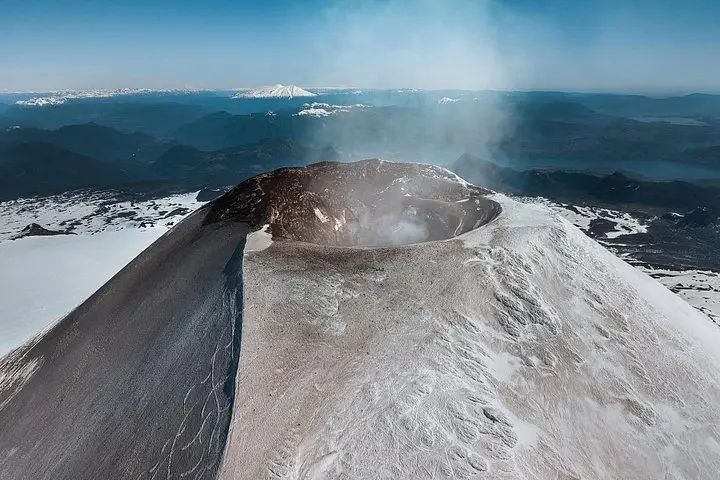
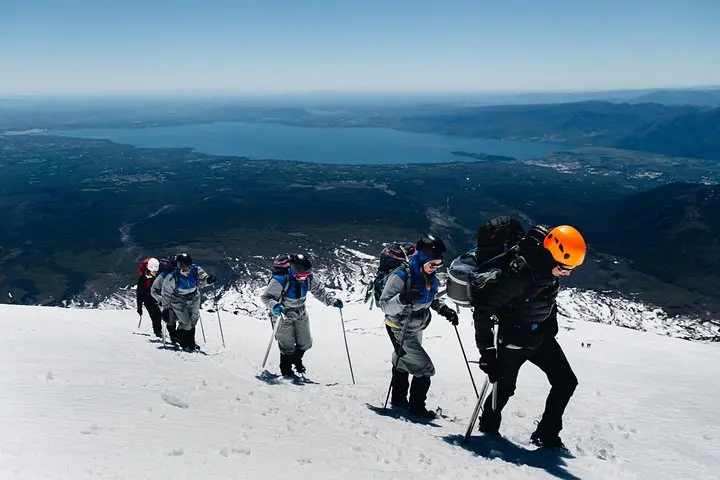
By the time the vans stop, the mountain is close enough to read—ridges of volcanic scree, patches of glacier, the thin curl of steam that marks an active vent. The team rigs harnesses, fits crampons and practices ice-axe self-arrest until the movements feel like second nature. The ascent is straightforward in technique but demanding in execution: steep snow and ice, brittle volcanic rock, and a steady climb toward 2,847 meters above sea level.
Villarrica is one of the most active volcanoes in the southern Andes; its eruptions and lava-filled crater have shaped local Mapuche history and the surrounding landscape for millennia. The volcano’s cone sits on layers of basalt and ash, and the glacier that crowns the summit moves slowly over that volcanic bed—an uneasy partnership between fire and ice. From the crater rim, on clear days, you can see neighboring snow-capped peaks, the blue streak of lakes, and the patchwork of forests that define the Araucanía region.
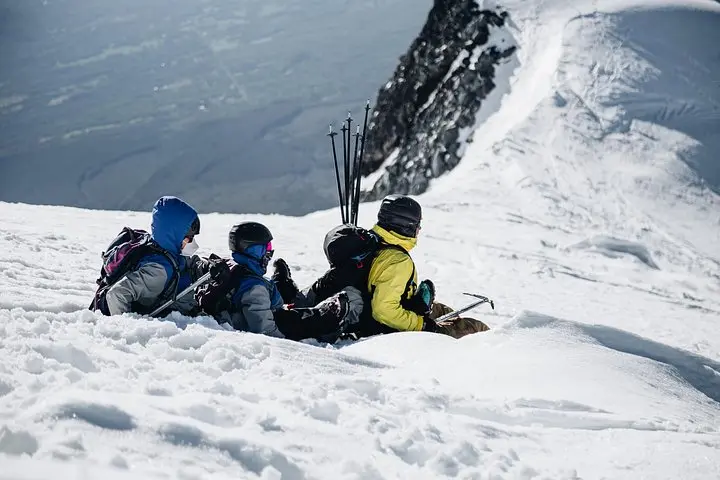
Culturally, Pucón has long been the gateway for mountaineers and outdoor travelers seeking the volcano’s particular thrill—local guides combine technical instruction, safety-minded pacing and a pragmatic sense of humor to keep the climb disciplined and enjoyable. Returning to the slope is often quicker than the ascent: depending on snow conditions you may sled down steep sections, an efficient, grin-inducing way to descend.
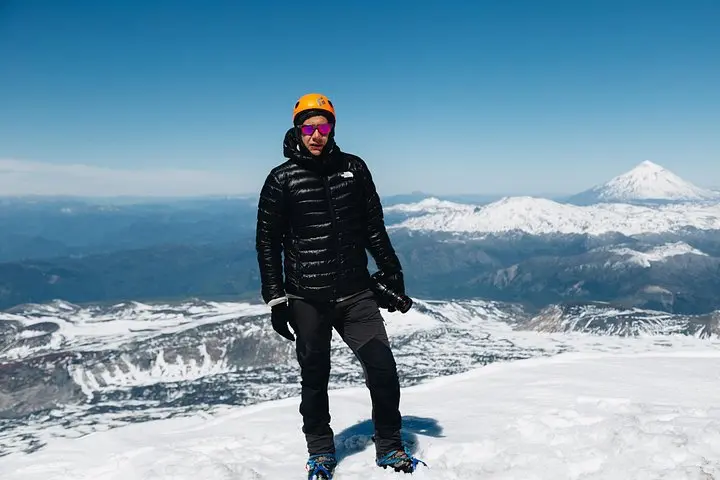
Practicalities matter here. The trip is a full 9-hour day with early start, and while the technical ropes are short, the physical demand is significant. Guides provide avalanche-aware routing, helmets, crampons, ice axes and a final beer at the end; you bring layered clothing, sturdy mountaineering boots, water and sun protection. Weather can flip—wind sharpens into a gale and visibility can drop—so flexibility and respect for cancellations are part of the plan.
For travelers based in Pucón, this climb is accessible—pick-up is typically included from town center lodgings. Expect a moderate-to-high fitness requirement, basic comfort on steep slopes and willingness to learn rope and glacier travel techniques. The reward is literal: a view into a living crater and a perspective on the raw geologic forces still shaping southern Chile.
If you want a day that blends technical learning, volcanic geology and a raw alpine atmosphere, Villarrica delivers with direct, honest intensity. Come prepared, listen to the guides, and the mountain will give you a summit you won’t forget.
You should have good cardiovascular fitness and be accustomed to long days hiking; the pace is steady but sustained, with steep snow sections.
No prior experience is required—guides teach crampon and ice-axe techniques—but basic comfort on steep terrain helps.
Lava is visible some days when the crater is active, but volcanic activity varies; guides maintain a safe distance from any unstable vents.
Trips are canceled if conditions are unsafe; the operator typically offers a full refund if canceled at least 24 hours before departure or due to weather.
Age and fitness restrictions apply; operators usually ask for passenger age and may require minimum age or experience—confirm at booking.
Yes—guides provide helmets, crampons, ice axes, waterproof overpants and often backpacks; confirm specifics with the operator before departure.
Baum Adventure operates guided outdoor trips and adventures with an emphasis on safety, stewardship, and memorable experiences.
Morning light slices across the black flank of Villarrica long before the town of Pucón wakes. You meet at the guide office on the main street, swap the warmth of a café for the clean bite of Andean air and ride toward the volcano as the road unwinds through pine and lenga forests.
Morning light slices across the black flank of Villarrica long before the town of Pucón wakes. You meet at the guide office on the main street, swap the warmth of a café for the clean bite of Andean air and ride toward the volcano as the road unwinds through pine and lenga forests.
By the time the vans stop, the mountain is close enough to read—ridges of volcanic scree, patches of glacier, the thin curl of steam that marks an active vent. The team rigs harnesses, fits crampons and practices ice-axe self-arrest until the movements feel like second nature. The ascent is straightforward in technique but demanding in execution: steep snow and ice, brittle volcanic rock, and a steady climb toward 2,847 meters above sea level.
Villarrica is one of the most active volcanoes in the southern Andes; its eruptions and lava-filled crater have shaped local Mapuche history and the surrounding landscape for millennia. The volcano’s cone sits on layers of basalt and ash, and the glacier that crowns the summit moves slowly over that volcanic bed—an uneasy partnership between fire and ice. From the crater rim, on clear days, you can see neighboring snow-capped peaks, the blue streak of lakes, and the patchwork of forests that define the Araucanía region.
Culturally, Pucón has long been the gateway for mountaineers and outdoor travelers seeking the volcano’s particular thrill—local guides combine technical instruction, safety-minded pacing and a pragmatic sense of humor to keep the climb disciplined and enjoyable. Returning to the slope is often quicker than the ascent: depending on snow conditions you may sled down steep sections, an efficient, grin-inducing way to descend.
Practicalities matter here. The trip is a full 9-hour day with early start, and while the technical ropes are short, the physical demand is significant. Guides provide avalanche-aware routing, helmets, crampons, ice axes and a final beer at the end; you bring layered clothing, sturdy mountaineering boots, water and sun protection. Weather can flip—wind sharpens into a gale and visibility can drop—so flexibility and respect for cancellations are part of the plan.
For travelers based in Pucón, this climb is accessible—pick-up is typically included from town center lodgings. Expect a moderate-to-high fitness requirement, basic comfort on steep slopes and willingness to learn rope and glacier travel techniques. The reward is literal: a view into a living crater and a perspective on the raw geologic forces still shaping southern Chile.
If you want a day that blends technical learning, volcanic geology and a raw alpine atmosphere, Villarrica delivers with direct, honest intensity. Come prepared, listen to the guides, and the mountain will give you a summit you won’t forget.