THE ADVENTURE COLLECTIVE® · Independent discovery and booking for outdoor travel

A high-altitude full-day trek to Vinicunca (Rainbow Mountain) delivers dramatic mineral stripes, sweeping views of Ausangate, and encounters with Quechua highland life. This guide explains what to expect, how to prepare, and the key logistics for a safe, rewarding day in the Andes.
A high-altitude full-day trek to Vinicunca (Rainbow Mountain) delivers dramatic mineral stripes, sweeping views of Ausangate, and encounters with Quechua highland life. This guide explains what to expect, how to prepare, and the key logistics for a safe, rewarding day in the Andes.
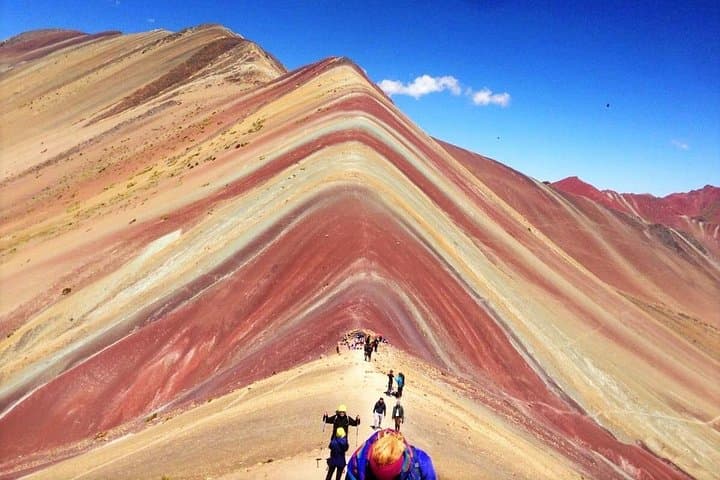
You step from the bus into air that is thin and cold, the Andes opening like a hard-bound book. A hush falls over the ridge as the first colors of Vinicunca—rust red, mustard yellow, slate gray—reveal themselves across a corrugated mountainside. Wind pushes against your jacket; condors wheel in the blue above. This is high-altitude walking where every breath counts and the landscape feels honest and unsoftened.
Verified experiences and guided adventures in the surrounding area.
Operated by Conde Travel · Cusco, Cusco
You step from the bus into air that is thin and cold, the Andes opening like a hard-bound book. A hush falls over the ridge as the first colors of Vinicunca—rust red, mustard yellow, slate gray—reveal themselves across a corrugated mountainside. Wind pushes against your jacket; condors wheel in the blue above. This is high-altitude walking where every breath counts and the landscape feels honest and unsoftened.
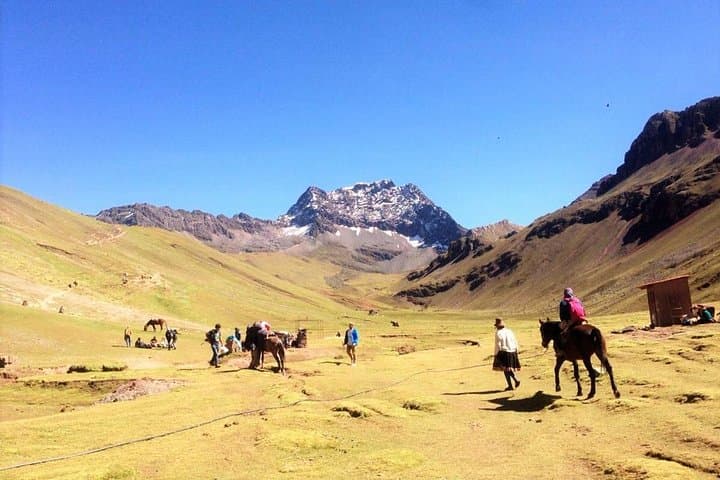
The rainbow bands are geological pages: layers of clay, sand, iron oxide and copper sulfate exposed by glacial retreat and erosion. The route threads pastoral Quechua communities—Hanchipata and Pitusiray—whose herding traditions persist, and passes views of Ausangate, an Andean glacier revered in local cosmology. Puka Punta and nearby lakes add quiet contrast to the colored slopes.
Practical guidance matters here. Tours collect early from Cusco and drive 2–3 hours to the trailhead; the uphill walk to the summit takes about 2–3 hours depending on acclimatization, with altitudes reaching ~5,200 m. Expect rocky, uneven trail and sudden weather shifts—sun, gusts, and sleet can alternate in one hour. Hydrate the day before, pace yourself on the ascent, and use layers to manage temperature swings.
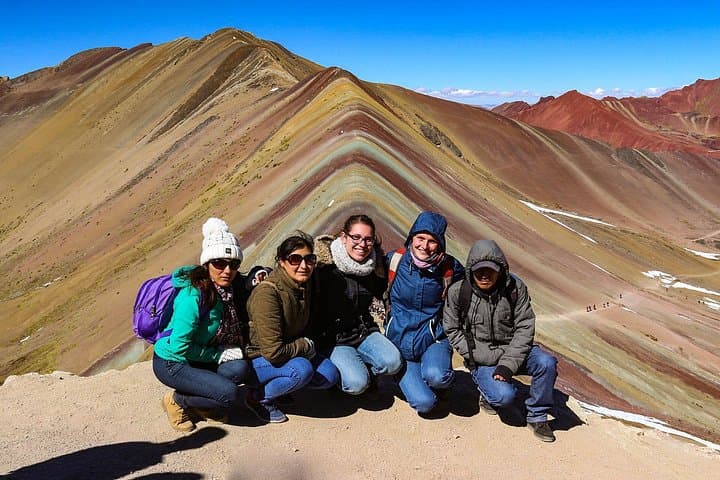
Photography windows are best mid-morning when light lifts the pigments, but cloud cover can flatten them—plan flexible timing. Respect the fragile puna: stay on trails, avoid picking plants, and pack out waste. For most visitors this is a demanding day hike more than a technical climb—rewarding for those prepared for altitude and sudden mountain weather.
The uphill hike typically takes 2–3 hours from the trailhead depending on pace and acclimatization, with about 1 hour at the viewpoint.
Local communities sometimes offer horses for part of the ascent or descent at extra cost; availability varies and may not be suitable for severe altitude issues.
The dry season (May–September) generally offers the clearest skies and best color contrast; rainy months can make pigments less distinct.
Facilities are limited — basic pit stops exist near trailheads or communities, so plan accordingly and pack hand sanitizer and tissue.
Conde Travel operates guided outdoor trips and adventures with an emphasis on safety, stewardship, and memorable experiences.

You step from the bus into air that is thin and cold, the Andes opening like a hard-bound book. A hush falls over the ridge as the first colors of Vinicunca—rust red, mustard yellow, slate gray—reveal themselves across a corrugated mountainside. Wind pushes against your jacket; condors wheel in the blue above. This is high-altitude walking where every breath counts and the landscape feels honest and unsoftened.
You step from the bus into air that is thin and cold, the Andes opening like a hard-bound book. A hush falls over the ridge as the first colors of Vinicunca—rust red, mustard yellow, slate gray—reveal themselves across a corrugated mountainside. Wind pushes against your jacket; condors wheel in the blue above. This is high-altitude walking where every breath counts and the landscape feels honest and unsoftened.
The rainbow bands are geological pages: layers of clay, sand, iron oxide and copper sulfate exposed by glacial retreat and erosion. The route threads pastoral Quechua communities—Hanchipata and Pitusiray—whose herding traditions persist, and passes views of Ausangate, an Andean glacier revered in local cosmology. Puka Punta and nearby lakes add quiet contrast to the colored slopes.
Practical guidance matters here. Tours collect early from Cusco and drive 2–3 hours to the trailhead; the uphill walk to the summit takes about 2–3 hours depending on acclimatization, with altitudes reaching ~5,200 m. Expect rocky, uneven trail and sudden weather shifts—sun, gusts, and sleet can alternate in one hour. Hydrate the day before, pace yourself on the ascent, and use layers to manage temperature swings.
Photography windows are best mid-morning when light lifts the pigments, but cloud cover can flatten them—plan flexible timing. Respect the fragile puna: stay on trails, avoid picking plants, and pack out waste. For most visitors this is a demanding day hike more than a technical climb—rewarding for those prepared for altitude and sudden mountain weather.