THE ADVENTURE COLLECTIVE® · Independent discovery and booking for outdoor travel

A private, customizable 10–12 hour loop from the Fuji Subaru 5th Station to Hakone’s steaming valleys and Lake Ashi. Expect ropeways, a lake cruise, historic villages, and up-close views of Mount Fuji — all arranged for your group.
A private, customizable 10–12 hour loop from the Fuji Subaru 5th Station to Hakone’s steaming valleys and Lake Ashi. Expect ropeways, a lake cruise, historic villages, and up-close views of Mount Fuji — all arranged for your group.
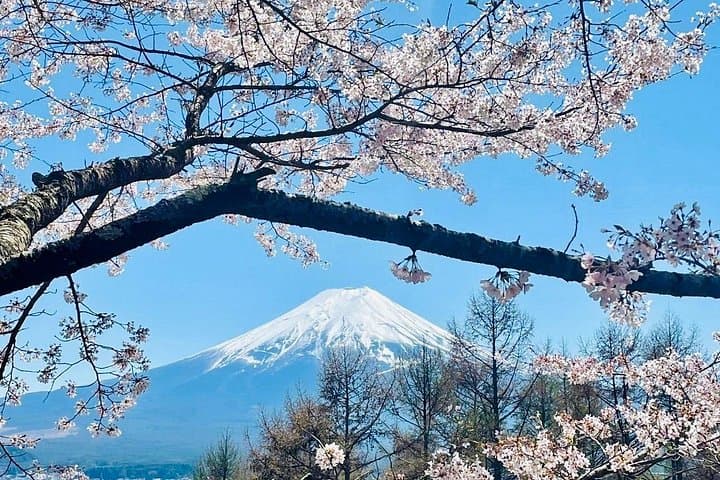
You step out of an air-conditioned minivan onto a ridge that feels like the edge of the world. The air is thin and cool at the Fuji Subaru 5th Station, and if the weather gives you grace, Mount Fuji rises above the clouds like a forceful old friend — snow-capped, compact, and impossible to ignore. Below, the tour’s driver-organizer becomes a quiet choreographer: a ropeway here, a short stroll there, a cruise across a lake that refuses to keep still.
Verified experiences and guided adventures in the surrounding area.
Operated by Sato · Fujinomiya, Shizuoka
You step out of an air-conditioned minivan onto a ridge that feels like the edge of the world. The air is thin and cool at the Fuji Subaru 5th Station, and if the weather gives you grace, Mount Fuji rises above the clouds like a forceful old friend — snow-capped, compact, and impossible to ignore. Below, the tour’s driver-organizer becomes a quiet choreographer: a ropeway here, a short stroll there, a cruise across a lake that refuses to keep still.
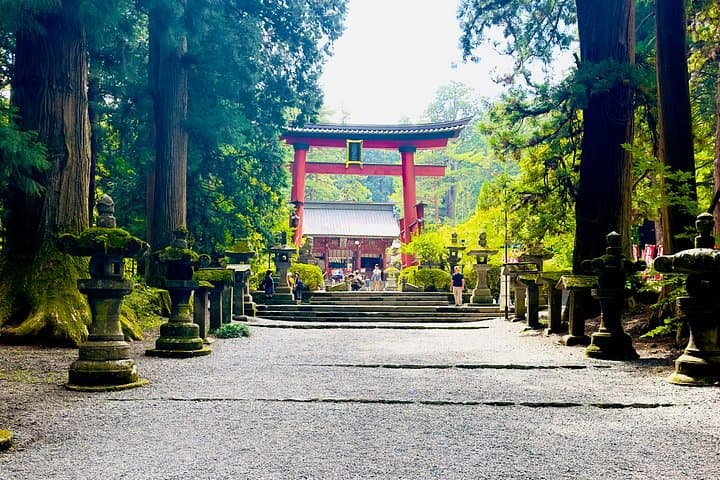
This is a customized 10–12 hour private loop through two of Japan’s most cinematic landscapes: the volcanic slopes of Mount Fuji and the cradled lakes and hot-spring valleys of Hakone. The route stitches together natural features formed by tectonics and cooling lava, plus human landmarks — Hakone Shrine’s torii at Lake Ashi and the reconstructed thatched houses of Saiko Iyashi Sato no Nemba — that tell the story of centuries of living with a mountain that both gives and takes.
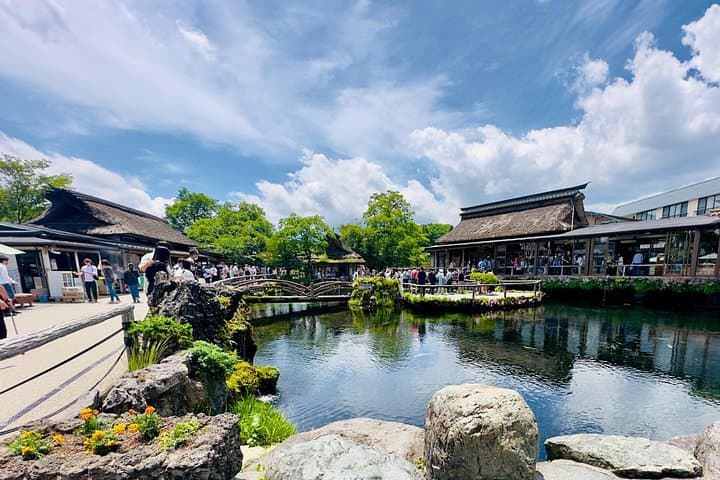
Geology is visible at every turn. Lava tubes and caves like Narusawa Ice Cave are chapters in Mount Fuji’s eruptive youth; Owakudani’s steaming vents speak of a landscape still breathing. Culturally, the region has been part pilgrimage, part palette for artists and poets; the eight ponds of Oshino Hakkai carry spiritual weight as clear feeders of life. Modern additions — ropeways, pleasure boats, and the open-air Gotemba outlets — frame the old with unmistakable convenience.
Practical edge: the tour is built to be flexible. You can linger at Lake Yamanakako for the “Sakasa-Fuji” reflection or swap shopping at Gotemba Outlets for extra time at Owakudani. Expect the highest elevation at the 5th Station (~2,300 m / 7,546 ft) — no serious climbing required, just acclimation to thinner air and changing temperatures. Surfaces are paved or well-maintained trails for most stops, but some sites (ice cave, boardwalks) are slippery when wet.
When to go: spring and autumn deliver crisp views and blossoms or foliage; winter offers clear skies but cold, and summer tends to bring haze and occasional rain. Bring layers, closed shoes with good grip, sunscreen, and a small daypack with water and snacks. The driver/guide handles parking, local navigation, and entry logistics, so you trade planning frustration for a tailored day of high-impact scenery.
At the end of the day you’ll have photos of a red torii reflected in a lake, a steam-scented valley, and a mountain that keeps its distances. More practically, you’ll know how to swap stops depending on weather, how to dress for 2,000+ meters without overpacking, and where to go next if this day leaves you wanting more.
This private tour runs approximately 10–12 hours with pickup and drop-off included; you’ll supply a pickup address at booking.
No — the itinerary visits the Fuji Subaru 5th Station (~2,300 m) for panoramic views but does not include a summit climb.
Many transit and sightseeing fees are covered in the tour, but confirm specific paid attractions or activity upgrades when booking or customizing the itinerary.
Yes — the tour is fully customizable; you can add or skip stops depending on group interests and timing.
Yes — the tour lists stroller and wheelchair accessibility for many areas, but some sites (caves, steep boardwalks) may be less accessible; discuss needs when booking.
The provider advises checking weather before your tour; they may cancel or adjust the itinerary for safety and visibility — cancel at least 24 hours in advance for a full refund per policy.
Sato operates guided outdoor trips and adventures with an emphasis on safety, stewardship, and memorable experiences.

You step out of an air-conditioned minivan onto a ridge that feels like the edge of the world. The air is thin and cool at the Fuji Subaru 5th Station, and if the weather gives you grace, Mount Fuji rises above the clouds like a forceful old friend — snow-capped, compact, and impossible to ignore. Below, the tour’s driver-organizer becomes a quiet choreographer: a ropeway here, a short stroll there, a cruise across a lake that refuses to keep still.
You step out of an air-conditioned minivan onto a ridge that feels like the edge of the world. The air is thin and cool at the Fuji Subaru 5th Station, and if the weather gives you grace, Mount Fuji rises above the clouds like a forceful old friend — snow-capped, compact, and impossible to ignore. Below, the tour’s driver-organizer becomes a quiet choreographer: a ropeway here, a short stroll there, a cruise across a lake that refuses to keep still.
This is a customized 10–12 hour private loop through two of Japan’s most cinematic landscapes: the volcanic slopes of Mount Fuji and the cradled lakes and hot-spring valleys of Hakone. The route stitches together natural features formed by tectonics and cooling lava, plus human landmarks — Hakone Shrine’s torii at Lake Ashi and the reconstructed thatched houses of Saiko Iyashi Sato no Nemba — that tell the story of centuries of living with a mountain that both gives and takes.
Geology is visible at every turn. Lava tubes and caves like Narusawa Ice Cave are chapters in Mount Fuji’s eruptive youth; Owakudani’s steaming vents speak of a landscape still breathing. Culturally, the region has been part pilgrimage, part palette for artists and poets; the eight ponds of Oshino Hakkai carry spiritual weight as clear feeders of life. Modern additions — ropeways, pleasure boats, and the open-air Gotemba outlets — frame the old with unmistakable convenience.
Practical edge: the tour is built to be flexible. You can linger at Lake Yamanakako for the “Sakasa-Fuji” reflection or swap shopping at Gotemba Outlets for extra time at Owakudani. Expect the highest elevation at the 5th Station (~2,300 m / 7,546 ft) — no serious climbing required, just acclimation to thinner air and changing temperatures. Surfaces are paved or well-maintained trails for most stops, but some sites (ice cave, boardwalks) are slippery when wet.
When to go: spring and autumn deliver crisp views and blossoms or foliage; winter offers clear skies but cold, and summer tends to bring haze and occasional rain. Bring layers, closed shoes with good grip, sunscreen, and a small daypack with water and snacks. The driver/guide handles parking, local navigation, and entry logistics, so you trade planning frustration for a tailored day of high-impact scenery.
At the end of the day you’ll have photos of a red torii reflected in a lake, a steam-scented valley, and a mountain that keeps its distances. More practically, you’ll know how to swap stops depending on weather, how to dress for 2,000+ meters without overpacking, and where to go next if this day leaves you wanting more.