THE ADVENTURE COLLECTIVE® · Independent discovery and booking for outdoor travel

Catch Angkor Wat’s first light, then move through Bayon’s face towers and Ta Prohm’s tree-clad ruins on a private full-day tour. Expect guided interpretation, short temple walks on uneven stone, and a dawn-to-evening itinerary suited to first-time and repeat visitors alike.
Catch Angkor Wat’s first light, then move through Bayon’s face towers and Ta Prohm’s tree-clad ruins on a private full-day tour. Expect guided interpretation, short temple walks on uneven stone, and a dawn-to-evening itinerary suited to first-time and repeat visitors alike.
The sky is still ink when your guide meets you at 4:40 a.m., a single motorbike idling under a lantern. You cross the causeway while the moat breathes mist; Angkor Wat opens like a vast stone eye as first light slices the towers. The stones are cool beneath your hands and the carved devas seem to wake as the sun edges into bas-relief.
Verified experiences and guided adventures in the surrounding area.
Operated by Angkor Friendly tour · Siem Reap, Siem Reap
The sky is still ink when your guide meets you at 4:40 a.m., a single motorbike idling under a lantern. You cross the causeway while the moat breathes mist; Angkor Wat opens like a vast stone eye as first light slices the towers. The stones are cool beneath your hands and the carved devas seem to wake as the sun edges into bas-relief.
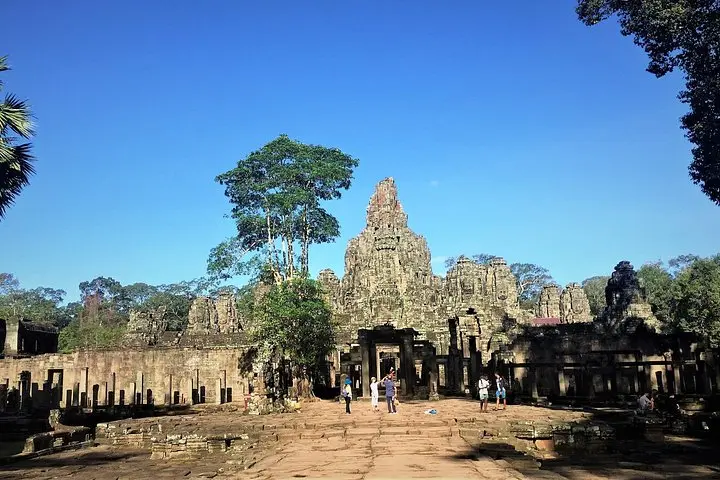
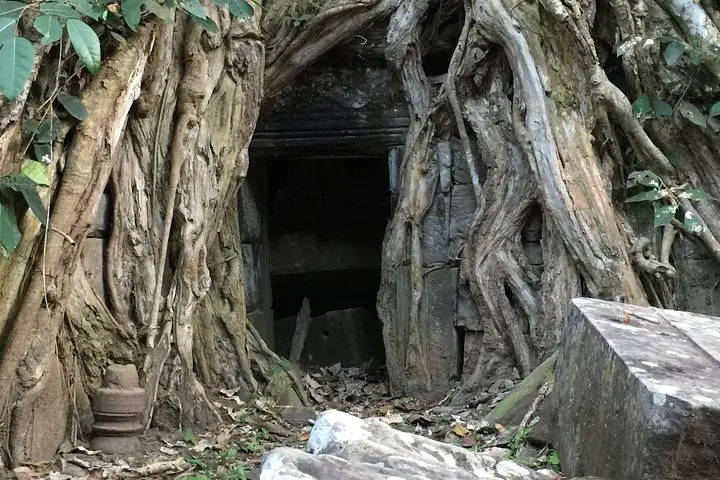
This full-day loop moves from the classical symmetry of Angkor Wat—built in the early 12th century for Suryavarman II—to the crowded face towers of Bayon at the center of Angkor Thom, a late 12th–13th century project of Jayavarman VII. Geology here is flat alluvium over sandstone; laterite and brick underpin smaller temple cores. Ta Prohm’s strangling figs and Ta Nei’s quiet galleries reveal the jungle’s slow negotiation with stone; Kravan’s brickwork shows different masonry and period detail.
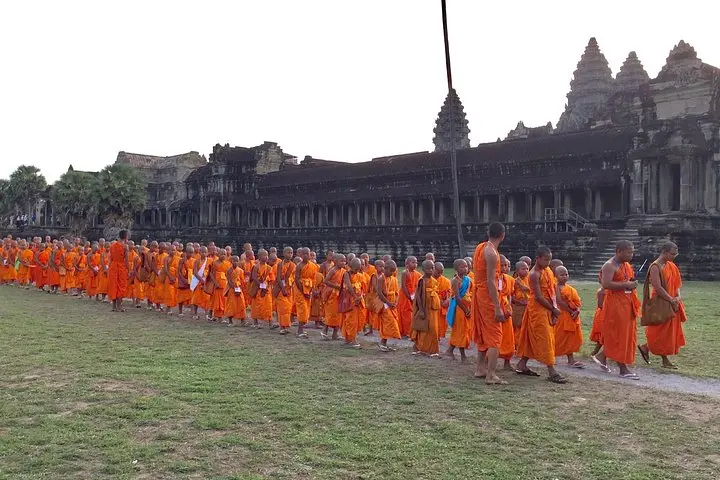
Expect a mix of short walks on uneven, sometimes steep temple stairs and easier stretches along causeways. Timing matters: sunrise and midday differ for lighting and crowds. Local culture spills into the route—vendors at Srah Srang, monks in orange at smaller shrines—and guides will point out iconography and conservation rules enforced by the APSARA Authority.
Practical edge: bring water and mosquito repellent, wear shoulders- and knees-covering clothing for temple etiquette, and plan rest after the dawn stretch; the tour’s motorbike transfers reduce walking between sites but you’ll be on your feet for hours. If you want quieter corners, ask your guide to schedule Ta Nei or Kravan during late morning when the larger circuits clear.
Yes—entering the Angkor Archaeological Park requires an Angkor Pass purchased at the ticket office; bring your passport for purchase and validation.
Shoulders must be covered and knees covered by shorts or skirts; sleeveless tops and short shorts can be refused entry to inner sanctums.
Sunrise at Angkor Wat is popular; a private guide can route you to quieter vantage points and adjust timing to minimize crowds.
This tour includes pickup/drop-off, a cold water bottle, and motorbike transfer for the solo traveler—confirm details with your operator.
Angkor Friendly tour operates guided outdoor trips and adventures with an emphasis on safety, stewardship, and memorable experiences.
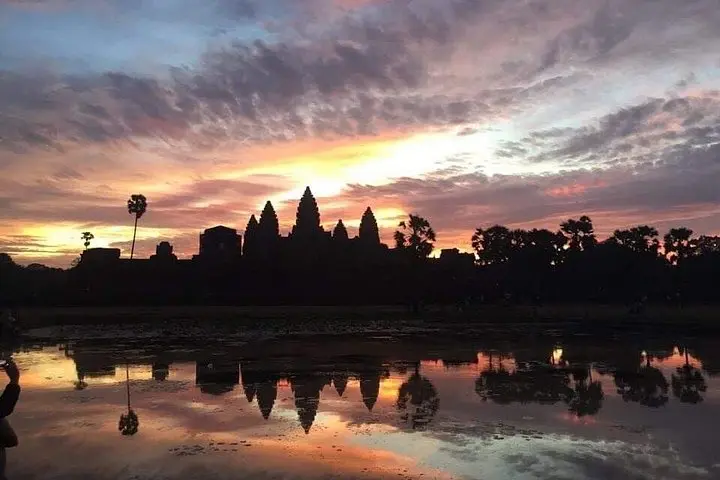
The sky is still ink when your guide meets you at 4:40 a.m., a single motorbike idling under a lantern. You cross the causeway while the moat breathes mist; Angkor Wat opens like a vast stone eye as first light slices the towers. The stones are cool beneath your hands and the carved devas seem to wake as the sun edges into bas-relief.
The sky is still ink when your guide meets you at 4:40 a.m., a single motorbike idling under a lantern. You cross the causeway while the moat breathes mist; Angkor Wat opens like a vast stone eye as first light slices the towers. The stones are cool beneath your hands and the carved devas seem to wake as the sun edges into bas-relief.
This full-day loop moves from the classical symmetry of Angkor Wat—built in the early 12th century for Suryavarman II—to the crowded face towers of Bayon at the center of Angkor Thom, a late 12th–13th century project of Jayavarman VII. Geology here is flat alluvium over sandstone; laterite and brick underpin smaller temple cores. Ta Prohm’s strangling figs and Ta Nei’s quiet galleries reveal the jungle’s slow negotiation with stone; Kravan’s brickwork shows different masonry and period detail.
Expect a mix of short walks on uneven, sometimes steep temple stairs and easier stretches along causeways. Timing matters: sunrise and midday differ for lighting and crowds. Local culture spills into the route—vendors at Srah Srang, monks in orange at smaller shrines—and guides will point out iconography and conservation rules enforced by the APSARA Authority.
Practical edge: bring water and mosquito repellent, wear shoulders- and knees-covering clothing for temple etiquette, and plan rest after the dawn stretch; the tour’s motorbike transfers reduce walking between sites but you’ll be on your feet for hours. If you want quieter corners, ask your guide to schedule Ta Nei or Kravan during late morning when the larger circuits clear.