THE ADVENTURE COLLECTIVE® · Independent discovery and booking for outdoor travel

Perched on Bonnet à l’Evêque, Citadelle Laferrière is a massive early-19th-century fortress that rewards effort with dramatic coastal views and tangible history. This practical guide explains what to expect, how to prepare, and key local insights before you go.
Perched on Bonnet à l’Evêque, Citadelle Laferrière is a massive early-19th-century fortress that rewards effort with dramatic coastal views and tangible history. This practical guide explains what to expect, how to prepare, and key local insights before you go.
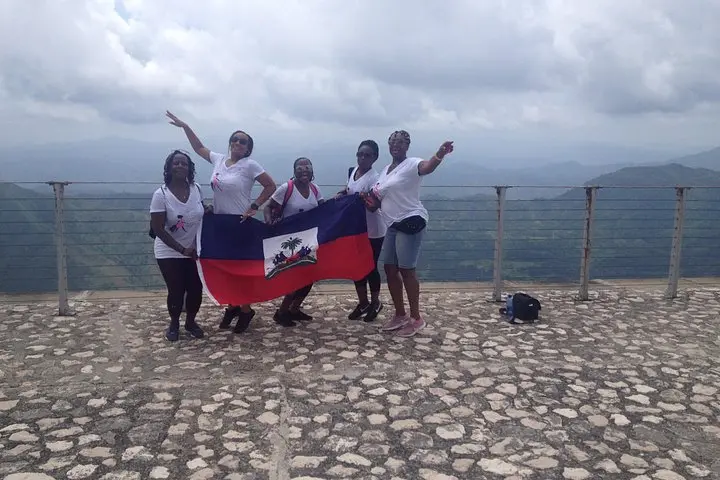
The wind climbs with you, flattening your hat against the exposed stone as the Citadelle appears above the ridge—massive, angular, and unblinking. From the approach road at Milot the fortress dominates the skyline, its ramparts cutting into the sky while the north coast and Cap-Haïtien spill out below like a map.
Verified experiences and guided adventures in the surrounding area.
Operated by Eagle Adventures and Tours · Milot, Nord
The wind climbs with you, flattening your hat against the exposed stone as the Citadelle appears above the ridge—massive, angular, and unblinking. From the approach road at Milot the fortress dominates the skyline, its ramparts cutting into the sky while the north coast and Cap-Haïtien spill out below like a map.
Built in the early 19th century by Henri Christophe after Haiti’s revolution, Citadelle Laferrière stands on Bonnet à l’Evêque in the Massif du Nord. Its thick masonry, angled bastions and deep cisterns were engineered to resist cannon fire and sustain long sieges; today those same features offer tangible lessons in military architecture and early republican ambition. The stone is weathered, sometimes sharp underfoot, and the fortress opens to three sides of sweeping views that reveal both geology—folded limestone ridges—and the human geography of northern Haiti.
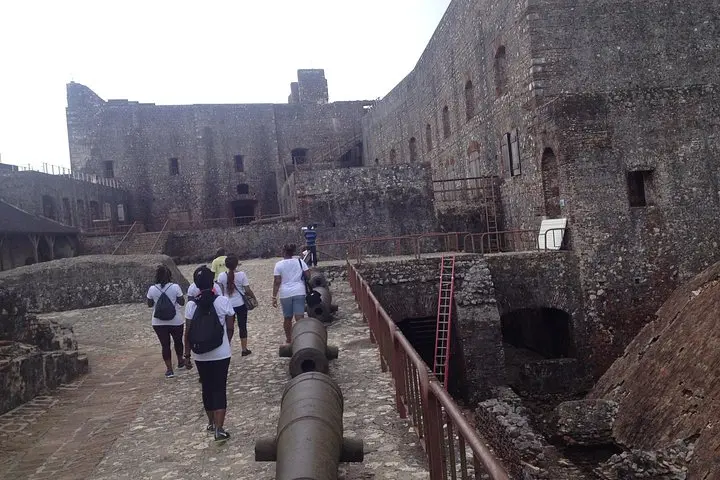
Expect uneven stairways, broad parapets, cannon platforms, store rooms and open courtyards that once held food and water for thousands. Local culture is visible in Milot’s markets and the nearby ruins of Sans-Souci Palace; vendors often set up near the entrance and local guides are available to explain names, dates and stories.
Practicalities: tickets are mobile-friendly and admission grants access to most parts of the site; moderate fitness is required—many climbs and stone steps await. Wear sturdy shoes, bring 1–2 liters of water, sun protection, and modest attire (smart casual requested). Allow 2–4 hours for a thorough visit and plan mornings or late afternoons to avoid the hottest sun and the busiest tour windows.
Plan 2–4 hours to explore the main fortifications, take photos, and walk some of the surrounding viewpoints; longer if combining with Sans-Souci Palace.
Yes—local guides and organized tours operate from Milot and Cap-Haïtien; tickets sometimes cover admission only, so confirm if guide services are included.
No—the site includes steep, narrow, and uneven stone steps; it is not wheelchair accessible and is not recommended for those with serious mobility issues.
Mobile and paper tickets are accepted; admission typically grants access to most parts of the fortress, but follow any posted closures for safety or conservation.
Eagle Adventures and Tours operates guided outdoor trips and adventures with an emphasis on safety, stewardship, and memorable experiences.
The wind climbs with you, flattening your hat against the exposed stone as the Citadelle appears above the ridge—massive, angular, and unblinking. From the approach road at Milot the fortress dominates the skyline, its ramparts cutting into the sky while the north coast and Cap-Haïtien spill out below like a map.
The wind climbs with you, flattening your hat against the exposed stone as the Citadelle appears above the ridge—massive, angular, and unblinking. From the approach road at Milot the fortress dominates the skyline, its ramparts cutting into the sky while the north coast and Cap-Haïtien spill out below like a map.
Built in the early 19th century by Henri Christophe after Haiti’s revolution, Citadelle Laferrière stands on Bonnet à l’Evêque in the Massif du Nord. Its thick masonry, angled bastions and deep cisterns were engineered to resist cannon fire and sustain long sieges; today those same features offer tangible lessons in military architecture and early republican ambition. The stone is weathered, sometimes sharp underfoot, and the fortress opens to three sides of sweeping views that reveal both geology—folded limestone ridges—and the human geography of northern Haiti.
Expect uneven stairways, broad parapets, cannon platforms, store rooms and open courtyards that once held food and water for thousands. Local culture is visible in Milot’s markets and the nearby ruins of Sans-Souci Palace; vendors often set up near the entrance and local guides are available to explain names, dates and stories.
Practicalities: tickets are mobile-friendly and admission grants access to most parts of the site; moderate fitness is required—many climbs and stone steps await. Wear sturdy shoes, bring 1–2 liters of water, sun protection, and modest attire (smart casual requested). Allow 2–4 hours for a thorough visit and plan mornings or late afternoons to avoid the hottest sun and the busiest tour windows.