THE ADVENTURE COLLECTIVE® · Independent discovery and booking for outdoor travel

Drive east from Ulaanbaatar into Terelj National Park to stand beneath the world's largest equestrian statue of Chinggis Khaan, then hike the granite ribs of Turtle Rock. This compact day tour mixes national history, steppe geology and short, scenic walks.
Drive east from Ulaanbaatar into Terelj National Park to stand beneath the world's largest equestrian statue of Chinggis Khaan, then hike the granite ribs of Turtle Rock. This compact day tour mixes national history, steppe geology and short, scenic walks.
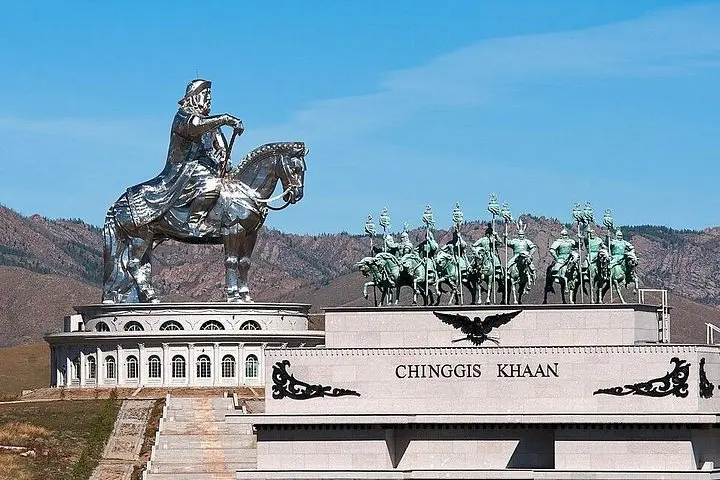
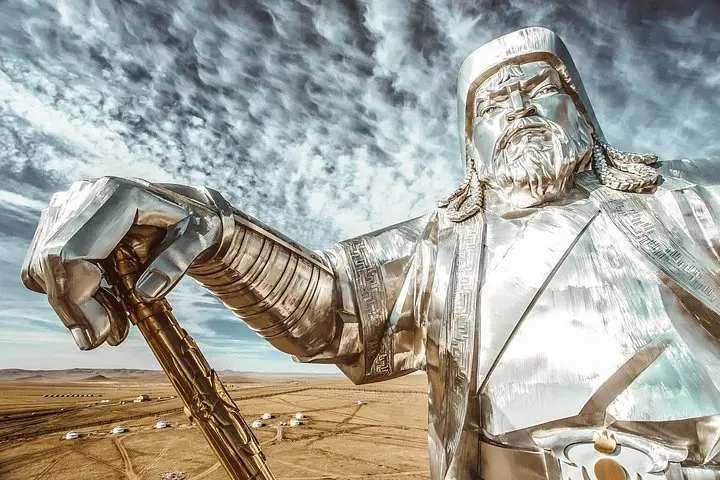
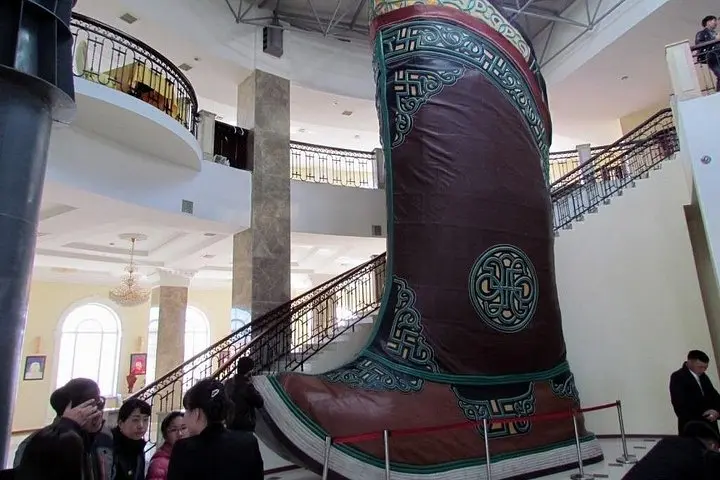
You step off the highway into a broad, wind-swept plain where metal and stone rise like a modern monument to Mongolia’s past: the 40‑meter equestrian statue of Chinggis Khaan looms above the steppe, its polished flank catching the sun. From the viewing platform on the horse’s head the steppe opens in all directions; far below, the museum at the statue’s base lays out Bronze Age artifacts, nomadic weaponry and a replica 13th‑century ger that frames the empire’s human scale.
Verified experiences and guided adventures in the surrounding area.
Operated by Turu · Ulaanbaatar, Töv Province
You step off the highway into a broad, wind-swept plain where metal and stone rise like a modern monument to Mongolia’s past: the 40‑meter equestrian statue of Chinggis Khaan looms above the steppe, its polished flank catching the sun. From the viewing platform on the horse’s head the steppe opens in all directions; far below, the museum at the statue’s base lays out Bronze Age artifacts, nomadic weaponry and a replica 13th‑century ger that frames the empire’s human scale.
A short drive farther into Terelj National Park brings you to Melkhii Khad—Turtle Rock—a 24‑meter granite outcrop shaped by millennia of freeze‑thaw and wind. The rock’s contours have encouraged short, steep hikes and local legends of hidden treasure; shepherds and summer gers still dot the slopes, and eagles glide the thermals.
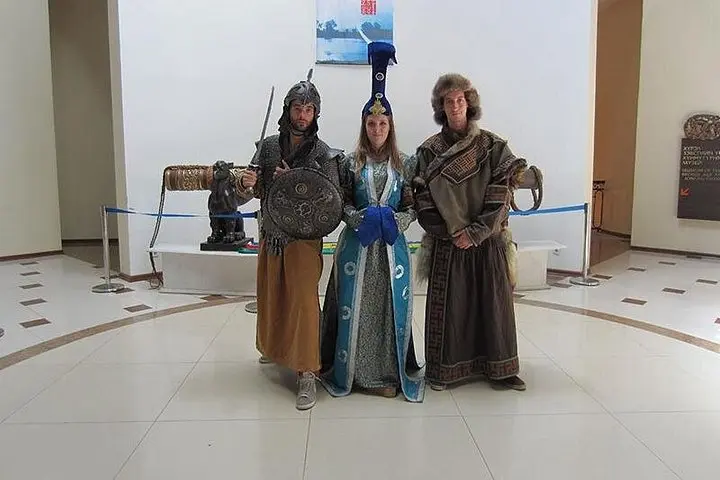
Geology here is straightforward: granite batholiths exposed by uplift and erosion, carved into blocks and tors. Culturally, the site ties modern national identity to a pastoral past—costume displays and eagle‑handling experiences are common but staged with clear links to Mongolian tradition.
Practical notes: the round trip from Ulaanbaatar is roughly 70–90 km depending on route and stops, and the day takes about 5–7 hours. Expect uneven trails at Turtle Rock with short elevation gains—good footwear, sun protection and water are musts. Visit in the morning for softer light at the statue and afternoon for warmer tones at Turtle Rock; travel in a private vehicle with a guide for the smoothest logistics and context.
The Chinggis Khaan statue complex is about 46 km east of central Ulaanbaatar by road; total driving for the tour with stops is typically 70–90 km round trip.
Yes—an elevator in the statue’s base takes visitors up to a viewing platform on the horse’s head for panoramic views (admission usually included on guided tours).
No technical climbing is required; expect short, steep stretches and rocky footing—use caution and worn shoes, but it’s suitable for most moderately fit visitors.
Many tours include staged eagle‑handling and costume rentals for photos, often for an additional fee—ask your guide about availability and any extra costs.
Turu operates guided outdoor trips and adventures with an emphasis on safety, stewardship, and memorable experiences.
You step off the highway into a broad, wind-swept plain where metal and stone rise like a modern monument to Mongolia’s past: the 40‑meter equestrian statue of Chinggis Khaan looms above the steppe, its polished flank catching the sun. From the viewing platform on the horse’s head the steppe opens in all directions; far below, the museum at the statue’s base lays out Bronze Age artifacts, nomadic weaponry and a replica 13th‑century ger that frames the empire’s human scale.
You step off the highway into a broad, wind-swept plain where metal and stone rise like a modern monument to Mongolia’s past: the 40‑meter equestrian statue of Chinggis Khaan looms above the steppe, its polished flank catching the sun. From the viewing platform on the horse’s head the steppe opens in all directions; far below, the museum at the statue’s base lays out Bronze Age artifacts, nomadic weaponry and a replica 13th‑century ger that frames the empire’s human scale.
A short drive farther into Terelj National Park brings you to Melkhii Khad—Turtle Rock—a 24‑meter granite outcrop shaped by millennia of freeze‑thaw and wind. The rock’s contours have encouraged short, steep hikes and local legends of hidden treasure; shepherds and summer gers still dot the slopes, and eagles glide the thermals.
Geology here is straightforward: granite batholiths exposed by uplift and erosion, carved into blocks and tors. Culturally, the site ties modern national identity to a pastoral past—costume displays and eagle‑handling experiences are common but staged with clear links to Mongolian tradition.
Practical notes: the round trip from Ulaanbaatar is roughly 70–90 km depending on route and stops, and the day takes about 5–7 hours. Expect uneven trails at Turtle Rock with short elevation gains—good footwear, sun protection and water are musts. Visit in the morning for softer light at the statue and afternoon for warmer tones at Turtle Rock; travel in a private vehicle with a guide for the smoothest logistics and context.