THE ADVENTURE COLLECTIVE® · Independent discovery and booking for outdoor travel

A deep-dive into Hawaiian and Pacific culture, the Bishop Museum pairs gallery-based storytelling with hands-on science and planetarium shows. Plan 1–4 hours to see Hawaiian Hall, Pacific Hall, live lava demonstrations, and the planetarium.
A deep-dive into Hawaiian and Pacific culture, the Bishop Museum pairs gallery-based storytelling with hands-on science and planetarium shows. Plan 1–4 hours to see Hawaiian Hall, Pacific Hall, live lava demonstrations, and the planetarium.
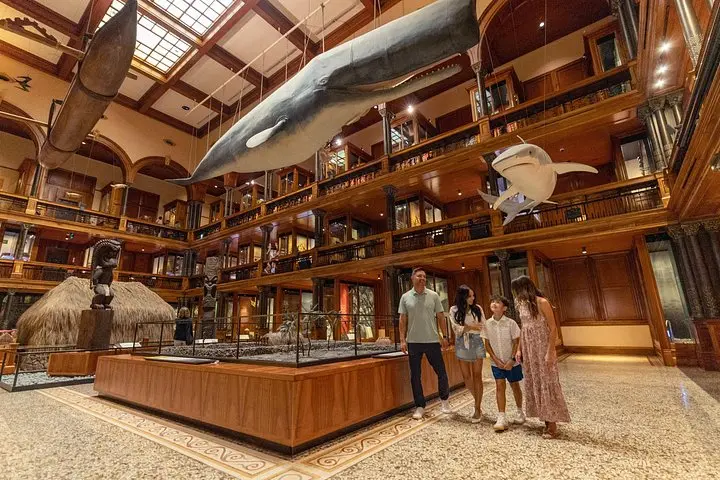
You step from Honolulu traffic into a cool, quiet hall where feathered ʻahuʻula and carved wooden gods hold still as if listening. Light falls across glass cases of featherwork and navigational charts; a planetarium dome waits to reel the stars that once guided canoes across the Pacific. The Bishop Museum presents Hawaiian history not as static display but as a set of actions—voyages, eruptions, and cultural exchanges—that shaped islands and people.
Verified experiences and guided adventures in the surrounding area.
Operated by Bishop Museum · Honolulu, Hawaii
You step from Honolulu traffic into a cool, quiet hall where feathered ʻahuʻula and carved wooden gods hold still as if listening. Light falls across glass cases of featherwork and navigational charts; a planetarium dome waits to reel the stars that once guided canoes across the Pacific. The Bishop Museum presents Hawaiian history not as static display but as a set of actions—voyages, eruptions, and cultural exchanges—that shaped islands and people.
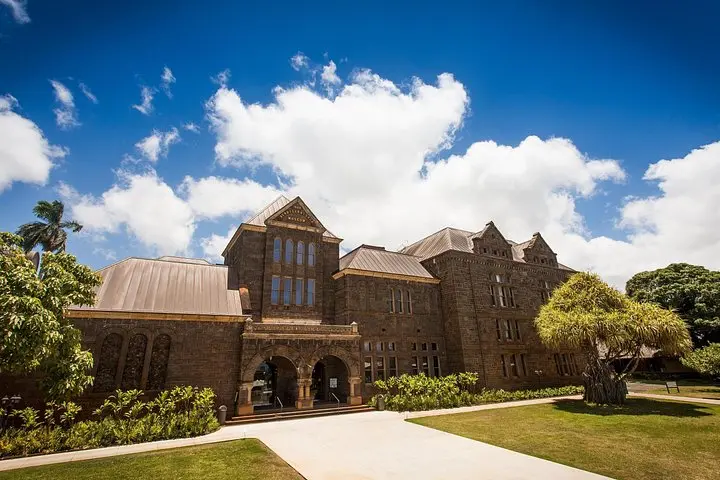
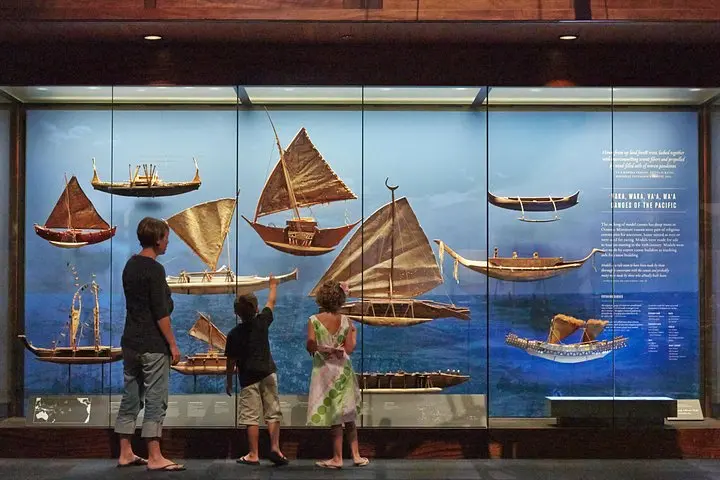
Founded in the late 19th century by Charles Reed Bishop to preserve Hawaiian artifacts, the museum sits on grounds steeped in both colonial history and native resurgence. Exhibits range from Hawaiian Hall’s genealogies and feather-work to Pacific Hall’s migration maps; the Science Adventure Center explains volcanic geology, and the planetarium connects Polynesian wayfinding to modern astronomy. Live lava demonstrations and interactive geology displays make the islands’ fiery origins tangible—molten rock given a safe, theatrical voice.
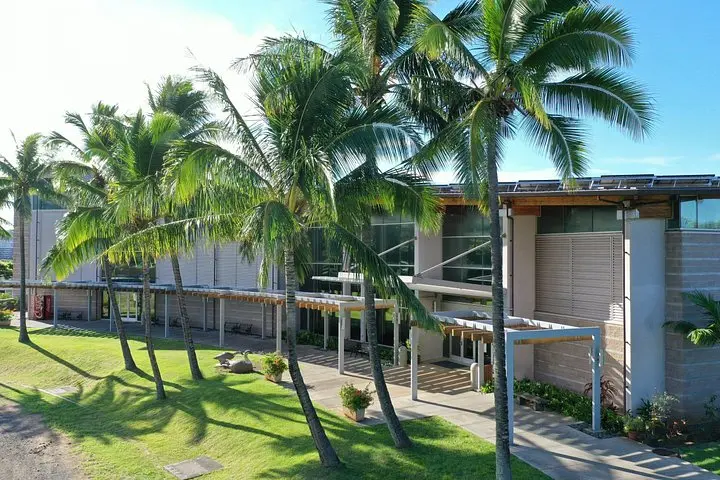
Practically: plan 1–4 hours depending on exhibits and planetarium shows. Mobile tickets provide direct entry; the site is wheelchair- and stroller-accessible, with public transit nearby. Mornings are quieter for focused gallery time; afternoons suit families when planetarium shows run more frequently. Wear comfortable shoes for gallery floors and outdoor pathways, bring a refillable bottle, and allow extra time if special exhibits are showing. Respect display guidelines—photography and touching rules vary by gallery—and use museum resources to learn proper protocols for cultural artifacts. A visit here primes any Oʻahu itinerary, grounding beach days in the larger story of the islands and the Pacific.
Most visitors spend 1–4 hours; allow more time if you plan to see multiple planetarium shows or special exhibits.
The museum typically offers reduced rates for kamaʻāina (residents) and children—check the official ticketing page for current pricing.
Yes—galleries and facilities are wheelchair- and stroller-accessible, and staff can assist with accessibility needs.
Eating is generally restricted to designated areas or the museum café—check signage and staff guidance to avoid food near exhibits.
Bishop Museum operates guided outdoor trips and adventures with an emphasis on safety, stewardship, and memorable experiences.
You step from Honolulu traffic into a cool, quiet hall where feathered ʻahuʻula and carved wooden gods hold still as if listening. Light falls across glass cases of featherwork and navigational charts; a planetarium dome waits to reel the stars that once guided canoes across the Pacific. The Bishop Museum presents Hawaiian history not as static display but as a set of actions—voyages, eruptions, and cultural exchanges—that shaped islands and people.
You step from Honolulu traffic into a cool, quiet hall where feathered ʻahuʻula and carved wooden gods hold still as if listening. Light falls across glass cases of featherwork and navigational charts; a planetarium dome waits to reel the stars that once guided canoes across the Pacific. The Bishop Museum presents Hawaiian history not as static display but as a set of actions—voyages, eruptions, and cultural exchanges—that shaped islands and people.
Founded in the late 19th century by Charles Reed Bishop to preserve Hawaiian artifacts, the museum sits on grounds steeped in both colonial history and native resurgence. Exhibits range from Hawaiian Hall’s genealogies and feather-work to Pacific Hall’s migration maps; the Science Adventure Center explains volcanic geology, and the planetarium connects Polynesian wayfinding to modern astronomy. Live lava demonstrations and interactive geology displays make the islands’ fiery origins tangible—molten rock given a safe, theatrical voice.
Practically: plan 1–4 hours depending on exhibits and planetarium shows. Mobile tickets provide direct entry; the site is wheelchair- and stroller-accessible, with public transit nearby. Mornings are quieter for focused gallery time; afternoons suit families when planetarium shows run more frequently. Wear comfortable shoes for gallery floors and outdoor pathways, bring a refillable bottle, and allow extra time if special exhibits are showing. Respect display guidelines—photography and touching rules vary by gallery—and use museum resources to learn proper protocols for cultural artifacts. A visit here primes any Oʻahu itinerary, grounding beach days in the larger story of the islands and the Pacific.