THE ADVENTURE COLLECTIVE® · Independent discovery and booking for outdoor travel
Spend a half-day walking the shaded paths of Lola Ya Bonobo, the world’s only sanctuary for orphaned bonobos. This guided visit pairs close, regulated viewing of social bonobo groups with hands-on conservation education.
Spend a half-day walking the shaded paths of Lola Ya Bonobo, the world’s only sanctuary for orphaned bonobos. This guided visit pairs close, regulated viewing of social bonobo groups with hands-on conservation education.
Walk through a clearing where calls and rustling leaves feel like conversation—here the bonobos move with curious confidence, approaching their enclosure boundaries and studying visitors with humanlike intent.
Verified experiences and guided adventures in the surrounding area.
Operated by Opatrip.com DRC · Kinshasa, Kinshasa
Walk through a clearing where calls and rustling leaves feel like conversation—here the bonobos move with curious confidence, approaching their enclosure boundaries and studying visitors with humanlike intent.
Lola Ya Bonobo sits just outside Kinshasa and is the world’s only sanctuary dedicated to orphaned bonobos, the great apes endemic to the Democratic Republic of the Congo. The reserve recreates sections of lowland rainforest habitat so rescued families can live in social groups that mimic patterns seen in the wild. Guides explain how decades of habitat loss and hunting pushed conservationists to create this protected refuge and to run rehabilitation programs that combine care, research, and community outreach.
Geologically the area is flat riverine plain—deep, silty soils and a hot, humid climate that favors dense secondary forest and broadleaf canopy. Culturally, the sanctuary connects urban Kinshasa to Congo’s northern forests: many staff are Congolese biologists and educators who use the site for environmental education and local employment.
Practical guidance: tours are typically half-day, led by a professional guide, and involve short, easy walks on dirt paths that can get muddy after rain. Wear sturdy shoes, bring insect repellent and sun protection, and carry water. Photography is allowed but keep distance and follow the guide’s instructions; do not feed or touch animals.
A visit to Lola Ya Bonobo is an intimate, educational encounter—part wildlife observation, part conservation lesson—that rewards respectful attention and quiet curiosity.
The experience is approximately five hours total, typically a half-day visit including transport and a guided sanctuary tour.
Children are allowed but must remain with guardians at all times; age guidelines may vary so confirm when booking.
Yes—non-flash photography is generally permitted; follow guide instructions and avoid using lights or getting too close.
Yes—private transport is usually provided from Kinshasa; public transport options exist nearby but pickup can be arranged depending on the tour.
Opatrip.com DRC operates guided outdoor trips and adventures with an emphasis on safety, stewardship, and memorable experiences.
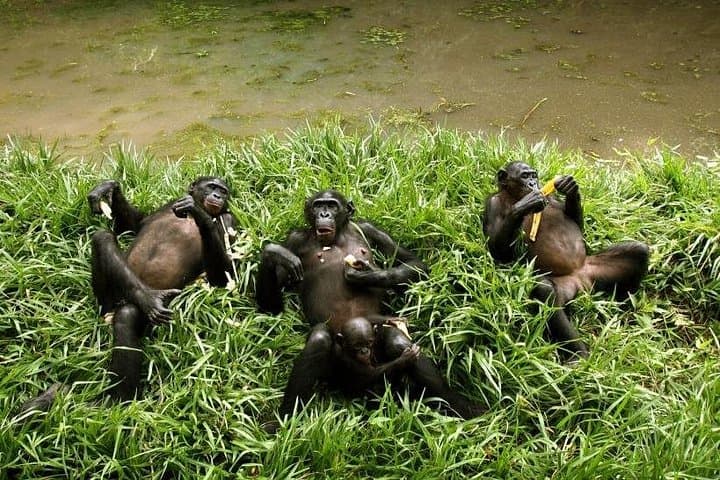
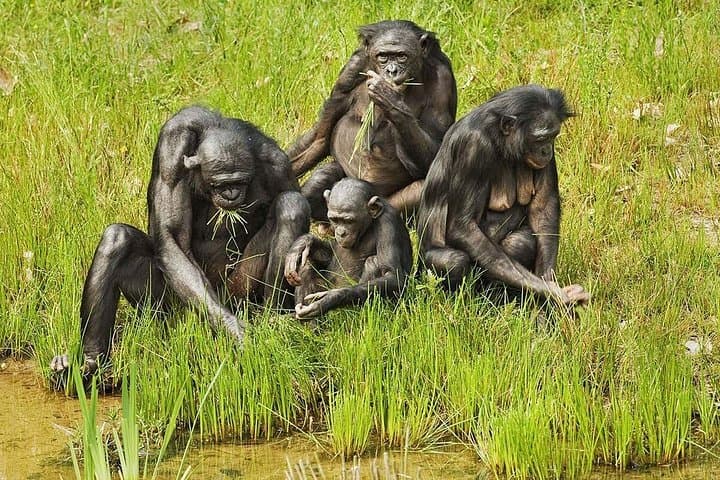
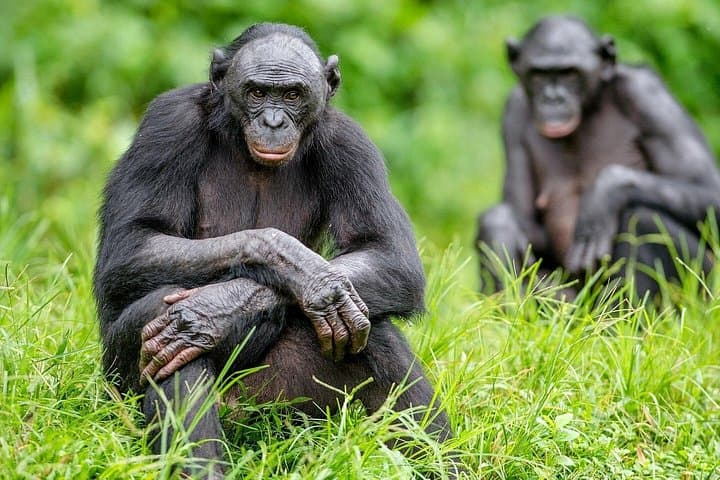
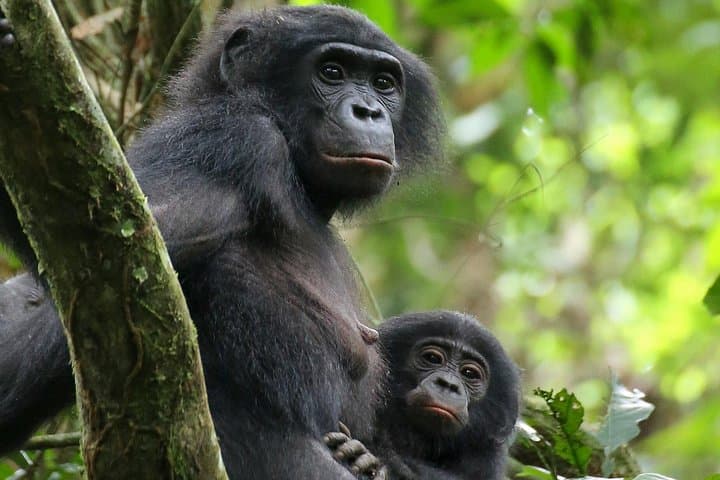
Walk through a clearing where calls and rustling leaves feel like conversation—here the bonobos move with curious confidence, approaching their enclosure boundaries and studying visitors with humanlike intent.
Walk through a clearing where calls and rustling leaves feel like conversation—here the bonobos move with curious confidence, approaching their enclosure boundaries and studying visitors with humanlike intent.
Lola Ya Bonobo sits just outside Kinshasa and is the world’s only sanctuary dedicated to orphaned bonobos, the great apes endemic to the Democratic Republic of the Congo. The reserve recreates sections of lowland rainforest habitat so rescued families can live in social groups that mimic patterns seen in the wild. Guides explain how decades of habitat loss and hunting pushed conservationists to create this protected refuge and to run rehabilitation programs that combine care, research, and community outreach.
Geologically the area is flat riverine plain—deep, silty soils and a hot, humid climate that favors dense secondary forest and broadleaf canopy. Culturally, the sanctuary connects urban Kinshasa to Congo’s northern forests: many staff are Congolese biologists and educators who use the site for environmental education and local employment.
Practical guidance: tours are typically half-day, led by a professional guide, and involve short, easy walks on dirt paths that can get muddy after rain. Wear sturdy shoes, bring insect repellent and sun protection, and carry water. Photography is allowed but keep distance and follow the guide’s instructions; do not feed or touch animals.
A visit to Lola Ya Bonobo is an intimate, educational encounter—part wildlife observation, part conservation lesson—that rewards respectful attention and quiet curiosity.
