THE ADVENTURE COLLECTIVE® · Independent discovery and booking for outdoor travel

Experience a focused, two-hour journey through history and human rights at the Dallas Holocaust and Human Rights Museum. This all-day ticket offers access to immersive exhibits, survivor testimony technology, and rotating special exhibitions that connect past atrocities to present challenges.
Experience a focused, two-hour journey through history and human rights at the Dallas Holocaust and Human Rights Museum. This all-day ticket offers access to immersive exhibits, survivor testimony technology, and rotating special exhibitions that connect past atrocities to present challenges.
You step off the sidewalk into a quiet, deliberately lit space where artifacts and voices occupy the same room. The Dallas Holocaust and Human Rights Museum guides visitors through three interconnected wings—Holocaust/Shoah, Human Rights, and Pivot to America—each designed to move you from witness to reflection.
Verified experiences and guided adventures in the surrounding area.
Operated by Dallas Holocaust and Human Rights Museum · Dallas, Texas
You step off the sidewalk into a quiet, deliberately lit space where artifacts and voices occupy the same room. The Dallas Holocaust and Human Rights Museum guides visitors through three interconnected wings—Holocaust/Shoah, Human Rights, and Pivot to America—each designed to move you from witness to reflection.
The museum anchors itself in history: survivor testimonies, original artifacts, and timelines that trace events from World War II to contemporary human-rights struggles. Geology and place peek through in subtle ways—the museum sits within downtown Dallas above the Trinity River floodplain, where urban development and civic memory meet; the city’s materials and scale frame how the exhibitions are experienced. Culturally, the museum is part of a growing civic conversation in Dallas about memory, responsibility, and public education.
Plan for an emotionally focused two hours. Start with the Holocaust/Shoah Wing to follow personal stories, then move through the Human Rights Wing to see contemporary connections; save Dimensions in Testimony—an interactive survivor biography—for later in your visit when you can sit and engage.
Practical guidance: tickets are mobile-friendly, entry is wheelchair accessible, and rotating special exhibits expand the core narrative. The content is intense—take breaks in the lobby, use the film "Voices of Courage" to contextualize material, and allow time afterward to process. Visit midweek mornings to avoid crowds, bring water and comfortable shoes for walking the galleries, and respect signage around photography and interactive displays.
The standard visit is about two hours, though visitors who engage deeply with exhibits or the film may spend longer.
Yes—public areas, galleries, and transportation options listed are wheelchair accessible; contact guest services for specific needs.
Dimensions in Testimony is an interactive experience that allows visitors to ask pre-recorded questions to a survivor’s archived responses, creating an educational dialogue.
Photography policies can vary by exhibit; follow posted signage in galleries and ask staff if unsure—some special exhibitions may restrict photos.
Dallas Holocaust and Human Rights Museum operates guided outdoor trips and adventures with an emphasis on safety, stewardship, and memorable experiences.
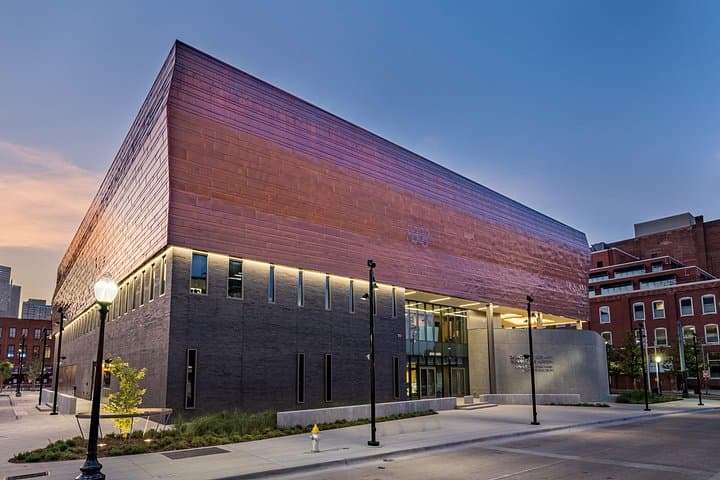
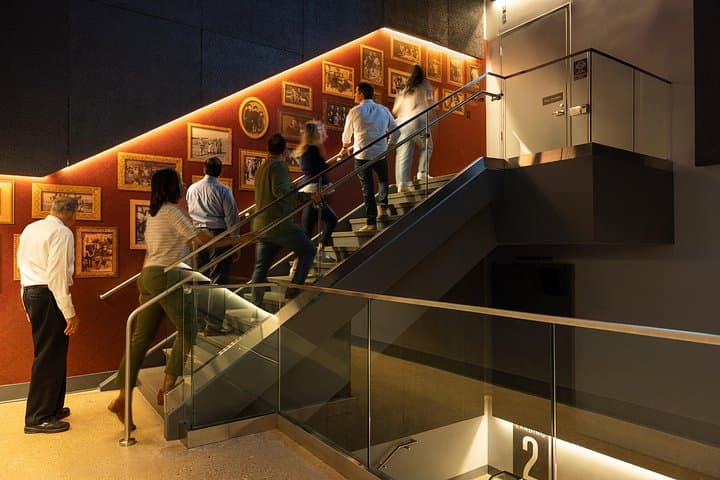
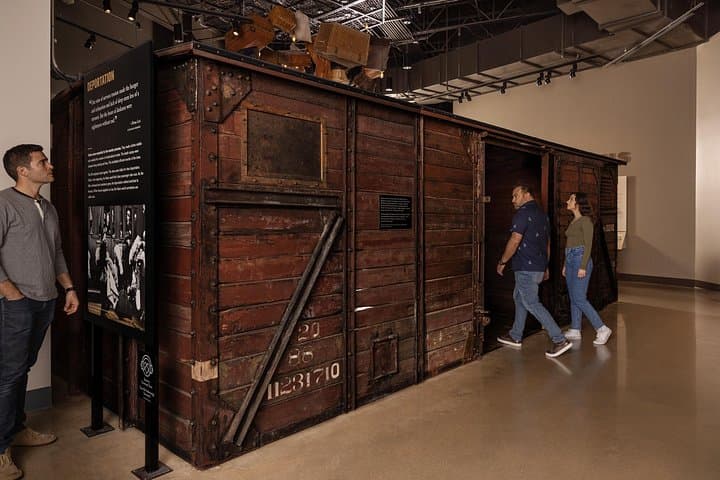
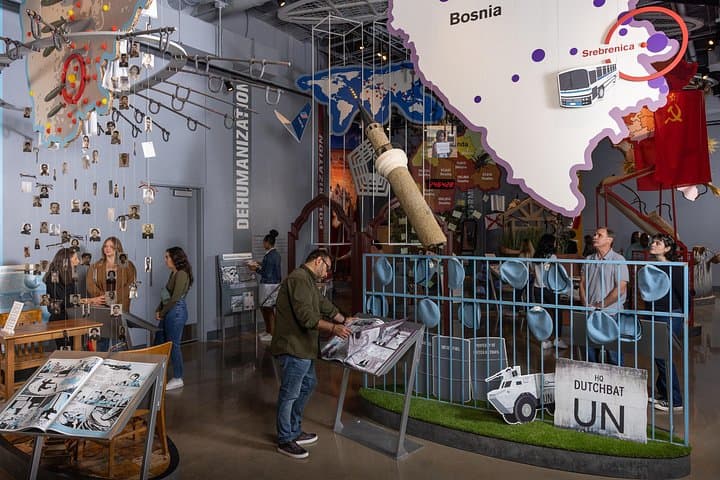
You step off the sidewalk into a quiet, deliberately lit space where artifacts and voices occupy the same room. The Dallas Holocaust and Human Rights Museum guides visitors through three interconnected wings—Holocaust/Shoah, Human Rights, and Pivot to America—each designed to move you from witness to reflection.
You step off the sidewalk into a quiet, deliberately lit space where artifacts and voices occupy the same room. The Dallas Holocaust and Human Rights Museum guides visitors through three interconnected wings—Holocaust/Shoah, Human Rights, and Pivot to America—each designed to move you from witness to reflection.
The museum anchors itself in history: survivor testimonies, original artifacts, and timelines that trace events from World War II to contemporary human-rights struggles. Geology and place peek through in subtle ways—the museum sits within downtown Dallas above the Trinity River floodplain, where urban development and civic memory meet; the city’s materials and scale frame how the exhibitions are experienced. Culturally, the museum is part of a growing civic conversation in Dallas about memory, responsibility, and public education.
Plan for an emotionally focused two hours. Start with the Holocaust/Shoah Wing to follow personal stories, then move through the Human Rights Wing to see contemporary connections; save Dimensions in Testimony—an interactive survivor biography—for later in your visit when you can sit and engage.
Practical guidance: tickets are mobile-friendly, entry is wheelchair accessible, and rotating special exhibits expand the core narrative. The content is intense—take breaks in the lobby, use the film "Voices of Courage" to contextualize material, and allow time afterward to process. Visit midweek mornings to avoid crowds, bring water and comfortable shoes for walking the galleries, and respect signage around photography and interactive displays.