THE ADVENTURE COLLECTIVE® · Independent discovery and booking for outdoor travel

The Grand Egyptian Museum pairs cutting‑edge conservation with one of the world’s richest archaeological collections. This practical guide outlines what to expect, how to plan your visit, and tips for getting the most from a 3–4 hour tour near the Giza Pyramids.
The Grand Egyptian Museum pairs cutting‑edge conservation with one of the world’s richest archaeological collections. This practical guide outlines what to expect, how to plan your visit, and tips for getting the most from a 3–4 hour tour near the Giza Pyramids.
You arrive under a hard, bright sky with the Pyramids’ silhouettes cutting the horizon; the Grand Egyptian Museum’s pale, modern facades sit like a deliberate pause between ancient stone and contemporary design. Inside, wide halls breathe—high ceilings, controlled light and glass cases that let gold and faience speak without glare—while a guide parses dates and rituals, giving context to objects that once moved through royal hands.
Verified experiences and guided adventures in the surrounding area.
Operated by NORTH AFRICAN SHIPPING AND TOURISM COMPANY (NASCO TOURS) · Giza, Giza Governorate
You arrive under a hard, bright sky with the Pyramids’ silhouettes cutting the horizon; the Grand Egyptian Museum’s pale, modern facades sit like a deliberate pause between ancient stone and contemporary design. Inside, wide halls breathe—high ceilings, controlled light and glass cases that let gold and faience speak without glare—while a guide parses dates and rituals, giving context to objects that once moved through royal hands.
The museum collects Egypt’s material history from pre-dynastic tools to Greco-Roman statuary, with the Tutankhamun collection as its headline: chariots, funerary masks, and gilded furniture removed from burial rooms and placed under conservation-grade lights. Geologically, the artifacts and the nearby pyramids share the same Giza limestone story; the plateau’s stones and the funerary materials tell a continuum of resource use and ancient engineering. Culturally, the GEM is designed as both repository and research hub—conservation labs and multimedia displays are part exhibition, part classroom.
Practical guidance: plan roughly 3–4 hours to move through the core galleries with a guide; tickets and private transfers are commonly included in packaged tours. Wear comfortable shoes—the floors are long and flat—and bring a refillable water bottle; the museum is air‑conditioned but the transit and outdoor approach can be hot. Photography rules vary by gallery; expect restricted areas around sensitive displays. Visits are accessible for most fitness levels and suitable for families, though infants should be supervised. Time your visit to avoid midday heat and to align with guided tour slots for the richest context. Leave room in your schedule to take in the exterior views of the plateau at sunset—stone, sky and history all sharpen as light falls.
Allow about 3–4 hours for a guided visit that covers the highlights, including the Tutankhamun galleries and the main archaeological halls.
Many operators include an air‑conditioned vehicle and a specialist guide; confirm pickup details and whether entry fees are covered before booking.
Yes—the Grand Egyptian Museum was built with accessibility in mind, offering ramps and elevators; contact your operator for specific assistance requests.
Children are welcome but must be supervised; some delicate exhibits may not be suitable for very young visitors and infant seating is available on request.
NORTH AFRICAN SHIPPING AND TOURISM COMPANY (NASCO TOURS) operates guided outdoor trips and adventures with an emphasis on safety, stewardship, and memorable experiences.
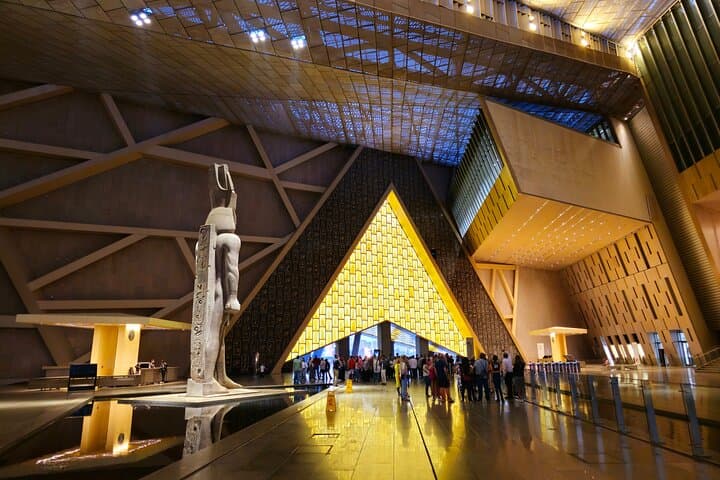
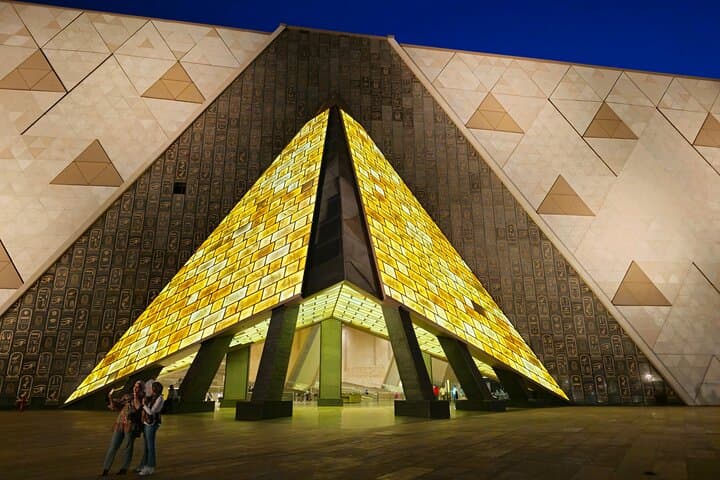

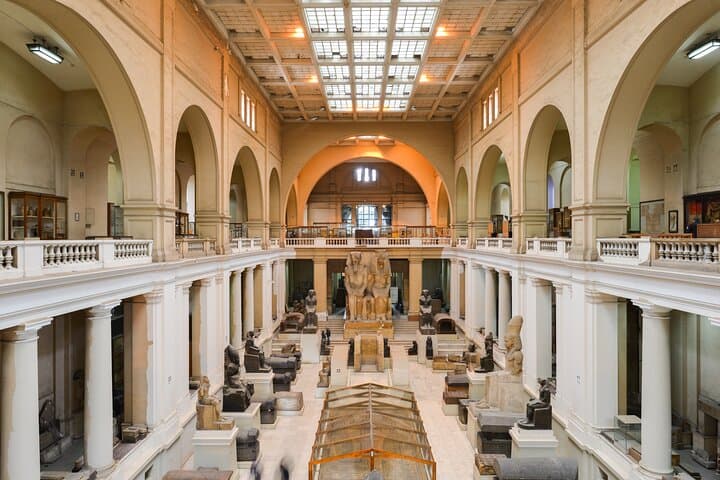
You arrive under a hard, bright sky with the Pyramids’ silhouettes cutting the horizon; the Grand Egyptian Museum’s pale, modern facades sit like a deliberate pause between ancient stone and contemporary design. Inside, wide halls breathe—high ceilings, controlled light and glass cases that let gold and faience speak without glare—while a guide parses dates and rituals, giving context to objects that once moved through royal hands.
You arrive under a hard, bright sky with the Pyramids’ silhouettes cutting the horizon; the Grand Egyptian Museum’s pale, modern facades sit like a deliberate pause between ancient stone and contemporary design. Inside, wide halls breathe—high ceilings, controlled light and glass cases that let gold and faience speak without glare—while a guide parses dates and rituals, giving context to objects that once moved through royal hands.
The museum collects Egypt’s material history from pre-dynastic tools to Greco-Roman statuary, with the Tutankhamun collection as its headline: chariots, funerary masks, and gilded furniture removed from burial rooms and placed under conservation-grade lights. Geologically, the artifacts and the nearby pyramids share the same Giza limestone story; the plateau’s stones and the funerary materials tell a continuum of resource use and ancient engineering. Culturally, the GEM is designed as both repository and research hub—conservation labs and multimedia displays are part exhibition, part classroom.
Practical guidance: plan roughly 3–4 hours to move through the core galleries with a guide; tickets and private transfers are commonly included in packaged tours. Wear comfortable shoes—the floors are long and flat—and bring a refillable water bottle; the museum is air‑conditioned but the transit and outdoor approach can be hot. Photography rules vary by gallery; expect restricted areas around sensitive displays. Visits are accessible for most fitness levels and suitable for families, though infants should be supervised. Time your visit to avoid midday heat and to align with guided tour slots for the richest context. Leave room in your schedule to take in the exterior views of the plateau at sunset—stone, sky and history all sharpen as light falls.