THE ADVENTURE COLLECTIVE® · Independent discovery and booking for outdoor travel

Explore Vjetrenica’s underground rivers and calcite halls on a six‑hour speleological tour from Mostar, with stops at Radimlja’s medieval necropolis and the rock-carved Zavala Monastery. Expect cool, uneven passages, knowledgeable guides, and a compact introduction to Herzegovina’s karst and history.
Explore Vjetrenica’s underground rivers and calcite halls on a six‑hour speleological tour from Mostar, with stops at Radimlja’s medieval necropolis and the rock-carved Zavala Monastery. Expect cool, uneven passages, knowledgeable guides, and a compact introduction to Herzegovina’s karst and history.
You step out of the minivan and the air changes—cooler, damp, and mineral-tinged—pulling you toward a dark mouth carved into limestone. The tour moves with purpose: a short stop at Radimlja’s engraved medieval tombstones, then deeper into the karst where Vjetrenica’s passages curve and the underground river seems to push you forward.
Verified experiences and guided adventures in the surrounding area.
Operated by iHouse Travel · Mostar, Herzegovina-Neretva Canton
You step out of the minivan and the air changes—cooler, damp, and mineral-tinged—pulling you toward a dark mouth carved into limestone. The tour moves with purpose: a short stop at Radimlja’s engraved medieval tombstones, then deeper into the karst where Vjetrenica’s passages curve and the underground river seems to push you forward.
Vjetrenica is one of the Balkans’ most significant caves, written about by early naturalists and still partly uncharted. The cave sits in a classic karst landscape—limestone folded and dissolved over millennia—where stalactites and stalagmites grow at geological patience. Nearby Zavala Monastery, cut into rock, speaks to the region’s layered cultural history: Orthodox, Ottoman, and Austro-Hungarian influences meet in stone and ritual.
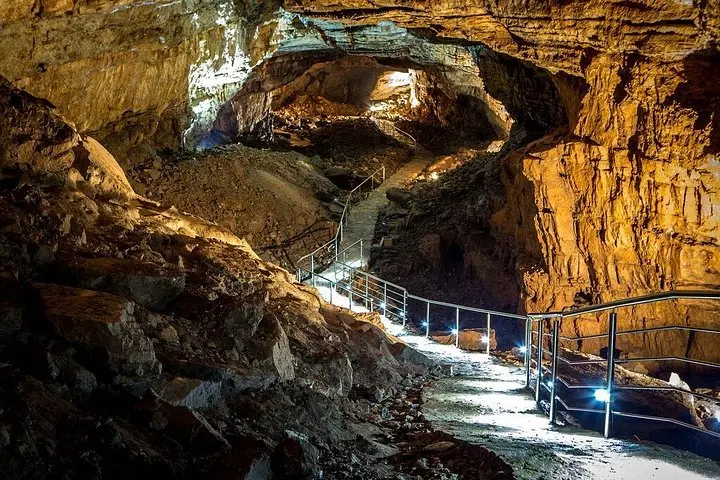
Inside the cave, expect narrow galleries, low-lit chambers, and reflective pools. Guides point out cave-adapted fauna and fragile calcite formations; the cave breathes, with gentle drafts drawing air along subterranean channels. Aboveground, Popovo Polje’s open plain and the monastery’s stairways offer panoramic relief after the close spaces.
Practical side: wear grippy shoes and a warm layer; the cave stays cool year-round and footing can be uneven. The full excursion runs about six hours from Mostar and includes transport; allow time for walking, photography, and short climbs at Radimlja and Zavala. Hydrate before you enter—the underground world has no water taps. Respect the guide’s route, avoid touching formations, and carry any trash out. For anyone curious about geology, history, or immersive cave travel, this day trip balances straightforward logistics with authentic subterranean discovery.
The typical guided cave portion runs around 60–90 minutes as part of a 5–6 hour day tour from Mostar.
The tour is family-friendly but involves uneven terrain and low passages; children must be supervised and those with mobility limits should check with the operator beforehand.
Yes—photography is generally allowed, but flash and touching formations are discouraged; follow guide instructions to avoid damaging delicate features.
Yes—transport by air‑conditioned minivan and selected hotel pickup/drop‑off are typically included in the tour price.
iHouse Travel operates guided outdoor trips and adventures with an emphasis on safety, stewardship, and memorable experiences.
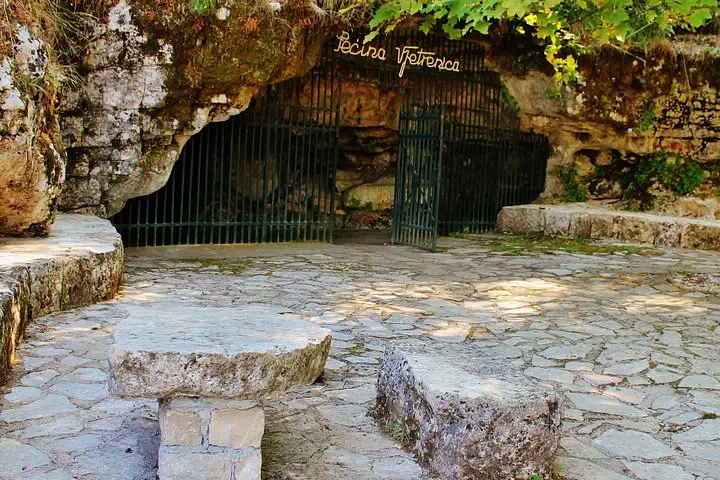
You step out of the minivan and the air changes—cooler, damp, and mineral-tinged—pulling you toward a dark mouth carved into limestone. The tour moves with purpose: a short stop at Radimlja’s engraved medieval tombstones, then deeper into the karst where Vjetrenica’s passages curve and the underground river seems to push you forward.
You step out of the minivan and the air changes—cooler, damp, and mineral-tinged—pulling you toward a dark mouth carved into limestone. The tour moves with purpose: a short stop at Radimlja’s engraved medieval tombstones, then deeper into the karst where Vjetrenica’s passages curve and the underground river seems to push you forward.
Vjetrenica is one of the Balkans’ most significant caves, written about by early naturalists and still partly uncharted. The cave sits in a classic karst landscape—limestone folded and dissolved over millennia—where stalactites and stalagmites grow at geological patience. Nearby Zavala Monastery, cut into rock, speaks to the region’s layered cultural history: Orthodox, Ottoman, and Austro-Hungarian influences meet in stone and ritual.
Inside the cave, expect narrow galleries, low-lit chambers, and reflective pools. Guides point out cave-adapted fauna and fragile calcite formations; the cave breathes, with gentle drafts drawing air along subterranean channels. Aboveground, Popovo Polje’s open plain and the monastery’s stairways offer panoramic relief after the close spaces.
Practical side: wear grippy shoes and a warm layer; the cave stays cool year-round and footing can be uneven. The full excursion runs about six hours from Mostar and includes transport; allow time for walking, photography, and short climbs at Radimlja and Zavala. Hydrate before you enter—the underground world has no water taps. Respect the guide’s route, avoid touching formations, and carry any trash out. For anyone curious about geology, history, or immersive cave travel, this day trip balances straightforward logistics with authentic subterranean discovery.