THE ADVENTURE COLLECTIVE® · Independent discovery and booking for outdoor travel

Tackle Tenorio’s volcanic slopes on a 2–2.5 hour ATV loop that crosses rivers, traverses pineapple plantations and stops at a riverside café near Río Celeste. Expect rainforest single-track, wildlife sightings and a local guide.
Tackle Tenorio’s volcanic slopes on a 2–2.5 hour ATV loop that crosses rivers, traverses pineapple plantations and stops at a riverside café near Río Celeste. Expect rainforest single-track, wildlife sightings and a local guide.
Mud sprays and leaves hiss as a line of Honda 520cc ATVs threads a narrow track up Tenorio’s lower flanks. Riders feel the machine’s pulse under them while the rainforest closes in—bromeliads clinging to trunks, rivers daring you to test their shallow crossings, and the distant slope of the volcano rising like a dark ridge.
Verified experiences and guided adventures in the surrounding area.
Operated by Costa Rica ATV & Horseback Riding Adventures · Bijagua, Alajuela
Mud sprays and leaves hiss as a line of Honda 520cc ATVs threads a narrow track up Tenorio’s lower flanks. Riders feel the machine’s pulse under them while the rainforest closes in—bromeliads clinging to trunks, rivers daring you to test their shallow crossings, and the distant slope of the volcano rising like a dark ridge.
The Tenorio area sits on the northern edge of Costa Rica’s volcanic arc; its soils feed the farms and pineapple plots riders cross. Río Celeste became famous for its peculiar sky-blue color, caused by a geologic mixing of mineral-rich streams—an effect protected by local conservation and the national park system. Bijagua and the small farming communities here still run on a slow rhythm: cattle, coffee, homestays and family-run riverside cafés where tours pause for snacks.
Expect two hours of varied terrain: farm roads, single-track through rainforest, two river crossings and loose volcanic gravel on steep pitches. Wildlife is common—sloths hang motionless in the canopy and toucans flash color between trees—so keep noise steady and speed measured.
Practically: each ATV requires its own booking and a signed waiver; a per-ATV rental fee and collision insurance charge are collected locally. Drivers must be old enough to meet local rules and all riders should wear closed shoes, long sleeves and bring a dry bag for cameras. Rain is frequent—plan for a poncho—and start times favor mornings to avoid late-day downpours and heavier traffic on shared ranch roads.
Drivers must meet the operator age requirement—individuals under 17 are not allowed to drive and minors should be accompanied by a licensed adult.
Yes—local charges include a per-ATV rental fee and collision damage insurance applied at signing; tax (IVA) also applies.
Tours can accommodate up to nine guests; basic ATV handling is recommended but guides will provide orientation for beginners.
Tours may be canceled for heavy rain or unsafe conditions—operators often require cancellation at least 24 hours for a full refund if needed.
Costa Rica ATV & Horseback Riding Adventures operates guided outdoor trips and adventures with an emphasis on safety, stewardship, and memorable experiences.
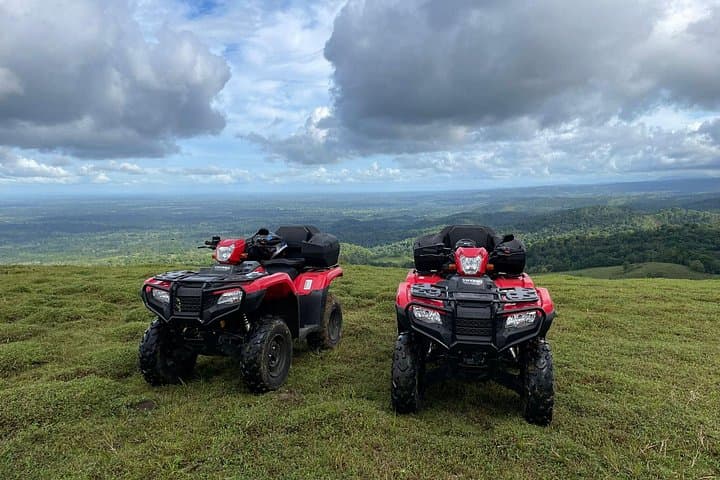


Mud sprays and leaves hiss as a line of Honda 520cc ATVs threads a narrow track up Tenorio’s lower flanks. Riders feel the machine’s pulse under them while the rainforest closes in—bromeliads clinging to trunks, rivers daring you to test their shallow crossings, and the distant slope of the volcano rising like a dark ridge.
Mud sprays and leaves hiss as a line of Honda 520cc ATVs threads a narrow track up Tenorio’s lower flanks. Riders feel the machine’s pulse under them while the rainforest closes in—bromeliads clinging to trunks, rivers daring you to test their shallow crossings, and the distant slope of the volcano rising like a dark ridge.
The Tenorio area sits on the northern edge of Costa Rica’s volcanic arc; its soils feed the farms and pineapple plots riders cross. Río Celeste became famous for its peculiar sky-blue color, caused by a geologic mixing of mineral-rich streams—an effect protected by local conservation and the national park system. Bijagua and the small farming communities here still run on a slow rhythm: cattle, coffee, homestays and family-run riverside cafés where tours pause for snacks.
Expect two hours of varied terrain: farm roads, single-track through rainforest, two river crossings and loose volcanic gravel on steep pitches. Wildlife is common—sloths hang motionless in the canopy and toucans flash color between trees—so keep noise steady and speed measured.
Practically: each ATV requires its own booking and a signed waiver; a per-ATV rental fee and collision insurance charge are collected locally. Drivers must be old enough to meet local rules and all riders should wear closed shoes, long sleeves and bring a dry bag for cameras. Rain is frequent—plan for a poncho—and start times favor mornings to avoid late-day downpours and heavier traffic on shared ranch roads.