THE ADVENTURE COLLECTIVE® · Independent discovery and booking for outdoor travel

Explore Roman mosaics at Volubilis, wander the sacred streets of Moulay Idriss, and stand beneath Bab El Mansour in Meknes on a one-day cultural circuit from Fes. This full-day private excursion mixes archaeology, local life, and imperial architecture with practical, easy-paced walking.
Explore Roman mosaics at Volubilis, wander the sacred streets of Moulay Idriss, and stand beneath Bab El Mansour in Meknes on a one-day cultural circuit from Fes. This full-day private excursion mixes archaeology, local life, and imperial architecture with practical, easy-paced walking.
You step out of an air-conditioned minivan onto a wind-swept plain and the light changes: low scrub, distant olive groves, and a scattering of Roman stonework that still catches the sun. The ruins at Volubilis open like an archaeological stage — colonnaded streets, mosaic floors, and the Arch of Caracalla standing as a precise reminder of Roman reach in North Africa.
Verified experiences and guided adventures in the surrounding area.
Operated by Luxury Fez Tours · Fes, Fès-Meknès
You step out of an air-conditioned minivan onto a wind-swept plain and the light changes: low scrub, distant olive groves, and a scattering of Roman stonework that still catches the sun. The ruins at Volubilis open like an archaeological stage — colonnaded streets, mosaic floors, and the Arch of Caracalla standing as a precise reminder of Roman reach in North Africa.
Geology here is simple and honest: limestone outcrops and terraced fields carved into gentle hills around the Zerhoun massif. Moulay Idriss Zerhoun, perched above those terraces, brings a different pulse — narrow stepped streets, whitewashed houses, and the living shrine to Idriss I that made this hilltop an early center of Moroccan Islam.
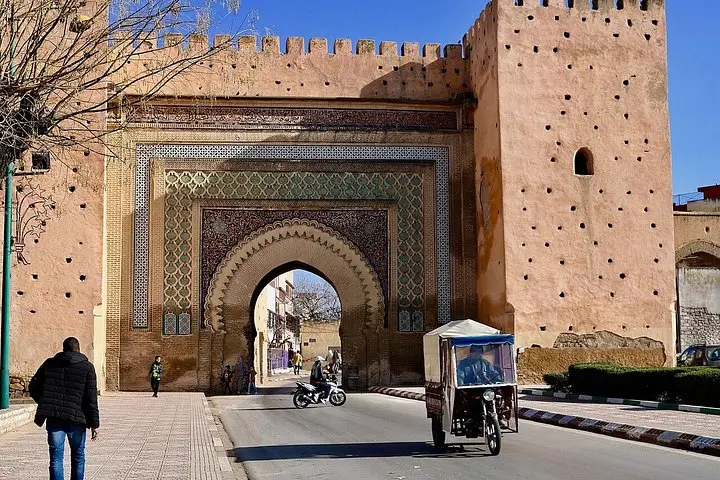
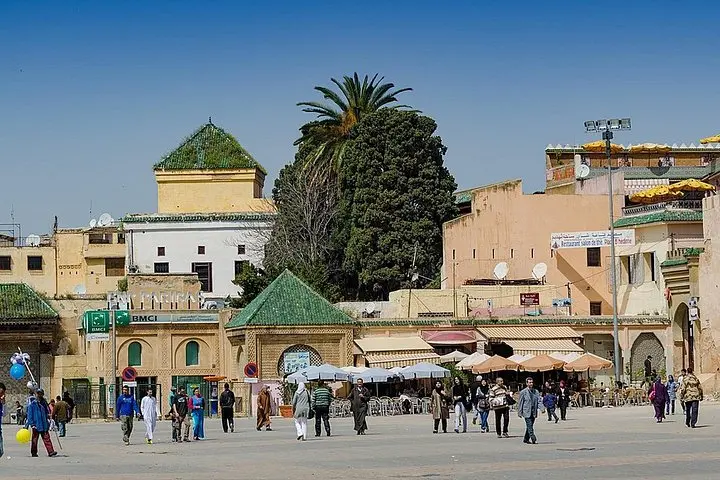
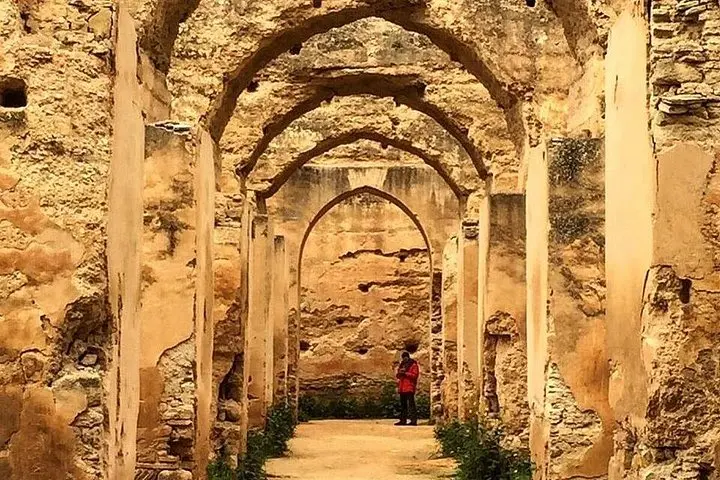
Meknes shifts the narrative again: 17th-century ramparts, the grand Bab El Mansour gate, and the vast royal stables where the scale of Sultan Moulay Ismail’s ambitions becomes obvious. The medina offers handicraft stalls and a compact, walkable souk scene that rewards slow exploration.
Practical side: expect a full-day outing from Fes with multiple short walks on uneven surfaces and cobbles; bring sun protection, a refillable water bottle, and modest clothing for shrine visits. Timing matters — mornings are cooler for Volubilis and midafternoon suits Meknes after lunch. A private driver gives flexibility for photo stops and a relaxed pace.
This trip is a study in transitions — from Roman planning to Islamic piety to imperial baroque — all within a day’s drive of Fes, making it an efficient, layered snapshot of Morocco’s layered past.
Drive time is roughly 1–1.5 hours to Volubilis from Fes, then about 30–40 minutes to Moulay Idriss and another 30 minutes to Meknes depending on stops and traffic.
Check your booking details; many day-trip packages include site admissions, but some may charge entrance separately — bring cash just in case.
Yes — the tour is listed as physically easy with short, manageable walks, but mobility issues with uneven terrain may make some ruins difficult for wheelchair users.
Yes — most itineraries include a sit-down Moroccan lunch in Meknes, often a tagine; advise any dietary needs when booking.
Luxury Fez Tours operates guided outdoor trips and adventures with an emphasis on safety, stewardship, and memorable experiences.
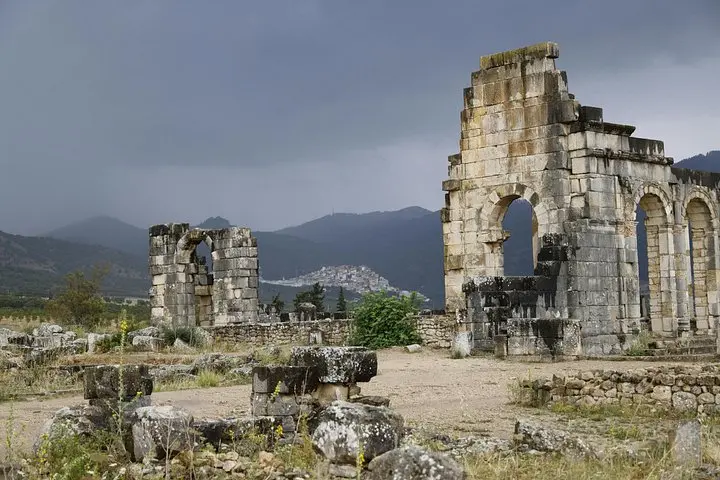
You step out of an air-conditioned minivan onto a wind-swept plain and the light changes: low scrub, distant olive groves, and a scattering of Roman stonework that still catches the sun. The ruins at Volubilis open like an archaeological stage — colonnaded streets, mosaic floors, and the Arch of Caracalla standing as a precise reminder of Roman reach in North Africa.
You step out of an air-conditioned minivan onto a wind-swept plain and the light changes: low scrub, distant olive groves, and a scattering of Roman stonework that still catches the sun. The ruins at Volubilis open like an archaeological stage — colonnaded streets, mosaic floors, and the Arch of Caracalla standing as a precise reminder of Roman reach in North Africa.
Geology here is simple and honest: limestone outcrops and terraced fields carved into gentle hills around the Zerhoun massif. Moulay Idriss Zerhoun, perched above those terraces, brings a different pulse — narrow stepped streets, whitewashed houses, and the living shrine to Idriss I that made this hilltop an early center of Moroccan Islam.
Meknes shifts the narrative again: 17th-century ramparts, the grand Bab El Mansour gate, and the vast royal stables where the scale of Sultan Moulay Ismail’s ambitions becomes obvious. The medina offers handicraft stalls and a compact, walkable souk scene that rewards slow exploration.
Practical side: expect a full-day outing from Fes with multiple short walks on uneven surfaces and cobbles; bring sun protection, a refillable water bottle, and modest clothing for shrine visits. Timing matters — mornings are cooler for Volubilis and midafternoon suits Meknes after lunch. A private driver gives flexibility for photo stops and a relaxed pace.
This trip is a study in transitions — from Roman planning to Islamic piety to imperial baroque — all within a day’s drive of Fes, making it an efficient, layered snapshot of Morocco’s layered past.