THE ADVENTURE COLLECTIVE® · Independent discovery and booking for outdoor travel

Spend a full day volunteering at Wolong Panda Base: suit up, help prepare food and clean enclosures, and learn the routines of panda care. This regulated, hands-on experience pairs meaningful conservation work with an unforgettable wildlife encounter near Chengdu.
Spend a full day volunteering at Wolong Panda Base: suit up, help prepare food and clean enclosures, and learn the routines of panda care. This regulated, hands-on experience pairs meaningful conservation work with an unforgettable wildlife encounter near Chengdu.
You arrive before dawn on a winding mountain road, the bus dropping you at an entrance where bamboo slopes press close against concrete paths. The air smells green and damp; in the enclosures a giant panda chews deliberately, pausing to watch you as if testing your patience. The day is structured: uniform fitting, a short training from keepers, then hands-on chores — cleaning enclosures, preparing and distributing fresh bamboo and panda cakes, and logging behavior notes.
Verified experiences and guided adventures in the surrounding area.
Operated by China Dream Tour · Wolong (Wenchuan County), Sichuan
You arrive before dawn on a winding mountain road, the bus dropping you at an entrance where bamboo slopes press close against concrete paths. The air smells green and damp; in the enclosures a giant panda chews deliberately, pausing to watch you as if testing your patience. The day is structured: uniform fitting, a short training from keepers, then hands-on chores — cleaning enclosures, preparing and distributing fresh bamboo and panda cakes, and logging behavior notes.
Wolong was among China’s earliest reserves, founded in the 1960s to protect panda habitat where the mountains and valleys create a humid microclimate ideal for bamboo growth. Geologically this section of the Minshan range is steep and eroded, with terraces of bamboo clinging to shale and soil. Culturally, the reserve sits within Tibetan and Qiang ethnic regions; local communities and conservation programs have long negotiated land use and tourism.
Practically, the program is intensive and regulated: volunteers must provide passport copies and a health certificate, be between 12–65 years old, and accept a compulsory donation to the panda foundation. Activities are physically moderate — expect several hours on your feet, lifting bamboo bundles and bending for cleaning. There is no handling of cubs; close-contact interactions are suspended. Bring sturdy, closed-toe shoes, layers for mountain weather, and cash for donations. Photographs are permitted from designated areas; follow keeper instructions at all times.
By afternoon you’ll receive a certificate and the quieter reward of having helped a long-running conservation effort — and a clearer sense of how fragile those bamboo slopes really are.
No. All close-contact activities have been suspended; volunteers can prepare food, clean enclosures, and photograph pandas from designated areas under keeper supervision.
You must provide a passport copy and a health certificate; organizers also ask for full name, passport details, and date of birth at booking.
Yes, a compulsory donation supports the non-profit center’s work; bring cash (local currency) on the day as it may be required on-site.
Yes—participants should be between 12 and 65, not pregnant, and have no serious spinal or cardiovascular conditions; a moderate fitness level is expected.
China Dream Tour operates guided outdoor trips and adventures with an emphasis on safety, stewardship, and memorable experiences.
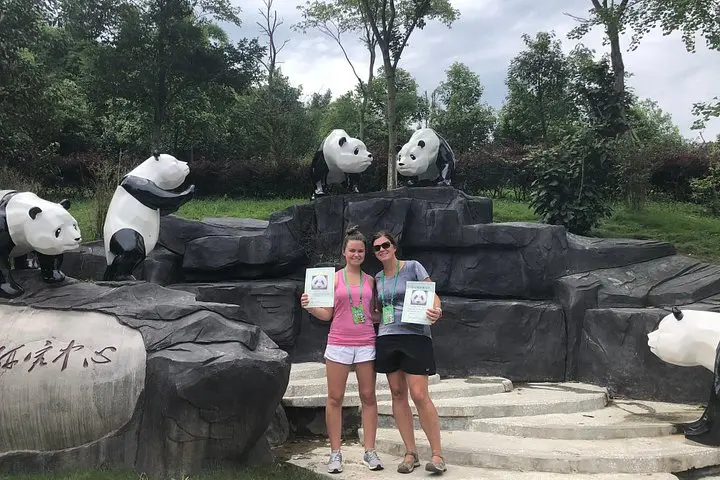



You arrive before dawn on a winding mountain road, the bus dropping you at an entrance where bamboo slopes press close against concrete paths. The air smells green and damp; in the enclosures a giant panda chews deliberately, pausing to watch you as if testing your patience. The day is structured: uniform fitting, a short training from keepers, then hands-on chores — cleaning enclosures, preparing and distributing fresh bamboo and panda cakes, and logging behavior notes.
You arrive before dawn on a winding mountain road, the bus dropping you at an entrance where bamboo slopes press close against concrete paths. The air smells green and damp; in the enclosures a giant panda chews deliberately, pausing to watch you as if testing your patience. The day is structured: uniform fitting, a short training from keepers, then hands-on chores — cleaning enclosures, preparing and distributing fresh bamboo and panda cakes, and logging behavior notes.
Wolong was among China’s earliest reserves, founded in the 1960s to protect panda habitat where the mountains and valleys create a humid microclimate ideal for bamboo growth. Geologically this section of the Minshan range is steep and eroded, with terraces of bamboo clinging to shale and soil. Culturally, the reserve sits within Tibetan and Qiang ethnic regions; local communities and conservation programs have long negotiated land use and tourism.
Practically, the program is intensive and regulated: volunteers must provide passport copies and a health certificate, be between 12–65 years old, and accept a compulsory donation to the panda foundation. Activities are physically moderate — expect several hours on your feet, lifting bamboo bundles and bending for cleaning. There is no handling of cubs; close-contact interactions are suspended. Bring sturdy, closed-toe shoes, layers for mountain weather, and cash for donations. Photographs are permitted from designated areas; follow keeper instructions at all times.
By afternoon you’ll receive a certificate and the quieter reward of having helped a long-running conservation effort — and a clearer sense of how fragile those bamboo slopes really are.