THE ADVENTURE COLLECTIVE® · Independent discovery and booking for outdoor travel

Explore the Long Tan memorials, Nui Dat base site and the Long Phuoc tunnels on a full-day shore excursion from Phu My. This guided tour pairs battlefield history with local culture, a beachfront break and market shopping.
Explore the Long Tan memorials, Nui Dat base site and the Long Phuoc tunnels on a full-day shore excursion from Phu My. This guided tour pairs battlefield history with local culture, a beachfront break and market shopping.
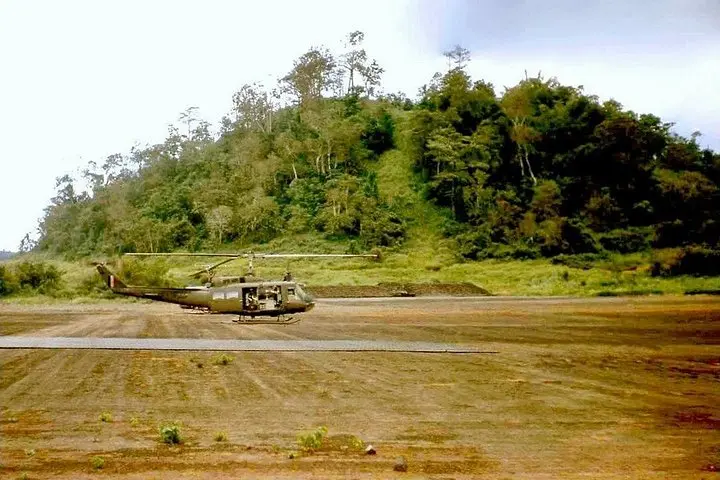
You step off the tender into the heat and humidity of southern Vietnam, the Phu My port humming with luggage carts and cruise staff. A short drive through flat coastal plains leads to the spike of Nui Dat—a dusty heliograph of a former Australian Task Force base—then into rubber plantations and scrub where the Long Tan battle was fought in August 1966. The air here smells of earth and wet leaves; the road bumps force a slower cadence that suits reflection.
Verified experiences and guided adventures in the surrounding area.
Operated by Adventures Travel Vietnam · Vung Tau, Ba Ria-Vung Tau
You step off the tender into the heat and humidity of southern Vietnam, the Phu My port humming with luggage carts and cruise staff. A short drive through flat coastal plains leads to the spike of Nui Dat—a dusty heliograph of a former Australian Task Force base—then into rubber plantations and scrub where the Long Tan battle was fought in August 1966. The air here smells of earth and wet leaves; the road bumps force a slower cadence that suits reflection.
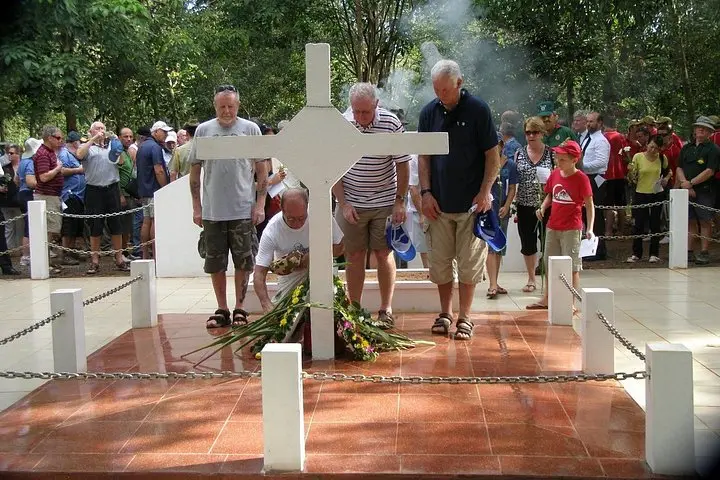
This shore excursion threads modern Vietnam with wartime footprints: the Long Tan Cross Memorial, maintained by veterans and local caretakers; the reconstructed Nui Dat base area; and the Long Phuoc tunnels, hand-dug defensive and survival structures used during the conflict. Geologically the Ba Ria–Vung Tau province is coastal lowland—sandy soils replaced by rubber and coconut plantation—so expect firm tracks and short sections of uneven ground rather than alpine terrain.
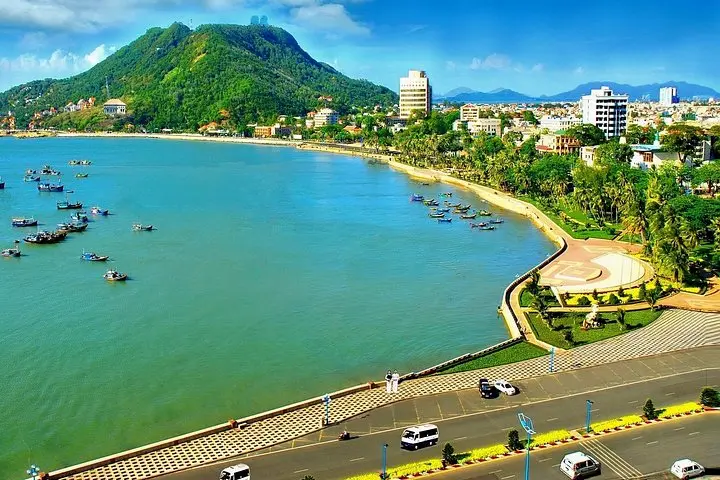
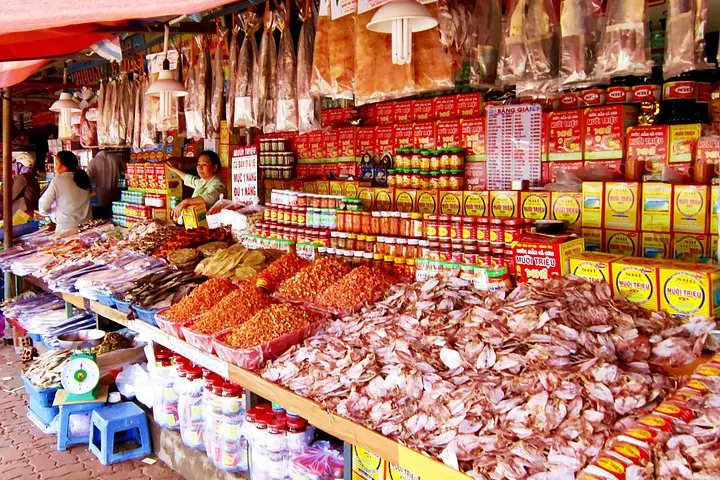
Culturally, visits include time with community initiatives (an Australian-managed orphanage) and a local lunch that showcases southern Vietnamese flavors. The day finishes with time on a Vung Tau beach and a market stop for lacquerware or local snacks.
Practical guidance: dress for sticky heat and walking—closed shoes, sun protection, and modest clothes for memorial sites. Bring insect repellent and a refillable bottle; tunnels are cool but low-ceilinged. The tour runs 7–9 hours with air-conditioned transport and moderate walking; plan for transfers with your ship’s timing to avoid missed departures. This excursion balances history, community insight, and a coastal unwind—an accessible way to see wartime sites without extended overland travel.
Yes—this shore excursion includes pick-up and return to Phu My port via an air-conditioned vehicle; confirm exact pick-up time on booking.
Tunnels have low ceilings and narrow passages; older children who can stoop and navigate uneven ground can usually participate, but infants and small toddlers may find it difficult.
The tour notes wheelchair accessibility for transport, but some sites (tunnels and certain memorial steps) have limited access—notify the operator ahead for accommodations.
Guiding is typically in English with local staff; the itinerary shows admissions included for the main sites (Long Tan, Nui Dat areas).
Adventures Travel Vietnam operates guided outdoor trips and adventures with an emphasis on safety, stewardship, and memorable experiences.
You step off the tender into the heat and humidity of southern Vietnam, the Phu My port humming with luggage carts and cruise staff. A short drive through flat coastal plains leads to the spike of Nui Dat—a dusty heliograph of a former Australian Task Force base—then into rubber plantations and scrub where the Long Tan battle was fought in August 1966. The air here smells of earth and wet leaves; the road bumps force a slower cadence that suits reflection.
You step off the tender into the heat and humidity of southern Vietnam, the Phu My port humming with luggage carts and cruise staff. A short drive through flat coastal plains leads to the spike of Nui Dat—a dusty heliograph of a former Australian Task Force base—then into rubber plantations and scrub where the Long Tan battle was fought in August 1966. The air here smells of earth and wet leaves; the road bumps force a slower cadence that suits reflection.
This shore excursion threads modern Vietnam with wartime footprints: the Long Tan Cross Memorial, maintained by veterans and local caretakers; the reconstructed Nui Dat base area; and the Long Phuoc tunnels, hand-dug defensive and survival structures used during the conflict. Geologically the Ba Ria–Vung Tau province is coastal lowland—sandy soils replaced by rubber and coconut plantation—so expect firm tracks and short sections of uneven ground rather than alpine terrain.
Culturally, visits include time with community initiatives (an Australian-managed orphanage) and a local lunch that showcases southern Vietnamese flavors. The day finishes with time on a Vung Tau beach and a market stop for lacquerware or local snacks.
Practical guidance: dress for sticky heat and walking—closed shoes, sun protection, and modest clothes for memorial sites. Bring insect repellent and a refillable bottle; tunnels are cool but low-ceilinged. The tour runs 7–9 hours with air-conditioned transport and moderate walking; plan for transfers with your ship’s timing to avoid missed departures. This excursion balances history, community insight, and a coastal unwind—an accessible way to see wartime sites without extended overland travel.