THE ADVENTURE COLLECTIVE® · Independent discovery and booking for outdoor travel
A full‑day outing from Tabuk that threads a narrow, palm‑lined wadi and the dramatic cleft of Al‑Shaq. Expect sandstone canyons, Nabataean engravings, a farm lunch, and striking viewpoints for photography.
A full‑day outing from Tabuk that threads a narrow, palm‑lined wadi and the dramatic cleft of Al‑Shaq. Expect sandstone canyons, Nabataean engravings, a farm lunch, and striking viewpoints for photography.
You step out of the air‑conditioned vehicle into a narrow corridor of red sandstone—walls rising like pages of a slow geology lesson. Wadi Al Disah pulls the light down into ochre and gold; a thin stream dares you to follow it while palms lean in to shade the path.
Verified experiences and guided adventures in the surrounding area.
Operated by Saudi Journey Hospitality · Tabuk, Tabuk
You step out of the air‑conditioned vehicle into a narrow corridor of red sandstone—walls rising like pages of a slow geology lesson. Wadi Al Disah pulls the light down into ochre and gold; a thin stream dares you to follow it while palms lean in to shade the path.
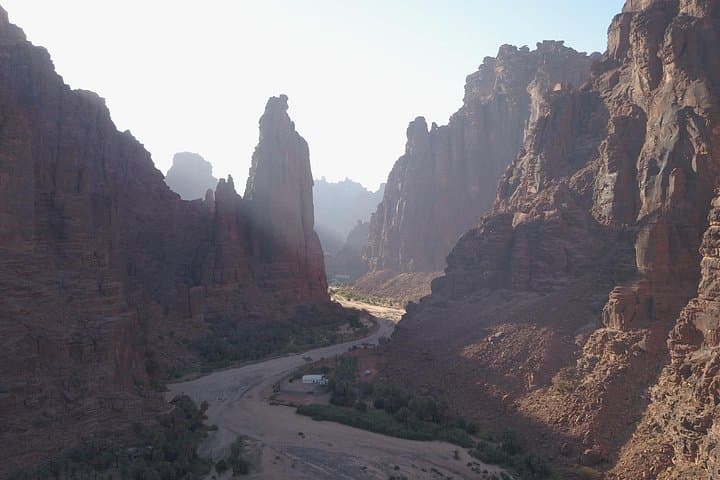
The valley is carved from millions of years of sediment and tectonic stress. Al‑Shaq, the so‑called Great Canyon, shows the moment the earth gave way: a sharp rip between ridgelines where Jabal Hesma and surrounding massifs press against the sky. Cultural traces remain—Nabataean rock engravings and old caravan routes that once guided traders through this rain‑scarce region.
Local farms fed by the wadi’s seepage provide a green contrast to the surrounding desert; lunch here often includes fresh dates and simple regional dishes. Photographers find compelling geometry—sheer cliffs, palm clusters, and a distant lion‑shaped peak—and historians notice the gate marks that speak to long human passage.
Practical note: expect dusty tracks and short, uneven walks up to viewpoints and along the stream; sandals won’t cut it. Heat is the dominant challenge—start early, carry 2–3 liters of water, and plan shade breaks. A guide handles navigation and local context, plus the farm lunch and bottled water included in most full‑day services. Mobile signal can be intermittent; download maps and keep a physical copy of pickup details. Timing your visit in spring or late autumn delivers milder temperatures and greener scenery. Leave no trace: fragile desert soils and rare plant pockets recover slowly from disturbance.
Walking includes short, uneven paths and brief climbs to viewpoints; it’s not technical but requires steady footing and basic fitness.
Children are generally welcome but infants must sit on a lap; check with the operator about age limits for specific pickup arrangements.
Sun protection, sturdy shoes, a small daypack, any necessary medications, and a camera; consider a portable charger for low‑signal areas.
Yes—extreme heat or flash‑flood risk can prompt cancellation or rescheduling; operators often require 24‑hour cancellation windows for refunds.
Saudi Journey Hospitality operates guided outdoor trips and adventures with an emphasis on safety, stewardship, and memorable experiences.
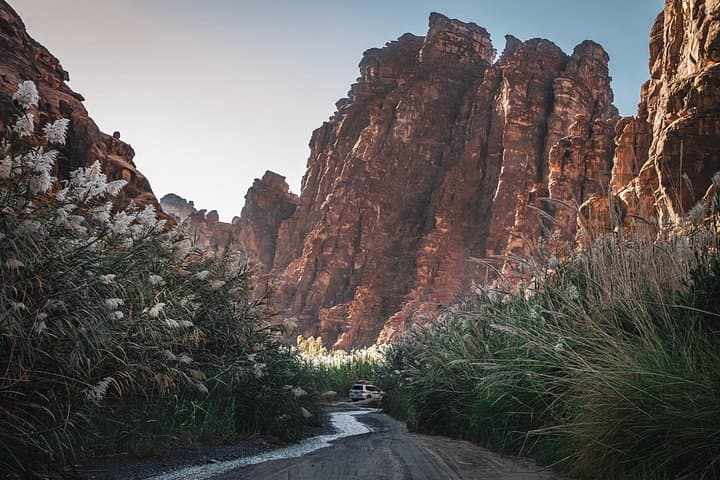
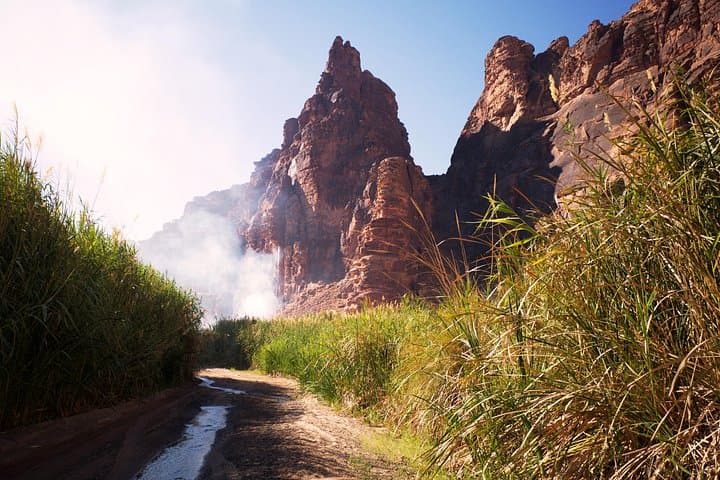
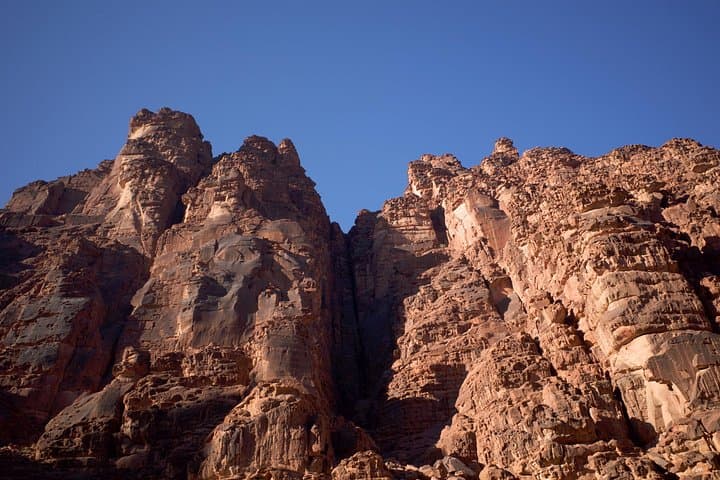
You step out of the air‑conditioned vehicle into a narrow corridor of red sandstone—walls rising like pages of a slow geology lesson. Wadi Al Disah pulls the light down into ochre and gold; a thin stream dares you to follow it while palms lean in to shade the path.
You step out of the air‑conditioned vehicle into a narrow corridor of red sandstone—walls rising like pages of a slow geology lesson. Wadi Al Disah pulls the light down into ochre and gold; a thin stream dares you to follow it while palms lean in to shade the path.
The valley is carved from millions of years of sediment and tectonic stress. Al‑Shaq, the so‑called Great Canyon, shows the moment the earth gave way: a sharp rip between ridgelines where Jabal Hesma and surrounding massifs press against the sky. Cultural traces remain—Nabataean rock engravings and old caravan routes that once guided traders through this rain‑scarce region.
Local farms fed by the wadi’s seepage provide a green contrast to the surrounding desert; lunch here often includes fresh dates and simple regional dishes. Photographers find compelling geometry—sheer cliffs, palm clusters, and a distant lion‑shaped peak—and historians notice the gate marks that speak to long human passage.
Practical note: expect dusty tracks and short, uneven walks up to viewpoints and along the stream; sandals won’t cut it. Heat is the dominant challenge—start early, carry 2–3 liters of water, and plan shade breaks. A guide handles navigation and local context, plus the farm lunch and bottled water included in most full‑day services. Mobile signal can be intermittent; download maps and keep a physical copy of pickup details. Timing your visit in spring or late autumn delivers milder temperatures and greener scenery. Leave no trace: fragile desert soils and rare plant pockets recover slowly from disturbance.
