THE ADVENTURE COLLECTIVE® · Independent discovery and booking for outdoor travel

A four-hour Jeep loop through Wadi Rum led by a Bedouin guide offers dune climbs, a canyon walk with ancient inscriptions, rock-arch scrambles and a Bedouin picnic. Perfect for travelers who want intense desert scenery and cultural context in a half-day outing.
A four-hour Jeep loop through Wadi Rum led by a Bedouin guide offers dune climbs, a canyon walk with ancient inscriptions, rock-arch scrambles and a Bedouin picnic. Perfect for travelers who want intense desert scenery and cultural context in a half-day outing.
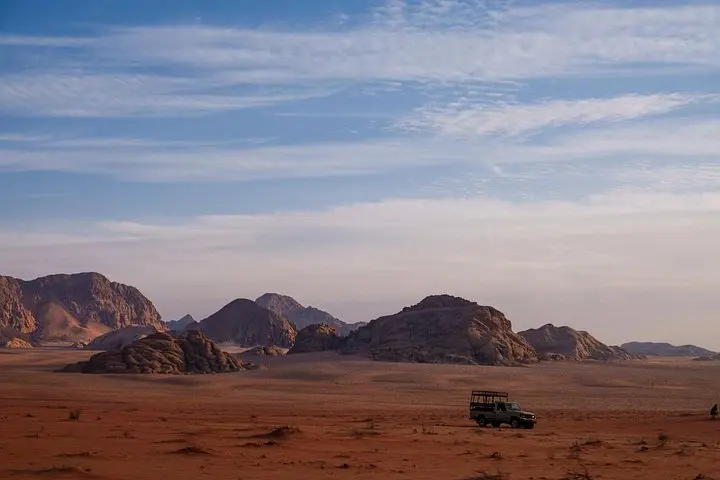
A wind that smells faintly of metal and salt pushes across the desert as the jeep drops its last wheel tracks in the sand. The vehicle eases to a stop beneath a squat red dune and the world opens: ribbed sand, sheer sandstone walls, and a sky so wide it feels like a roof you could push up with your hands.
Verified experiences and guided adventures in the surrounding area.
Operated by Desert Moon Camp · Wadi Rum Village, Aqaba Governorate
A wind that smells faintly of metal and salt pushes across the desert as the jeep drops its last wheel tracks in the sand. The vehicle eases to a stop beneath a squat red dune and the world opens: ribbed sand, sheer sandstone walls, and a sky so wide it feels like a roof you could push up with your hands.
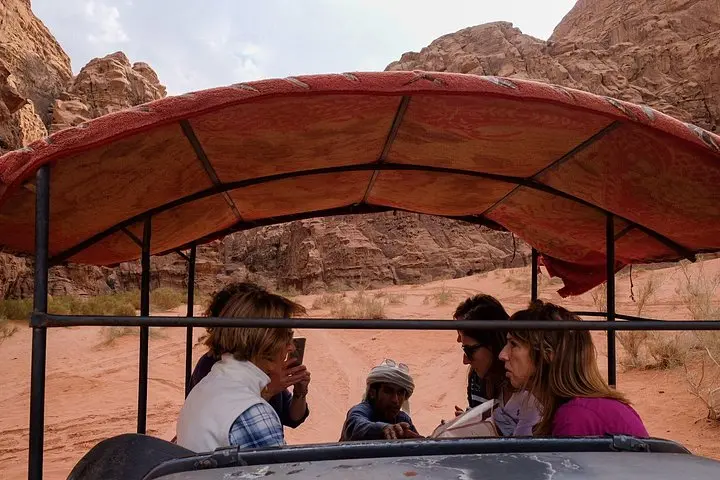
This is Wadi Rum on a four-hour loop guided by a Bedouin driver-guide — not a quick photo stop, but a compact field lesson in desert geology, history and everyday survival. The guide points out where rainwater still pools in natural basins, gestures toward petroglyphs carved into canyon walls centuries ago, and pours steaming Bedouin tea as if it were part of the landscape itself.
Wadi Rum’s landscape is young in geological terms: towering sandstone and granite were carved by wind and infrequent but violent flash floods, leaving arches, bridges and narrow canyons. Human traces run deep here too. Nabatean inscriptions and faint caravan tracks recall the region’s role as a crossroads; Lawrence of Arabia’s route through the valley added a 20th-century layer to the story. Today, Bedouin families manage camps, guide tours, and keep local knowledge alive — expect their stories about seasonal grazing, hidden springs and the old caravan tracks that still map the desert.
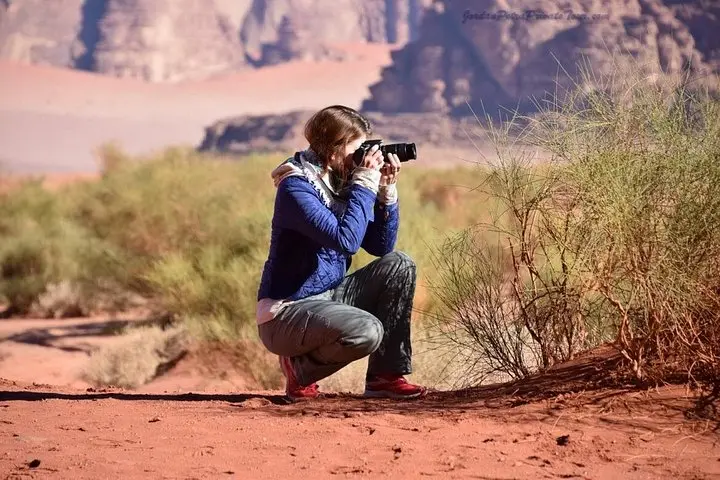
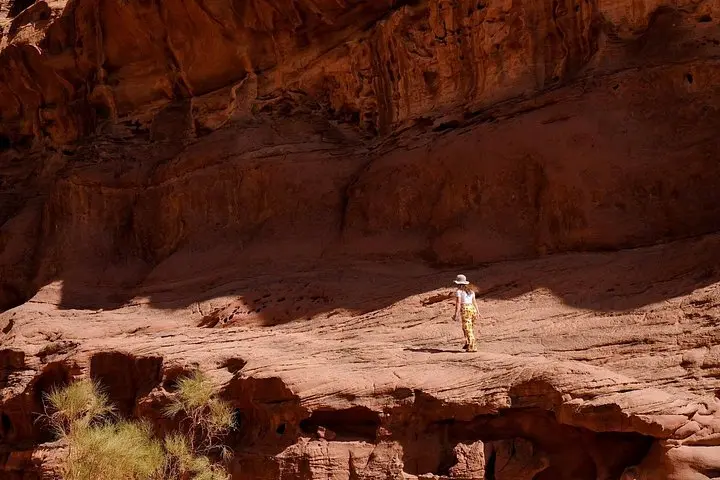
On this four-hour tour you’ll swap between short drives and several 20–45 minute stops: a dune climb for 360-degree views and sandboarding chances, a slot canyon walk with rock inscriptions, scrambling up to a small arch for photos, and a sunset viewpoint if you’re on an afternoon run. The terrain alternates between loose sand, compact desert pavement, and fractured rock; elevation changes are modest but expect short scrambles of 5–30 vertical meters at arches and bridges.
Practical edge: start early to avoid midday heat, or take an afternoon slot for cooler light and a campfire finish. Wear sturdy shoes with grit-friendly soles and bring a headscarf or buff for wind and dust. Hydrate aggressively — bottled water is provided, but bring extra in summer. Respect fragile rock art by not touching inscriptions and by staying on established paths. Lunch is a simple Bedouin picnic prepared by your guide; tipping is customary for excellent local guides.
This tour is compact, culturally rich and physically accessible to most travelers with moderate fitness. It’s an efficient way to see Wadi Rum’s signature features and to walk away with more than a photo — with a sense of how people and landscape shape one another in the desert.
Meet at the parking lot of Wadi Rum Village next to the Wadi Rum Rest House; pickups are not provided — plan travel time from Aqaba or your desert camp.
Children with moderate mobility can join, but the tour involves short scrambles and hot sun — parents should bring shade and extra water.
Basic facilities exist at Wadi Rum Village; in the field there are no formal restrooms — guides will stop at discreet, stable-ground locations if needed.
Sandboarding is possible at the red dune stop when conditions allow; bring a small towel to sit on and ask your guide for boards if included.
Not recommended for travelers with serious spinal issues due to bumpy 4x4 sections and short scrambles off the vehicle.
Tipping is customary; 5–10% of the tour price or a few Jordanian dinars per person is typical depending on service.
Desert Moon Camp operates guided outdoor trips and adventures with an emphasis on safety, stewardship, and memorable experiences.
A wind that smells faintly of metal and salt pushes across the desert as the jeep drops its last wheel tracks in the sand. The vehicle eases to a stop beneath a squat red dune and the world opens: ribbed sand, sheer sandstone walls, and a sky so wide it feels like a roof you could push up with your hands.
A wind that smells faintly of metal and salt pushes across the desert as the jeep drops its last wheel tracks in the sand. The vehicle eases to a stop beneath a squat red dune and the world opens: ribbed sand, sheer sandstone walls, and a sky so wide it feels like a roof you could push up with your hands.
This is Wadi Rum on a four-hour loop guided by a Bedouin driver-guide — not a quick photo stop, but a compact field lesson in desert geology, history and everyday survival. The guide points out where rainwater still pools in natural basins, gestures toward petroglyphs carved into canyon walls centuries ago, and pours steaming Bedouin tea as if it were part of the landscape itself.
Wadi Rum’s landscape is young in geological terms: towering sandstone and granite were carved by wind and infrequent but violent flash floods, leaving arches, bridges and narrow canyons. Human traces run deep here too. Nabatean inscriptions and faint caravan tracks recall the region’s role as a crossroads; Lawrence of Arabia’s route through the valley added a 20th-century layer to the story. Today, Bedouin families manage camps, guide tours, and keep local knowledge alive — expect their stories about seasonal grazing, hidden springs and the old caravan tracks that still map the desert.
On this four-hour tour you’ll swap between short drives and several 20–45 minute stops: a dune climb for 360-degree views and sandboarding chances, a slot canyon walk with rock inscriptions, scrambling up to a small arch for photos, and a sunset viewpoint if you’re on an afternoon run. The terrain alternates between loose sand, compact desert pavement, and fractured rock; elevation changes are modest but expect short scrambles of 5–30 vertical meters at arches and bridges.
Practical edge: start early to avoid midday heat, or take an afternoon slot for cooler light and a campfire finish. Wear sturdy shoes with grit-friendly soles and bring a headscarf or buff for wind and dust. Hydrate aggressively — bottled water is provided, but bring extra in summer. Respect fragile rock art by not touching inscriptions and by staying on established paths. Lunch is a simple Bedouin picnic prepared by your guide; tipping is customary for excellent local guides.
This tour is compact, culturally rich and physically accessible to most travelers with moderate fitness. It’s an efficient way to see Wadi Rum’s signature features and to walk away with more than a photo — with a sense of how people and landscape shape one another in the desert.