THE ADVENTURE COLLECTIVE® · Independent discovery and booking for outdoor travel

Race dunes and scramble through narrow canyons on a Bedouin-guided 4-hour Jeep tour of Wadi Rum. This compact adventure delivers rock arches, petroglyphs, and optional sandboarding or camel rides at the valley’s most dramatic viewpoints.
Race dunes and scramble through narrow canyons on a Bedouin-guided 4-hour Jeep tour of Wadi Rum. This compact adventure delivers rock arches, petroglyphs, and optional sandboarding or camel rides at the valley’s most dramatic viewpoints.
Dawn breaks over Wadi Rum like a slow exhale — the ridges glow copper, and the desert pulls itself out of night with a hush punctuated by camel calls and the rasp of wind over sandstone. On a 4-hour Bedouin-led Jeep tour, that silence becomes a frame for motion: a Land Cruiser climbs a dune, the guide steers toward a narrow canyon, and the landscape opens into stone arches, ancient petroglyphs, and wide bowls of sand that dare you to run them.
Verified experiences and guided adventures in the surrounding area.
Dawn breaks over Wadi Rum like a slow exhale — the ridges glow copper, and the desert pulls itself out of night with a hush punctuated by camel calls and the rasp of wind over sandstone. On a 4-hour Bedouin-led Jeep tour, that silence becomes a frame for motion: a Land Cruiser climbs a dune, the guide steers toward a narrow canyon, and the landscape opens into stone arches, ancient petroglyphs, and wide bowls of sand that dare you to run them.
Wadi Rum’s story is written in rock and footpaths. Geologically it’s Cambrian sandstone and granite, carved by millennia of wind and flash floods into fins, bridges, and domes. Culturally the valley is Bedouin country — families whose livelihoods and oral histories are woven into the routes travelers follow today. T.E. Lawrence’s passage through these canyons brought international attention in the 20th century, and earlier millennia left petroglyphs and Nabataean traces near waterholes like Lawrence’s Spring.
A four-hour loop with a local guide hits the highlights efficiently: Jebel Khazali’s inscriptions and narrow clefts, the airy span of Um Fruth Bridge, washes that collect shadow and pattern, and dunes where guides set up sandboards for the curious. Guides born and raised in the Wadi Rum Protected Area add local context — pointing out seasonal plants, traditional Bedouin camp sites, and stories behind rock names.
Practically, this tour is vehicle-forward but not sedentary. Expect short hikes of 10–30 minutes at several stops; uneven sand and rock surfaces demand stable shoes. Temperature swings are dramatic — mornings and evenings can be cool, while midday quickly becomes hot and bright. Water, sun protection, and layers are non-negotiable.
If you want to add a camel ride, vendors typically offer short treks from the tour’s stops (confirm pricing in advance). Sandboarding is commonly included at dunes and is beginner-friendly; bring sunglasses and secure footwear. Photography is rewarding at first and last light, when shadows carve the cliffs and the sand reddens, but even midday reveals striking monochrome textures.
Logistics are straightforward: tours often include pickup from Wadi Rum Village and run morning or sunset to exploit better light and milder temperatures. Respect the guidelines your guide provides — the Wadi Rum Protected Area relies on responsible visitation to protect archaeological sites and fragile desert vegetation. With practical gear and a sense of curiosity, a four-hour Jeep tour in Wadi Rum is both an introduction and an invitation: enough time to see the valley’s defining forms, and to understand why travelers keep returning to this raw, articulate desert.
Yes — the protected area's terrain is rough and sandy; licensed local operators use 4×4 vehicles suited to dunes and rocky tracks.
Sandboarding is commonly offered free at dune stops on this tour, but confirm with your operator when booking.
Yes — short camel treks are usually available as an add-on at tour stops; price and duration vary by provider.
Morning and sunset tours offer cooler conditions and the best light for photography; midday can be very hot in summer.
Families with older children generally find this tour accessible, but very young children should be secured and monitored on dunes and during stops.
Yes — Bedouin guides typically provide local history, point out petroglyphs, and explain natural features along the route.
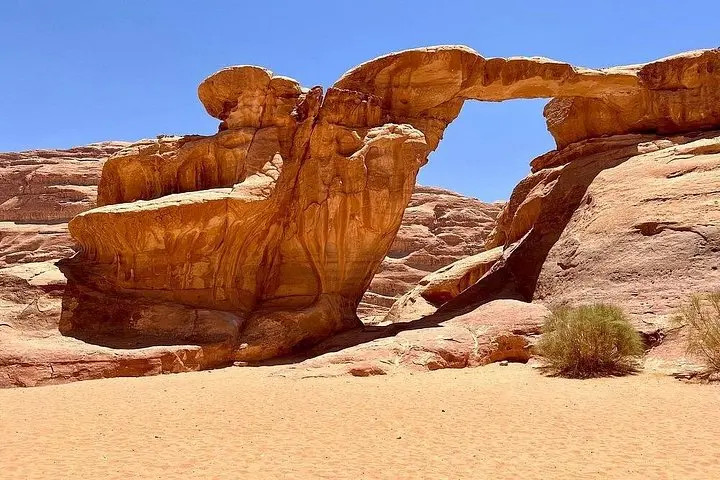
Dawn breaks over Wadi Rum like a slow exhale — the ridges glow copper, and the desert pulls itself out of night with a hush punctuated by camel calls and the rasp of wind over sandstone. On a 4-hour Bedouin-led Jeep tour, that silence becomes a frame for motion: a Land Cruiser climbs a dune, the guide steers toward a narrow canyon, and the landscape opens into stone arches, ancient petroglyphs, and wide bowls of sand that dare you to run them.
Dawn breaks over Wadi Rum like a slow exhale — the ridges glow copper, and the desert pulls itself out of night with a hush punctuated by camel calls and the rasp of wind over sandstone. On a 4-hour Bedouin-led Jeep tour, that silence becomes a frame for motion: a Land Cruiser climbs a dune, the guide steers toward a narrow canyon, and the landscape opens into stone arches, ancient petroglyphs, and wide bowls of sand that dare you to run them.
Wadi Rum’s story is written in rock and footpaths. Geologically it’s Cambrian sandstone and granite, carved by millennia of wind and flash floods into fins, bridges, and domes. Culturally the valley is Bedouin country — families whose livelihoods and oral histories are woven into the routes travelers follow today. T.E. Lawrence’s passage through these canyons brought international attention in the 20th century, and earlier millennia left petroglyphs and Nabataean traces near waterholes like Lawrence’s Spring.
A four-hour loop with a local guide hits the highlights efficiently: Jebel Khazali’s inscriptions and narrow clefts, the airy span of Um Fruth Bridge, washes that collect shadow and pattern, and dunes where guides set up sandboards for the curious. Guides born and raised in the Wadi Rum Protected Area add local context — pointing out seasonal plants, traditional Bedouin camp sites, and stories behind rock names.
Practically, this tour is vehicle-forward but not sedentary. Expect short hikes of 10–30 minutes at several stops; uneven sand and rock surfaces demand stable shoes. Temperature swings are dramatic — mornings and evenings can be cool, while midday quickly becomes hot and bright. Water, sun protection, and layers are non-negotiable.
If you want to add a camel ride, vendors typically offer short treks from the tour’s stops (confirm pricing in advance). Sandboarding is commonly included at dunes and is beginner-friendly; bring sunglasses and secure footwear. Photography is rewarding at first and last light, when shadows carve the cliffs and the sand reddens, but even midday reveals striking monochrome textures.
Logistics are straightforward: tours often include pickup from Wadi Rum Village and run morning or sunset to exploit better light and milder temperatures. Respect the guidelines your guide provides — the Wadi Rum Protected Area relies on responsible visitation to protect archaeological sites and fragile desert vegetation. With practical gear and a sense of curiosity, a four-hour Jeep tour in Wadi Rum is both an introduction and an invitation: enough time to see the valley’s defining forms, and to understand why travelers keep returning to this raw, articulate desert.