THE ADVENTURE COLLECTIVE® · Independent discovery and booking for outdoor travel

Two days that pair Wadi Rum’s desert panoramas with Petra’s carved stone city—sleep under a Bedouin sky, ride a 4x4 through rock arches, and walk the Siq to the Treasury. Practical for travelers arriving via the Eilat border.
Two days that pair Wadi Rum’s desert panoramas with Petra’s carved stone city—sleep under a Bedouin sky, ride a 4x4 through rock arches, and walk the Siq to the Treasury. Practical for travelers arriving via the Eilat border.
Sun lowers over ochre sandstone as your vehicle pulls away from the border and into the wide silence of southern Jordan. The desert air pushes at the windows; rock faces throw long shadows that invite a closer look. On day one the landscape is kinetic—jeep wheels carving tracks, Bedouin tea warming your hands—and at night a Bedouin camp makes the sky feel absurdly close.
Verified experiences and guided adventures in the surrounding area.
Operated by Jordan Horizon Tours · Wadi Musa (Petra), Ma'an Governorate
Sun lowers over ochre sandstone as your vehicle pulls away from the border and into the wide silence of southern Jordan. The desert air pushes at the windows; rock faces throw long shadows that invite a closer look. On day one the landscape is kinetic—jeep wheels carving tracks, Bedouin tea warming your hands—and at night a Bedouin camp makes the sky feel absurdly close.
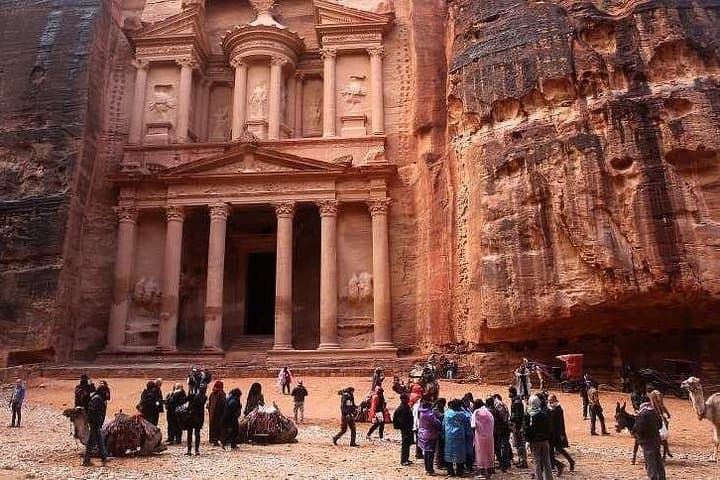
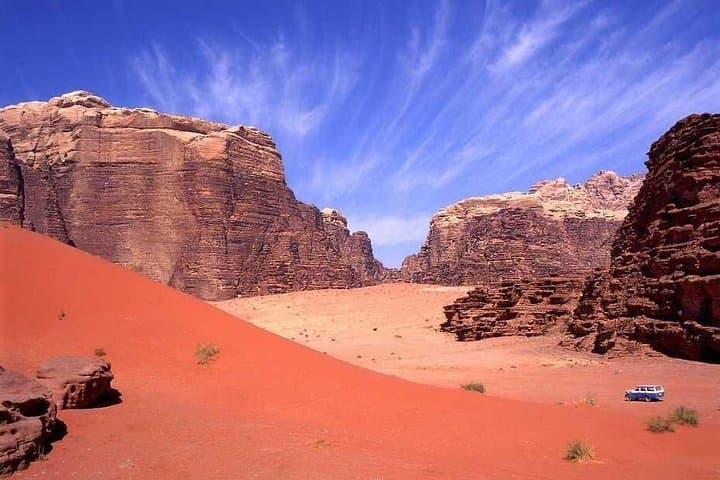
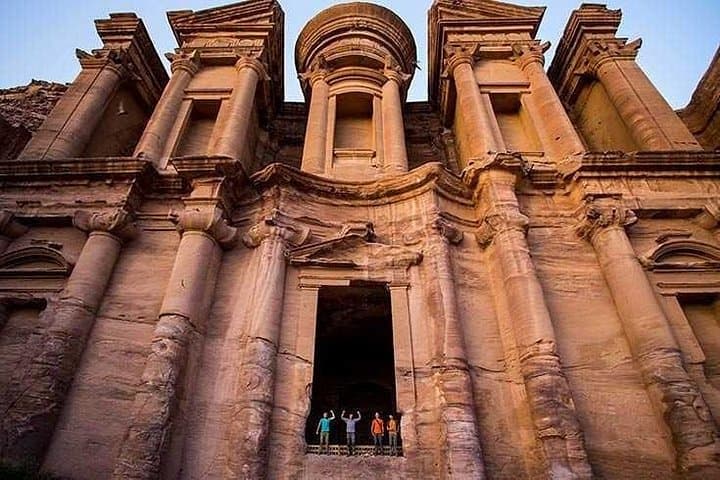
Petra’s rose-red façades and Wadi Rum’s stone cathedrals are chapters of different geologies and histories. Petra began as the Nabataean trading capital, carved into Cambrian and sandstone layers whose banded colors record millennia of deposition and uplift. Wadi Rum is a wind-sculpted arena of granite and sandstone where Lawrence of Arabia’s footsteps intersect with Bedouin routes; you’ll pass Nabatean inscriptions, natural arches and springs that sustained travel across this harsh country.
Expect 4–5 hour jeep explorations, short hikes to viewpoints and a 2–3 hour guided walk through Petra’s Siq to the Treasury. Cultural touches—Bedouin hospitality, tea, traditional BBQ—balance with practicalities like border formalities and timed entry at Petra.
Practical guidance: schedule extra time for the Eilat/Aqaba border crossing, carry at least 2–3 liters of water, wear sturdy shoes for loose sand and uneven stone, and bring layers—the desert warms fast by day and chills after sunset. If you’re planning the camel ride or horse transfer in Petra, budget small local tips. Respect local dress customs in towns; photography is welcome but always ask before photographing people.
Many nationalities can obtain a visa on arrival at the Jordanian border; check current embassy guidance before travel and ensure passport validity meets entry requirements.
This tour offers the option to stay overnight in either Petra (Wadi Musa) or a Wadi Rum Bedouin camp at the same rate—confirm your preference when booking.
Camel rides are optional and typically cost extra (around 10–15 USD per hour); handlers expect a tip for short transfers in Petra or Wadi Rum.
Petra involves 2–3 hours of guided walking through the Siq and to main monuments with uneven surfaces; Wadi Rum includes shorter hikes and jeep-based visits to viewpoints.
Jordan Horizon Tours operates guided outdoor trips and adventures with an emphasis on safety, stewardship, and memorable experiences.
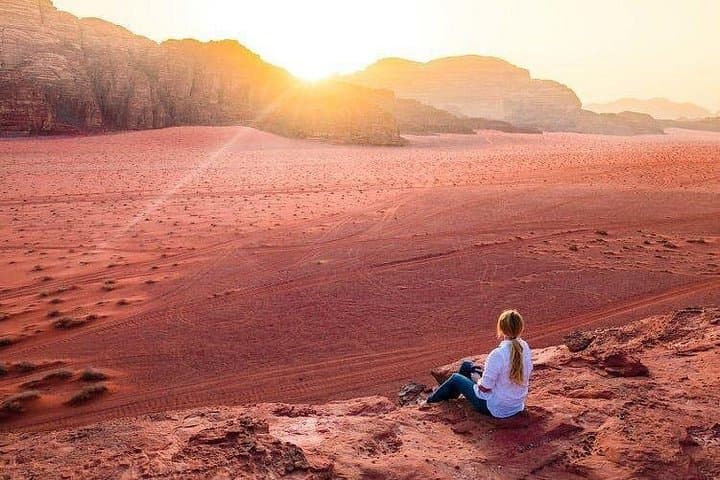
Sun lowers over ochre sandstone as your vehicle pulls away from the border and into the wide silence of southern Jordan. The desert air pushes at the windows; rock faces throw long shadows that invite a closer look. On day one the landscape is kinetic—jeep wheels carving tracks, Bedouin tea warming your hands—and at night a Bedouin camp makes the sky feel absurdly close.
Sun lowers over ochre sandstone as your vehicle pulls away from the border and into the wide silence of southern Jordan. The desert air pushes at the windows; rock faces throw long shadows that invite a closer look. On day one the landscape is kinetic—jeep wheels carving tracks, Bedouin tea warming your hands—and at night a Bedouin camp makes the sky feel absurdly close.
Petra’s rose-red façades and Wadi Rum’s stone cathedrals are chapters of different geologies and histories. Petra began as the Nabataean trading capital, carved into Cambrian and sandstone layers whose banded colors record millennia of deposition and uplift. Wadi Rum is a wind-sculpted arena of granite and sandstone where Lawrence of Arabia’s footsteps intersect with Bedouin routes; you’ll pass Nabatean inscriptions, natural arches and springs that sustained travel across this harsh country.
Expect 4–5 hour jeep explorations, short hikes to viewpoints and a 2–3 hour guided walk through Petra’s Siq to the Treasury. Cultural touches—Bedouin hospitality, tea, traditional BBQ—balance with practicalities like border formalities and timed entry at Petra.
Practical guidance: schedule extra time for the Eilat/Aqaba border crossing, carry at least 2–3 liters of water, wear sturdy shoes for loose sand and uneven stone, and bring layers—the desert warms fast by day and chills after sunset. If you’re planning the camel ride or horse transfer in Petra, budget small local tips. Respect local dress customs in towns; photography is welcome but always ask before photographing people.