THE ADVENTURE COLLECTIVE® · Independent discovery and booking for outdoor travel

Spend a day in Wadi Rum trading jeep tracks for camel steps, exploring narrow Nabatean canyons, sandboarding sun-warmed dunes, and sharing a Bedouin lunch cooked over an open fire. This full-day tour blends accessible hikes with dramatic vistas and cultural moments.
Spend a day in Wadi Rum trading jeep tracks for camel steps, exploring narrow Nabatean canyons, sandboarding sun-warmed dunes, and sharing a Bedouin lunch cooked over an open fire. This full-day tour blends accessible hikes with dramatic vistas and cultural moments.
The sun slices across the desert in a hard, clear line as a column of camels moves away from Wadi Rum Village. A visitor steps down from a padded saddle and feels the compacted sand give underfoot; the valley opens into a gallery of red-orange sandstone walls, natural bridges, and dunes that look newly stacked by a careful hand. Over the next eight hours the landscape changes from wind-polished slabs to tight, cool canyons and then to a dune sea that dares you to climb.
Verified experiences and guided adventures in the surrounding area.
Operated by Wadi Rum Excursions · Wadi Rum Village, Ma'an Governorate
The sun slices across the desert in a hard, clear line as a column of camels moves away from Wadi Rum Village. A visitor steps down from a padded saddle and feels the compacted sand give underfoot; the valley opens into a gallery of red-orange sandstone walls, natural bridges, and dunes that look newly stacked by a careful hand. Over the next eight hours the landscape changes from wind-polished slabs to tight, cool canyons and then to a dune sea that dares you to climb.
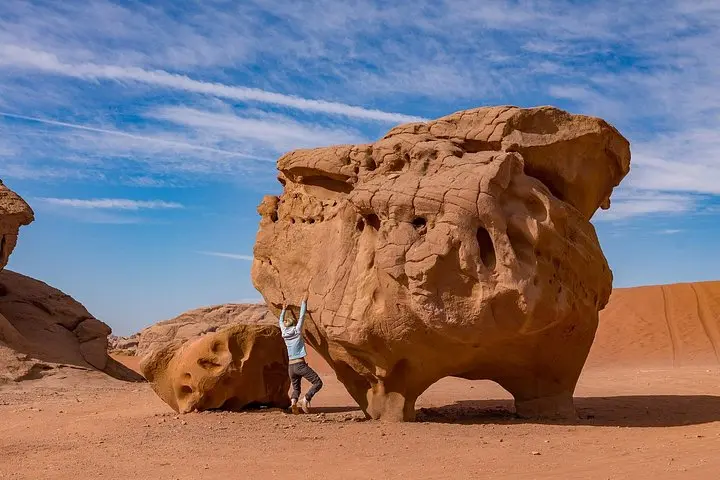
Wadi Rum’s landscape is geologic theater. Granite and sandstone, scored by wind and time, form arches and mushroom-shaped outcrops. Nabatean traders cut inscriptions into narrow canyons here centuries ago, leaving messages to passing caravans; later, T. E. Lawrence used the range as a base, and his house still marks the map. Bedouin culture remains active—guides and cooks keep traditions alive, serving tea and slow-roasted lamb over open coals in sites that have seen both ancient trade and twentieth-century desert campaigns.
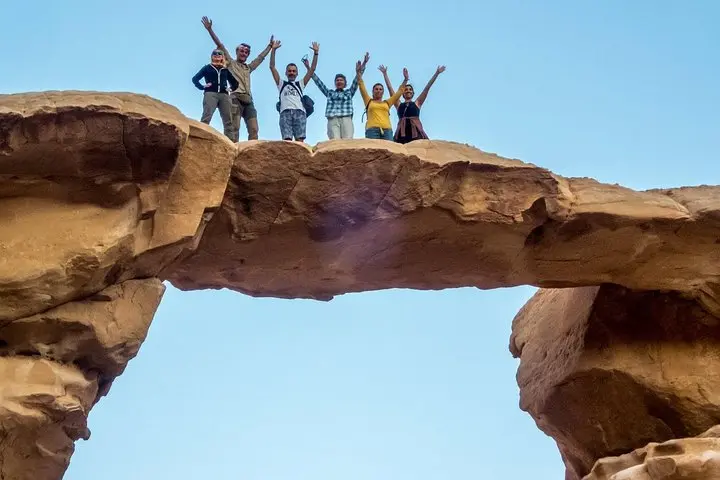
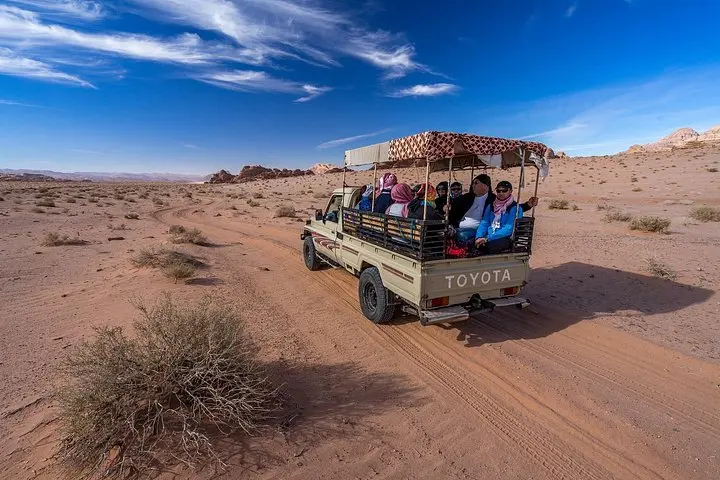
This full-day loop blends low-impact walking with off-road driving: expect multiple short hikes (20–60 minutes) through Khazali and Al‑Mahama canyons, a camel ride to Lawrence Spring, and dune climbs where sandboarding and running downhill are common. Jeep transfers cover the longer stretches between features like Mushroom Rock, Burdah Bridge, Um Frouth Rock Bridge, and Chicken Rock, which is a favored sunset perch. The guide times a mid-day stop to prepare a Bedouin lunch over fire, offering both a cultural moment and a practical chance to rest.
Practical edge: the desert is dry and exposed. Carry at least 2 liters of water, wear closed shoes for canyon scrambles, and layer—mornings can be cool while afternoons spike. If you plan to sandboard, bring gloves to protect hands from hot sand. Respect inscription sites—don’t touch carved faces—and follow your guide’s instructions on where to walk; fragile crust and rare plants can be damaged by off-trail wandering.
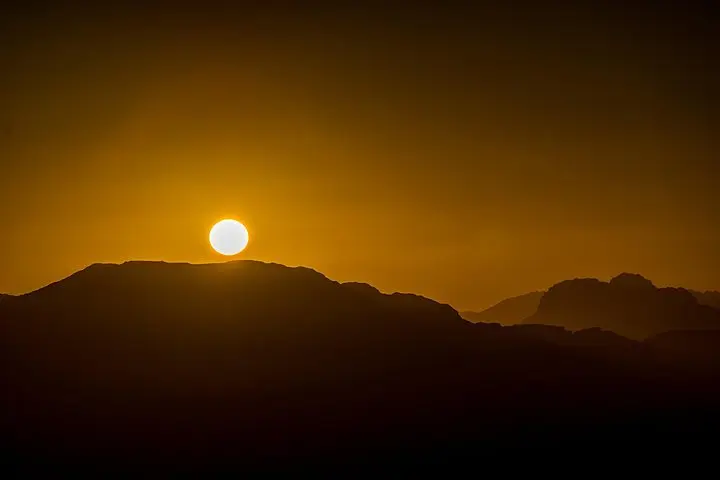
For photographers, plan sunset at Chicken Rock or an early-morning camel approach for soft light across the dunes. If you want less crowds, book early in the morning departures or visit outside peak travel weeks. The itinerary is accessible for most fitness levels but includes uneven terrain and short climbs, so basic mobility and a sense of adventure are the only real requirements.
By day’s end the desert seems to have shifted subtly—rocks keep their age, but the traveler leaves with a clearer map of Wadi Rum’s history, geology, and living Bedouin traditions: a full, grounded desert experience that’s both raw and organized for the visitor who wants to move through it with eyes open.
The tour runs about 8 hours with several short walks—typically 20–60 minutes—in canyons and to viewpoints; the rest is by jeep or short camel ride.
Yes. Camel rides are suitable for first-timers and guides assist mounts/dismounts; basic sandboarding is offered and instructors show safe techniques.
A Bedouin-style lunch, tea/coffee, and bottled water are included in the tour price.
Facilities are limited; expect simple, guided breaks and composting-style or basic toilets near camps; bring hand sanitizer and tissues.
The tour is labelled accessible for most fitness levels, but uneven terrain and short climbs may be difficult for those with limited mobility; camels and jeeps can limit walking distance for children.
Tipping is customary if you enjoyed the service; 5–10% of the tour cost split between driver and guide is a common guideline.
Wadi Rum Excursions operates guided outdoor trips and adventures with an emphasis on safety, stewardship, and memorable experiences.
The sun slices across the desert in a hard, clear line as a column of camels moves away from Wadi Rum Village. A visitor steps down from a padded saddle and feels the compacted sand give underfoot; the valley opens into a gallery of red-orange sandstone walls, natural bridges, and dunes that look newly stacked by a careful hand. Over the next eight hours the landscape changes from wind-polished slabs to tight, cool canyons and then to a dune sea that dares you to climb.
The sun slices across the desert in a hard, clear line as a column of camels moves away from Wadi Rum Village. A visitor steps down from a padded saddle and feels the compacted sand give underfoot; the valley opens into a gallery of red-orange sandstone walls, natural bridges, and dunes that look newly stacked by a careful hand. Over the next eight hours the landscape changes from wind-polished slabs to tight, cool canyons and then to a dune sea that dares you to climb.
Wadi Rum’s landscape is geologic theater. Granite and sandstone, scored by wind and time, form arches and mushroom-shaped outcrops. Nabatean traders cut inscriptions into narrow canyons here centuries ago, leaving messages to passing caravans; later, T. E. Lawrence used the range as a base, and his house still marks the map. Bedouin culture remains active—guides and cooks keep traditions alive, serving tea and slow-roasted lamb over open coals in sites that have seen both ancient trade and twentieth-century desert campaigns.
This full-day loop blends low-impact walking with off-road driving: expect multiple short hikes (20–60 minutes) through Khazali and Al‑Mahama canyons, a camel ride to Lawrence Spring, and dune climbs where sandboarding and running downhill are common. Jeep transfers cover the longer stretches between features like Mushroom Rock, Burdah Bridge, Um Frouth Rock Bridge, and Chicken Rock, which is a favored sunset perch. The guide times a mid-day stop to prepare a Bedouin lunch over fire, offering both a cultural moment and a practical chance to rest.
Practical edge: the desert is dry and exposed. Carry at least 2 liters of water, wear closed shoes for canyon scrambles, and layer—mornings can be cool while afternoons spike. If you plan to sandboard, bring gloves to protect hands from hot sand. Respect inscription sites—don’t touch carved faces—and follow your guide’s instructions on where to walk; fragile crust and rare plants can be damaged by off-trail wandering.
For photographers, plan sunset at Chicken Rock or an early-morning camel approach for soft light across the dunes. If you want less crowds, book early in the morning departures or visit outside peak travel weeks. The itinerary is accessible for most fitness levels but includes uneven terrain and short climbs, so basic mobility and a sense of adventure are the only real requirements.
By day’s end the desert seems to have shifted subtly—rocks keep their age, but the traveler leaves with a clearer map of Wadi Rum’s history, geology, and living Bedouin traditions: a full, grounded desert experience that’s both raw and organized for the visitor who wants to move through it with eyes open.