THE ADVENTURE COLLECTIVE® · Independent discovery and booking for outdoor travel

Climb into a 4x4 and cross a red-sand sea where granite spires and carved canyons wait to be explored. This full-day Wadi Rum jeep safari pairs Bedouin hospitality with sand-boarding, short hikes, and a sunset that rewards patience.
Climb into a 4x4 and cross a red-sand sea where granite spires and carved canyons wait to be explored. This full-day Wadi Rum jeep safari pairs Bedouin hospitality with sand-boarding, short hikes, and a sunset that rewards patience.
The jeep eats sand. Tires grind, chassis rumbles, and the red plain opens like a page of geological history—scarred granite and sandstone rising in ribs against a vast sky. Visitors meet their native Bedouin guide at the Wadi Rum rest house and, within minutes, leave tracks that the desert will smooth by morning. Over the next eight hours the landscape alternately narrows to canyon hush and unfurls into wind-sculpted dunes where sand-boarding becomes less sport and more contact with the terrain.
Verified experiences and guided adventures in the surrounding area.
Operated by Wadi Rum Camp and Tours · Wadi Rum Village, Ma'an Governorate
The jeep eats sand. Tires grind, chassis rumbles, and the red plain opens like a page of geological history—scarred granite and sandstone rising in ribs against a vast sky. Visitors meet their native Bedouin guide at the Wadi Rum rest house and, within minutes, leave tracks that the desert will smooth by morning. Over the next eight hours the landscape alternately narrows to canyon hush and unfurls into wind-sculpted dunes where sand-boarding becomes less sport and more contact with the terrain.
Wadi Rum sits at a crossroads of human history and tectonic drama. These valleys and monoliths were pushed up when the Arabian Plate collided with Africa, then eroded into arches, fluted pillars and honeycombed faces that Thomas Edward Lawrence made famous during the Arab Revolt. Bedouin camps here remain cultural touchstones—guides still pour sweet tea, tell stories by the ember glow, and offer a living link to a nomadic past.
Geology shows in the layering: the red comes from iron-oxide staining, while the dramatic cliffs preserve ancient seabed strata. Culturally, small rock inscriptions and Nabatean routes thread the landscape; a Bedouin guide will point out petroglyphs and old caravan paths, translating their markers into human continuity.
Practicality governs the day. The tour covers popular sites—Lawrence’s house, natural arches, and freshwater springs—plus off-track pockets that make for better light and solitude. Expect multiple photo stops, a picnic-style Bedouin lunch, and optional camel time for those who want a slower pace. Hikes are short but can involve scrambling; the hottest part of the day is typically midday, and the sunset on the dunes is the event everyone times their cameras for.
To get the most from the day, arrive hydrated and dressed in layers: mornings can be cool, afternoons hot, and evenings windy. Bring sunscreen, a brimmed hat and closed-toe shoes for scrambling and dune running. If sand-boarding, a lightweight board and a willingness to fall will speed the learning curve. Respect private camps and cultural customs—ask before photographing people and remove shoes if invited into a tent.
Logistics are straightforward: the meeting point is the Wadi Rum rest house about 7 km from the visitor center; tours run as private groups with instant confirmation and bottled water provided. For longer trips, consider adding a half-hour or hour camel ride. This is not a trek; it’s a paced, sensory immersion—rock, sand, sky—where the desert dares you to slow down, look closely and keep turning the page.
Tours run 6–8 hours (360–480 minutes) depending on group pace and optional extras like camel rides.
Sand-boarding is offered during the tour; bring suitable clothing—boards are provided by most operators.
Yes—camel rides are optional and available for an extra fee (approximately 10 JOD for 30 minutes, 15 JOD for 1 hour).
Yes—tours are rated easy to moderate; however, those with spinal issues or pregnancy are advised against participating.
Bring your ticket confirmation, sun protection, water bottle, sturdy shoes and a camera; the meeting point is the Wadi Rum rest house about 7 km from the visitor center.
Yes—professional, English-speaking native Bedouin guides lead the tours and provide cultural and historical insights.
Wadi Rum Camp and Tours operates guided outdoor trips and adventures with an emphasis on safety, stewardship, and memorable experiences.

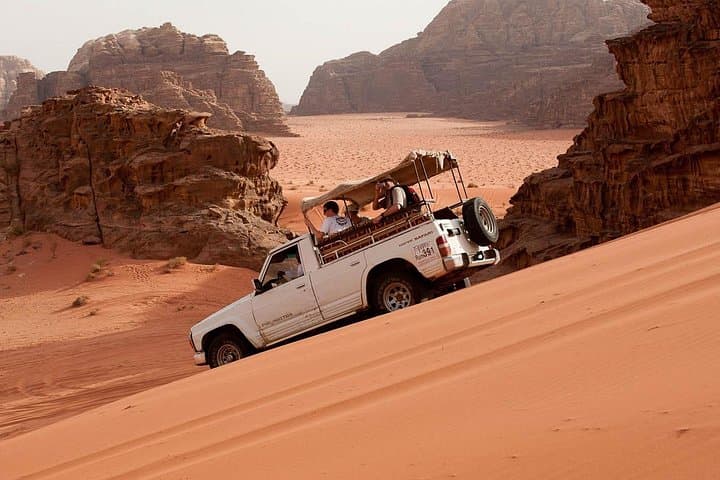


The jeep eats sand. Tires grind, chassis rumbles, and the red plain opens like a page of geological history—scarred granite and sandstone rising in ribs against a vast sky. Visitors meet their native Bedouin guide at the Wadi Rum rest house and, within minutes, leave tracks that the desert will smooth by morning. Over the next eight hours the landscape alternately narrows to canyon hush and unfurls into wind-sculpted dunes where sand-boarding becomes less sport and more contact with the terrain.
The jeep eats sand. Tires grind, chassis rumbles, and the red plain opens like a page of geological history—scarred granite and sandstone rising in ribs against a vast sky. Visitors meet their native Bedouin guide at the Wadi Rum rest house and, within minutes, leave tracks that the desert will smooth by morning. Over the next eight hours the landscape alternately narrows to canyon hush and unfurls into wind-sculpted dunes where sand-boarding becomes less sport and more contact with the terrain.
Wadi Rum sits at a crossroads of human history and tectonic drama. These valleys and monoliths were pushed up when the Arabian Plate collided with Africa, then eroded into arches, fluted pillars and honeycombed faces that Thomas Edward Lawrence made famous during the Arab Revolt. Bedouin camps here remain cultural touchstones—guides still pour sweet tea, tell stories by the ember glow, and offer a living link to a nomadic past.
Geology shows in the layering: the red comes from iron-oxide staining, while the dramatic cliffs preserve ancient seabed strata. Culturally, small rock inscriptions and Nabatean routes thread the landscape; a Bedouin guide will point out petroglyphs and old caravan paths, translating their markers into human continuity.
Practicality governs the day. The tour covers popular sites—Lawrence’s house, natural arches, and freshwater springs—plus off-track pockets that make for better light and solitude. Expect multiple photo stops, a picnic-style Bedouin lunch, and optional camel time for those who want a slower pace. Hikes are short but can involve scrambling; the hottest part of the day is typically midday, and the sunset on the dunes is the event everyone times their cameras for.
To get the most from the day, arrive hydrated and dressed in layers: mornings can be cool, afternoons hot, and evenings windy. Bring sunscreen, a brimmed hat and closed-toe shoes for scrambling and dune running. If sand-boarding, a lightweight board and a willingness to fall will speed the learning curve. Respect private camps and cultural customs—ask before photographing people and remove shoes if invited into a tent.
Logistics are straightforward: the meeting point is the Wadi Rum rest house about 7 km from the visitor center; tours run as private groups with instant confirmation and bottled water provided. For longer trips, consider adding a half-hour or hour camel ride. This is not a trek; it’s a paced, sensory immersion—rock, sand, sky—where the desert dares you to slow down, look closely and keep turning the page.