THE ADVENTURE COLLECTIVE® · Independent discovery and booking for outdoor travel

Spend a full day exploring Wadi Rum by 4x4: climb red dunes, read ancient petroglyphs in Khazali Canyon and share a campfire-cooked Bedouin lunch. This guided jeep route mixes geology, history and accessible adventure with sunset views that transform the desert.
Spend a full day exploring Wadi Rum by 4x4: climb red dunes, read ancient petroglyphs in Khazali Canyon and share a campfire-cooked Bedouin lunch. This guided jeep route mixes geology, history and accessible adventure with sunset views that transform the desert.
You climb into a low-slung Land Cruiser and the desert opens like a page: broad flats of powdered sand punctuated by towering sandstone ribs and wind-carved arches. The jeep rolls over corrugated tracks, dust rising behind you, while the guide points out petroglyphs and the green ribbon of Lawrence Spring tucked against a granite wall.
Verified experiences and guided adventures in the surrounding area.
Operated by Wadi Rum Quests · Wadi Rum Village, Aqaba Governorate
You climb into a low-slung Land Cruiser and the desert opens like a page: broad flats of powdered sand punctuated by towering sandstone ribs and wind-carved arches. The jeep rolls over corrugated tracks, dust rising behind you, while the guide points out petroglyphs and the green ribbon of Lawrence Spring tucked against a granite wall.
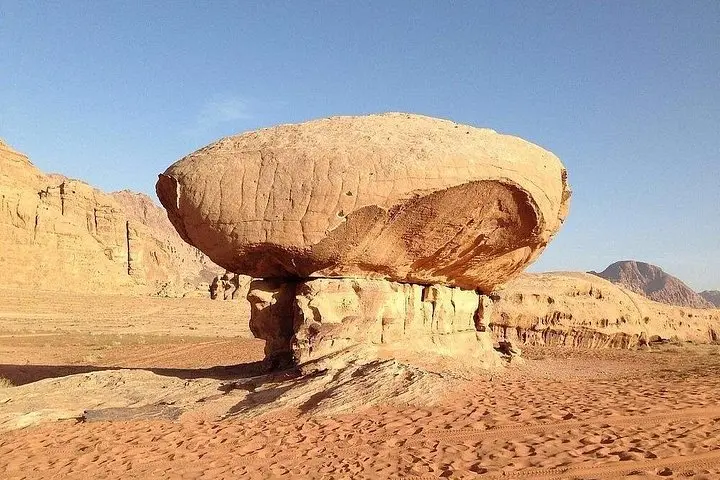
Wadi Rum’s landscape records millions of years of geology—cross-bedded sandstones, iron-rich dunes and natural bridges carved by wind and salt. Human history is layered on top: Nabatean and Thamudic inscriptions, caravan routes to Damascus and the faded stone remains associated with T.E. Lawrence’s wartime movements. Bedouin families still live here on traditional terms, sharing tea and stories around a fire.
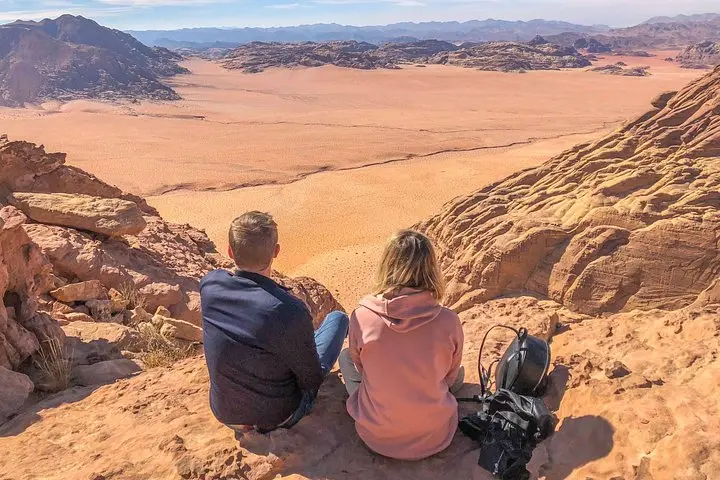
On a full-day jeep tour you’ll stop at Khazali Canyon to read ancient graffiti, test sprinting down the red sand dunes, climb the Little Bridge for a compact panorama, and stand on Umm Fruth or Burda Rock Bridge for dramatic photos. Lunch is cooked over coals in a Bedouin camp—simple, robust fare served with hospitality.
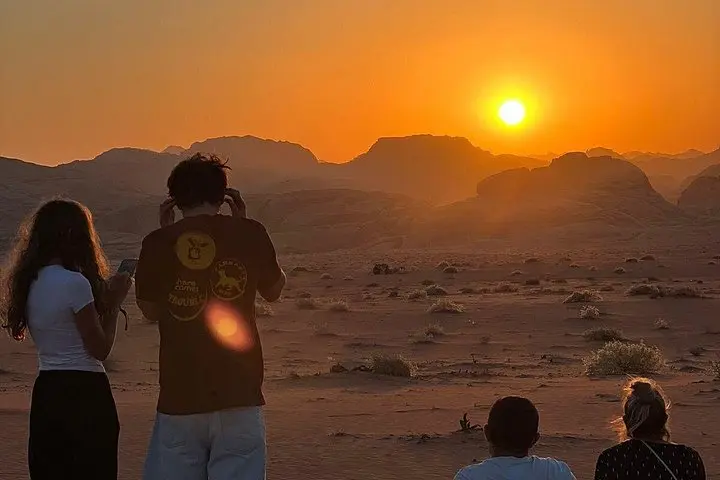
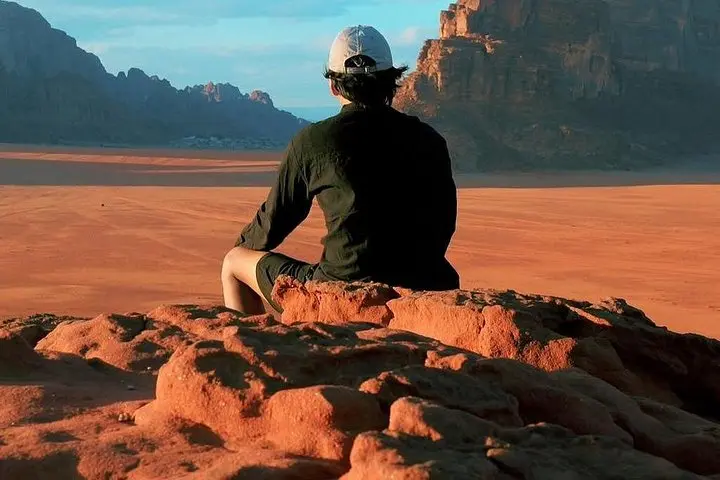
Practical guide: wear sturdy closed-toe shoes for short climbs, bring 2–3 liters of water and sun protection, and expect dust—pack a bandana or lightweight face cover. Mobility is easy but uneven terrain can be tricky for people with back or spine issues. Best light is early morning or late afternoon; sunset here deepens the desert’s ochres into rust and violet.
Respect sites and local customs, ask before photographing people, and leave no trace—the desert responds slowly to disturbance, but quickly to care.
Most tours meet at Wadi Rum Village (Rum Visitor Centre) or hotels in Aqaba; operators often provide clear pickup details—confirm pickup time when booking.
Yes, the itinerary is family-friendly with minimal walking required; however, those with serious back or spinal issues should avoid rough rides and check with the operator.
Lunch is typically a communal meal cooked over a campfire—stews, rice, bread and tea or coffee; notify operators of dietary needs in advance.
Some bridges like Umm Fruth have steep approaches and may be challenging; guides will advise which formations are safe for guests to access.
Wadi Rum Quests operates guided outdoor trips and adventures with an emphasis on safety, stewardship, and memorable experiences.
You climb into a low-slung Land Cruiser and the desert opens like a page: broad flats of powdered sand punctuated by towering sandstone ribs and wind-carved arches. The jeep rolls over corrugated tracks, dust rising behind you, while the guide points out petroglyphs and the green ribbon of Lawrence Spring tucked against a granite wall.
You climb into a low-slung Land Cruiser and the desert opens like a page: broad flats of powdered sand punctuated by towering sandstone ribs and wind-carved arches. The jeep rolls over corrugated tracks, dust rising behind you, while the guide points out petroglyphs and the green ribbon of Lawrence Spring tucked against a granite wall.
Wadi Rum’s landscape records millions of years of geology—cross-bedded sandstones, iron-rich dunes and natural bridges carved by wind and salt. Human history is layered on top: Nabatean and Thamudic inscriptions, caravan routes to Damascus and the faded stone remains associated with T.E. Lawrence’s wartime movements. Bedouin families still live here on traditional terms, sharing tea and stories around a fire.
On a full-day jeep tour you’ll stop at Khazali Canyon to read ancient graffiti, test sprinting down the red sand dunes, climb the Little Bridge for a compact panorama, and stand on Umm Fruth or Burda Rock Bridge for dramatic photos. Lunch is cooked over coals in a Bedouin camp—simple, robust fare served with hospitality.
Practical guide: wear sturdy closed-toe shoes for short climbs, bring 2–3 liters of water and sun protection, and expect dust—pack a bandana or lightweight face cover. Mobility is easy but uneven terrain can be tricky for people with back or spine issues. Best light is early morning or late afternoon; sunset here deepens the desert’s ochres into rust and violet.
Respect sites and local customs, ask before photographing people, and leave no trace—the desert responds slowly to disturbance, but quickly to care.