THE ADVENTURE COLLECTIVE® · Independent discovery and booking for outdoor travel

Spend a day crossing Wadi Rum’s red-rock corridors by Jeep, explore Nabatean carvings and narrow canyons, and finish under a sky of stars at a private Bedouin camp. Practical guidance on timing, gear and what to expect from the desert landscape.
Spend a day crossing Wadi Rum’s red-rock corridors by Jeep, explore Nabatean carvings and narrow canyons, and finish under a sky of stars at a private Bedouin camp. Practical guidance on timing, gear and what to expect from the desert landscape.
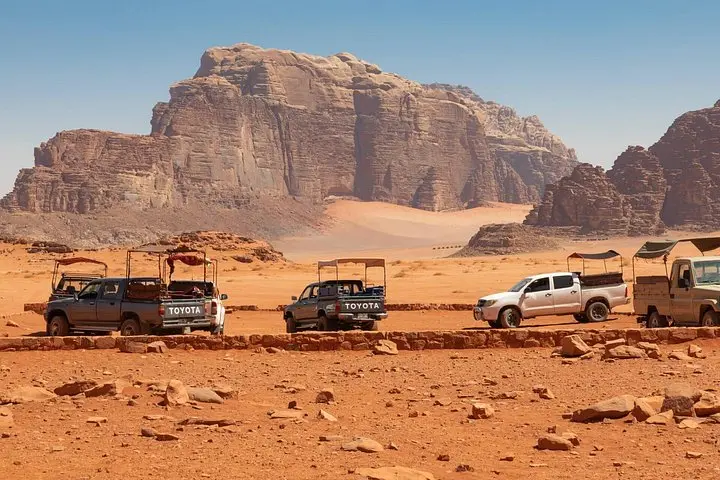
A pale sun punches through a ribbon of dust as the Land Cruiser crunches onto a track that climbs between red sandstone ribs. Wind tugs at your scarf; sand slips like glass under the tires. The Jeep stops at a narrow notch and the guide points: carved Nabatean marks half-buried in the lee, a dry spring named after T.E. Lawrence, and beyond them a sweep of dunes that fold into the horizon. This is Wadi Rum by daylight—big, blunt, and stubbornly beautiful—and by night it becomes a galaxy you can’t help but compare to a cathedral.
Verified experiences and guided adventures in the surrounding area.
Operated by Wadi Rum Bedouin Campsite & Tours · Wadi Rum Village, Ma'an Governorate
A pale sun punches through a ribbon of dust as the Land Cruiser crunches onto a track that climbs between red sandstone ribs. Wind tugs at your scarf; sand slips like glass under the tires. The Jeep stops at a narrow notch and the guide points: carved Nabatean marks half-buried in the lee, a dry spring named after T.E. Lawrence, and beyond them a sweep of dunes that fold into the horizon. This is Wadi Rum by daylight—big, blunt, and stubbornly beautiful—and by night it becomes a galaxy you can’t help but compare to a cathedral.
Wadi Rum’s geology reads like a field guide to ancient forces. Wind and flash floods have sculpted granite and sandstone into arches, bridges and narrow canyons over millions of years. The Nabateans left petroglyphs and inscriptions along canyon walls; later, Lawrence of Arabia moved through these passes, and Bedouin families kept living maps of water and shelter. The culture you encounter here is pragmatic and hospitable: expect strong black tea, stories by the fire and a simple, hearty Bedouin meal prepared over coals.
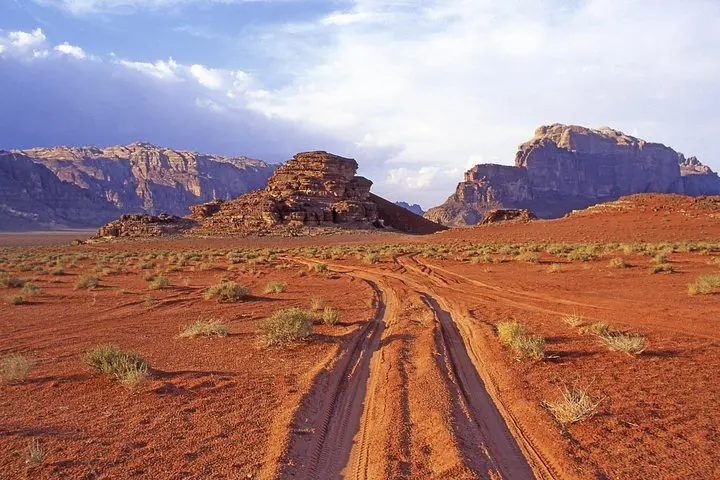
The trip moves fast and deliberately. Drivers navigate 20–40 km of off-road tracks; walking is limited but purposeful—Khazali Canyon is a 30–60 minute stroll through etched walls, and Burdah Rock Bridge involves a short 10–20 meter scramble to a sweeping lookout. Elevation change is modest (the valley floor sits around 700–900 m), but footing is mixed: hard-packed tracks, pebbled scree and loose sand on dune slopes.
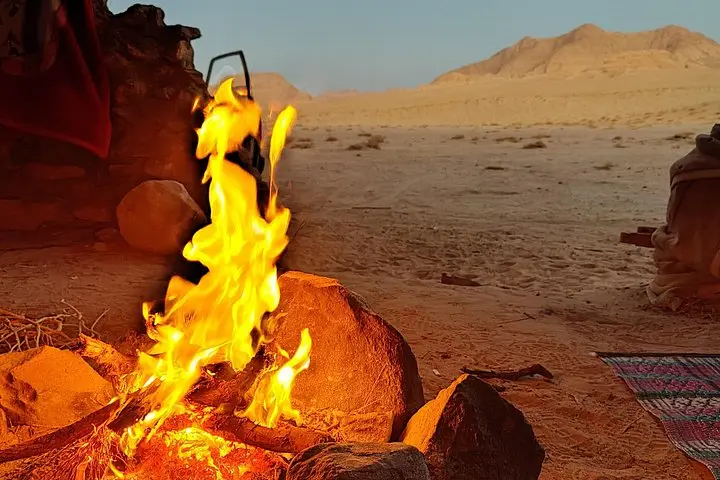
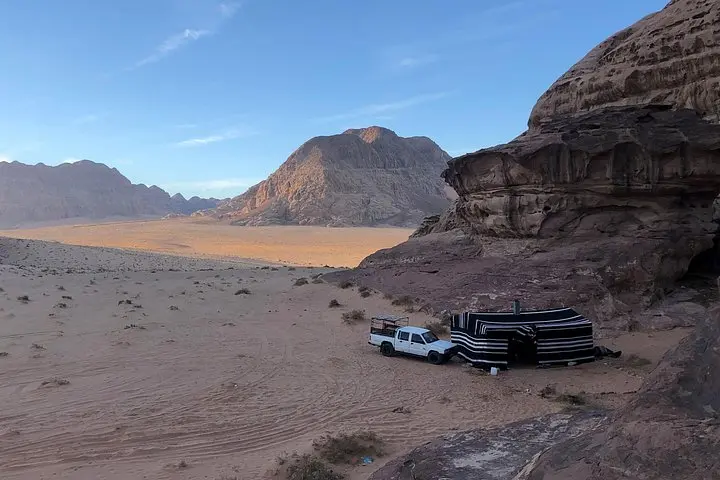
Practical planning matters. Go light but smart: layered clothing for hot days and cold nights, sturdy closed-toe shoes for scrambling, sun protection and at least 2–3 liters of water per person. Timing affects everything—midday rides are blistering; late afternoon brings softer light and the golden rim that makes the red rock glow. The overnight portion takes you to a private, isolated camp: tents are traditional but basic; bring a warm sleeping layer. Guides will arrange meals, Bedouin tea and the campfire, and local etiquette calls for modest dress while visiting villages and for accepting tea with both hands.
For photographers and hikers, the rewards are concrete: panoramic viewpoints at Burdah bridge for sunset, intimate rock art in Khazali, and endless compositions across dune-swept flats. Respect the landscape—stay on tracks where possible, avoid touching fragile inscriptions, and carry out what you carry in. At its best, the Best of Wadi Rum tour delivers a compact, sensory-heavy introduction to one of the Middle East’s most cinematic deserts—built around movement, memory and the simple comforts of camp life under a sky that won’t stop talking.
No—this tour is suitable for most fitness levels; it involves driving, short walks and light scrambling with guide assistance.
Private transportation in the Jeep, bottled water, lunch, dinner and breakfast at camp, tea/coffee, and an overnight Bedouin camp stay are included.
Temperatures can drop rapidly after sunset—expect a 10–20°C drop depending on season; bring warm layers or a sleeping bag rated for cool conditions.
Petroglyphs are accessible at short walk-in sites like Khazali; they are fragile—do not touch or climb on the carvings.
Yes—there is a short scramble to the bridge that offers panoramic views; wear grippy shoes and follow guides for safety.
Aqaba is about a 45–60 minute drive; Petra (Wadi Musa) is around 1.5–2 hours by road, making both practical bases for arrival or departure.
Wadi Rum Bedouin Campsite & Tours operates guided outdoor trips and adventures with an emphasis on safety, stewardship, and memorable experiences.
A pale sun punches through a ribbon of dust as the Land Cruiser crunches onto a track that climbs between red sandstone ribs. Wind tugs at your scarf; sand slips like glass under the tires. The Jeep stops at a narrow notch and the guide points: carved Nabatean marks half-buried in the lee, a dry spring named after T.E. Lawrence, and beyond them a sweep of dunes that fold into the horizon. This is Wadi Rum by daylight—big, blunt, and stubbornly beautiful—and by night it becomes a galaxy you can’t help but compare to a cathedral.
A pale sun punches through a ribbon of dust as the Land Cruiser crunches onto a track that climbs between red sandstone ribs. Wind tugs at your scarf; sand slips like glass under the tires. The Jeep stops at a narrow notch and the guide points: carved Nabatean marks half-buried in the lee, a dry spring named after T.E. Lawrence, and beyond them a sweep of dunes that fold into the horizon. This is Wadi Rum by daylight—big, blunt, and stubbornly beautiful—and by night it becomes a galaxy you can’t help but compare to a cathedral.
Wadi Rum’s geology reads like a field guide to ancient forces. Wind and flash floods have sculpted granite and sandstone into arches, bridges and narrow canyons over millions of years. The Nabateans left petroglyphs and inscriptions along canyon walls; later, Lawrence of Arabia moved through these passes, and Bedouin families kept living maps of water and shelter. The culture you encounter here is pragmatic and hospitable: expect strong black tea, stories by the fire and a simple, hearty Bedouin meal prepared over coals.
The trip moves fast and deliberately. Drivers navigate 20–40 km of off-road tracks; walking is limited but purposeful—Khazali Canyon is a 30–60 minute stroll through etched walls, and Burdah Rock Bridge involves a short 10–20 meter scramble to a sweeping lookout. Elevation change is modest (the valley floor sits around 700–900 m), but footing is mixed: hard-packed tracks, pebbled scree and loose sand on dune slopes.
Practical planning matters. Go light but smart: layered clothing for hot days and cold nights, sturdy closed-toe shoes for scrambling, sun protection and at least 2–3 liters of water per person. Timing affects everything—midday rides are blistering; late afternoon brings softer light and the golden rim that makes the red rock glow. The overnight portion takes you to a private, isolated camp: tents are traditional but basic; bring a warm sleeping layer. Guides will arrange meals, Bedouin tea and the campfire, and local etiquette calls for modest dress while visiting villages and for accepting tea with both hands.
For photographers and hikers, the rewards are concrete: panoramic viewpoints at Burdah bridge for sunset, intimate rock art in Khazali, and endless compositions across dune-swept flats. Respect the landscape—stay on tracks where possible, avoid touching fragile inscriptions, and carry out what you carry in. At its best, the Best of Wadi Rum tour delivers a compact, sensory-heavy introduction to one of the Middle East’s most cinematic deserts—built around movement, memory and the simple comforts of camp life under a sky that won’t stop talking.