THE ADVENTURE COLLECTIVE® · Independent discovery and booking for outdoor travel

Spend a day crossing Wadi Rum’s red sands, climbing rock bridges, and sliding down dunes, then sleep under the desert sky in a private Bedouin tent. This full-day jeep tour pairs cinematic landscapes with local hospitality for a compact, active desert experience.
Spend a day crossing Wadi Rum’s red sands, climbing rock bridges, and sliding down dunes, then sleep under the desert sky in a private Bedouin tent. This full-day jeep tour pairs cinematic landscapes with local hospitality for a compact, active desert experience.
The sun carves the desert into gold and shadow as your jeep eases out of the Rum Village car park and onto red sand that seems to have a life of its own. Wind-polished towers rise like folded pages of a giant atlas; the driver lifts a hand toward a narrow slit in the cliffs and the vehicle threads through—today the desert decides the pace.
Verified experiences and guided adventures in the surrounding area.
Operated by Desert Guide Camp · Wadi Rum Village, Ma'an Governorate
The sun carves the desert into gold and shadow as your jeep eases out of the Rum Village car park and onto red sand that seems to have a life of its own. Wind-polished towers rise like folded pages of a giant atlas; the driver lifts a hand toward a narrow slit in the cliffs and the vehicle threads through—today the desert decides the pace.
This full-day loop through Wadi Rum is a crash course in desert geology, Bedouin hospitality and cinematic scenery. Your guide steers across wadis and over dune crests between stops: an ancient Nabatean temple stamped into softer stone, the cool trickle at Lawrence’s Spring that once kept caravans alive, and Khazali Canyon with its petroglyphs—human voices frozen into rock. The landscapes here are carved by millions of years of wind and intermittent water; tafoni and mushroom rocks stand like geological punctuation marks.
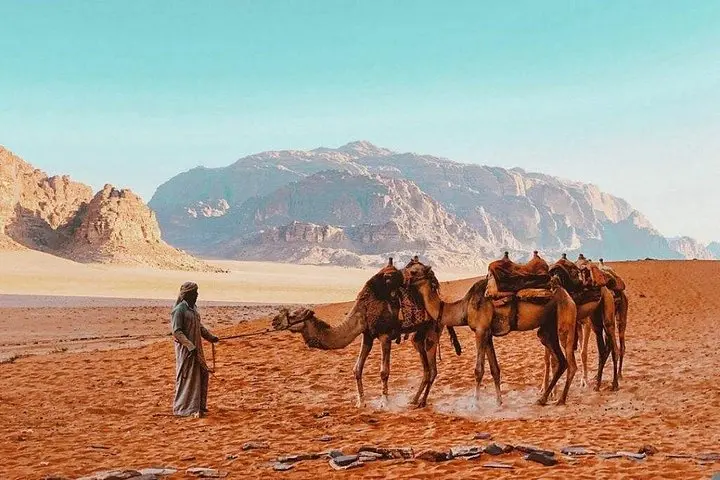
Culturally the trip hums with Bedouin presence. You’ll share mat and tea, learn a few phrases, and sleep in a private tent at a desert camp where storytelling is part of the meal. T.E. Lawrence’s shadow lingers at several sites—the spring and the ruins labeled Lawrence’s House—reminders of the area’s 20th-century political theater layered over millennia of human travel.
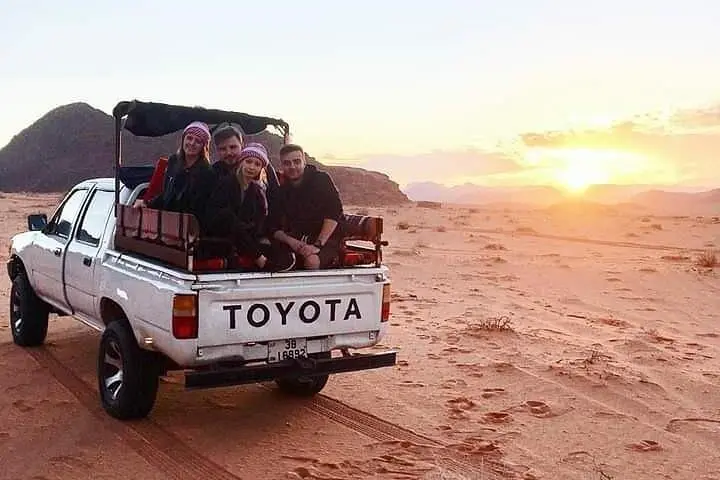
The adventure balances vehicle comfort with short, hands-on moments: a 40-minute hike through Burdah Canyon, a scramble to Um Fruth Bridge for photographs, and a slide down red dunes on a sandboard. At sunset the white sand basin glows; Bedouin hosts bring out hot tea and a quiet that feels intentional, as if the desert is holding its breath for the light to finish.
Practical notes: the day runs about eight hours and begins in Rum Village. Expect uneven terrain and short climbs—sturdy shoes are essential. Bring water, sun protection and a light layer for after-dark desert chill; nights can drop sharply. The camp provides dinner, breakfast and a private tent with basic amenities—check specifics if you need a mattress or shower.
Timing matters: early departures give cooler mornings for walks; late arrivals compress key viewpoints. Respect private Bedouin space, follow guide directions on fragile petroglyph sites, and carry out any non-biodegradable waste. For many travelers this combination of jeep mobility, short hikes and authentic overnight stays is the most efficient and sensory way to experience Wadi Rum’s rock bridges, dunes and ancient marks on the stone.
Meet at the large car park in Wadi Rum Village; the tour returns you to the same spot the morning after your overnight.
Accommodation is a private tent with basic bedding; the camp provides dinner and breakfast—confirm if you need hot water for a shower or extra bedding.
Hikes are short (typically 30–60 minutes) with some scrambling; they are manageable for most people in reasonable fitness but not suited for those with serious mobility issues.
Entry to Wadi Rum is managed at the village—fees are typically included by reputable operators but verify when booking.
Full refunds are available if you cancel at least 24 hours before departure; check your booking confirmation for specifics.
Yes—guides provide basic instruction and sandboards; dunes are gentle for first-timers but follow safety guidance to avoid collisions.
Desert Guide Camp operates guided outdoor trips and adventures with an emphasis on safety, stewardship, and memorable experiences.
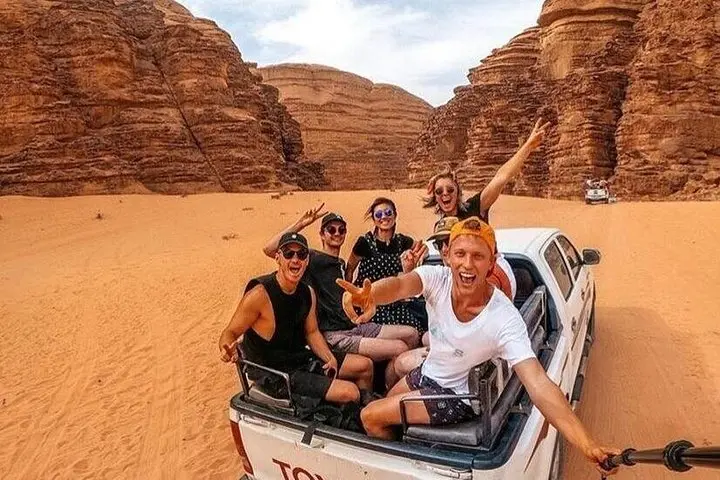
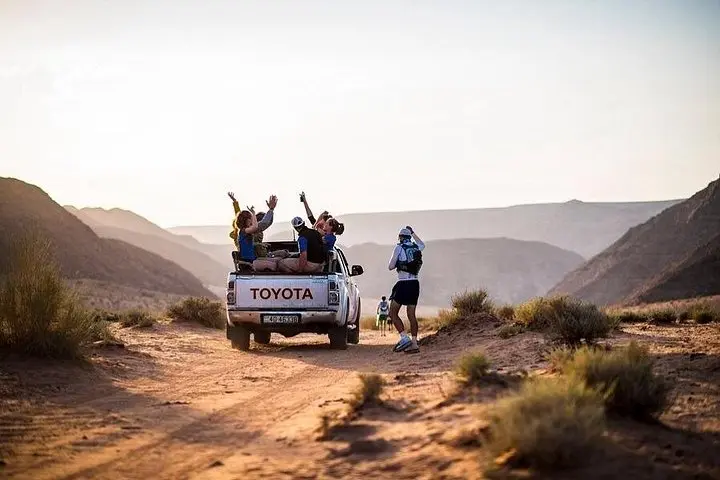
The sun carves the desert into gold and shadow as your jeep eases out of the Rum Village car park and onto red sand that seems to have a life of its own. Wind-polished towers rise like folded pages of a giant atlas; the driver lifts a hand toward a narrow slit in the cliffs and the vehicle threads through—today the desert decides the pace.
The sun carves the desert into gold and shadow as your jeep eases out of the Rum Village car park and onto red sand that seems to have a life of its own. Wind-polished towers rise like folded pages of a giant atlas; the driver lifts a hand toward a narrow slit in the cliffs and the vehicle threads through—today the desert decides the pace.
This full-day loop through Wadi Rum is a crash course in desert geology, Bedouin hospitality and cinematic scenery. Your guide steers across wadis and over dune crests between stops: an ancient Nabatean temple stamped into softer stone, the cool trickle at Lawrence’s Spring that once kept caravans alive, and Khazali Canyon with its petroglyphs—human voices frozen into rock. The landscapes here are carved by millions of years of wind and intermittent water; tafoni and mushroom rocks stand like geological punctuation marks.
Culturally the trip hums with Bedouin presence. You’ll share mat and tea, learn a few phrases, and sleep in a private tent at a desert camp where storytelling is part of the meal. T.E. Lawrence’s shadow lingers at several sites—the spring and the ruins labeled Lawrence’s House—reminders of the area’s 20th-century political theater layered over millennia of human travel.
The adventure balances vehicle comfort with short, hands-on moments: a 40-minute hike through Burdah Canyon, a scramble to Um Fruth Bridge for photographs, and a slide down red dunes on a sandboard. At sunset the white sand basin glows; Bedouin hosts bring out hot tea and a quiet that feels intentional, as if the desert is holding its breath for the light to finish.
Practical notes: the day runs about eight hours and begins in Rum Village. Expect uneven terrain and short climbs—sturdy shoes are essential. Bring water, sun protection and a light layer for after-dark desert chill; nights can drop sharply. The camp provides dinner, breakfast and a private tent with basic amenities—check specifics if you need a mattress or shower.
Timing matters: early departures give cooler mornings for walks; late arrivals compress key viewpoints. Respect private Bedouin space, follow guide directions on fragile petroglyph sites, and carry out any non-biodegradable waste. For many travelers this combination of jeep mobility, short hikes and authentic overnight stays is the most efficient and sensory way to experience Wadi Rum’s rock bridges, dunes and ancient marks on the stone.