THE ADVENTURE COLLECTIVE® · Independent discovery and booking for outdoor travel

Ride a rugged jeep through Wadi Rum’s sculpted cliffs by day and sleep under the stars in a Bedouin camp by night. This full-day, overnight tour pairs short hikes, ancient inscriptions, and traditional meals for a compact desert immersion.
Ride a rugged jeep through Wadi Rum’s sculpted cliffs by day and sleep under the stars in a Bedouin camp by night. This full-day, overnight tour pairs short hikes, ancient inscriptions, and traditional meals for a compact desert immersion.
You arrive at the Wadi Rum Rest House just after the sun has climbed high enough to warm the sand.
A line of steel-gray Toyotas waits, engines idling like patient animals, and your guide—usually a local Bedouin—greets the group with a nod and strong, sweet tea. The jeep lurches forward and the desert opens: serrated sandstone cliffs, iron-stained dunes, and a surface that alternates between compact gravel tracks and soft, sinking sand.
Verified experiences and guided adventures in the surrounding area.
Operated by Wadi Rum Classic Tours · Wadi Rum Village, Ma'an Governorate
You arrive at the Wadi Rum Rest House just after the sun has climbed high enough to warm the sand.
A line of steel-gray Toyotas waits, engines idling like patient animals, and your guide—usually a local Bedouin—greets the group with a nod and strong, sweet tea. The jeep lurches forward and the desert opens: serrated sandstone cliffs, iron-stained dunes, and a surface that alternates between compact gravel tracks and soft, sinking sand.
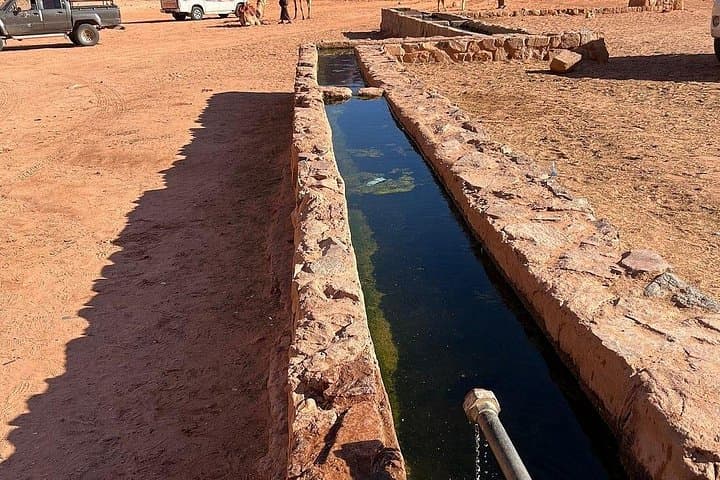
The day follows a rhythm that the landscape sets. You stop at Lawrence Spring, where a thin ribbon of water keeps a patch of green alive and the camels graze with indifferent grace. Khazali Canyon slots you between sheer walls engraved with Thamudic and Nabatean inscriptions—human voices frozen into rock. The Red Sand Dune demands effort; the climb is short but the sand steals your footing, forcing you to slow and breathe before the reward—an expansive view down the valley and a grin as you race back down the slope.
Geology here reads like a long, patient experiment. Wind and flash floods sculpt the sandstone into bridges and arches—Umm Fruth and Burdah Bridge among them—features that rise abruptly from the flat and invite shallow, careful climbs. The colors change with the light: iron-rich reds in the central wadi, the surprising bleached white desert farther south where different mineral content and erosion have altered the script of the land.
Culture rides along with the route. Meals are Bedouin—fresh flatbreads, stewed vegetables, hummus and slow-cooked meat—prepared over coals. Night in camp shifts tempo: guides set up mattresses and, when available, a panoramic tent with glass sides that frames the sky. Bedouin hospitality means stories, mint tea, and an invitation to learn how the desert measures time by the stars.
Practical side: expect short walks of 20–60 minutes between stops, mostly on soft sand or compact trails; the only long ascent nearby is the Jabal Burdah route (about four hours) and is not part of the standard jeep loop. The tour starts at the Wadi Rum Rest House, usually around 10:00, and returns the following morning after breakfast—plan for roughly 24–48 hours on site.
For comfort: bring layered clothing for warm days and chilly nights, sturdy closed-toe shoes for rock and sand, and at least 2–3 liters of water per person. Respect local customs—ask before photographing people, accept tea when offered—and consider tipping guides who share their knowledge and keep you safe over rough tracks.
This day-and-night jeep experience is as much about movement as it is about stillness—driving across a landscape that both resists and rewards curiosity, then sleeping under a sky that seems designed to keep watch.
Meet at the Wadi Rum Rest House in Wadi Rum Village—the first building on the right when entering the village; the guide usually meets guests there around 10:00.
Panoramic tents with glass sides are subject to availability; if not available you will stay in a private regular tent of similar amenities.
Most activity includes short walks (20–60 minutes) and easy climbs; the heavy Burdah Bridge ascent is not included and requires a separate, longer hike.
Yes—traditional Bedouin lunch, dinner, and breakfast are provided, featuring local breads, stews, salads, and tea.
Families are welcome, but infants must sit on a parent’s lap during transport; assess dune climbs and bridges for younger children’s abilities.
This experience is not recommended for travelers with serious cardiovascular conditions due to remote locations and variable terrain.
Wadi Rum Classic Tours operates guided outdoor trips and adventures with an emphasis on safety, stewardship, and memorable experiences.



You arrive at the Wadi Rum Rest House just after the sun has climbed high enough to warm the sand.
A line of steel-gray Toyotas waits, engines idling like patient animals, and your guide—usually a local Bedouin—greets the group with a nod and strong, sweet tea. The jeep lurches forward and the desert opens: serrated sandstone cliffs, iron-stained dunes, and a surface that alternates between compact gravel tracks and soft, sinking sand.
The day follows a rhythm that the landscape sets. You stop at Lawrence Spring, where a thin ribbon of water keeps a patch of green alive and the camels graze with indifferent grace. Khazali Canyon slots you between sheer walls engraved with Thamudic and Nabatean inscriptions—human voices frozen into rock. The Red Sand Dune demands effort; the climb is short but the sand steals your footing, forcing you to slow and breathe before the reward—an expansive view down the valley and a grin as you race back down the slope.
Geology here reads like a long, patient experiment. Wind and flash floods sculpt the sandstone into bridges and arches—Umm Fruth and Burdah Bridge among them—features that rise abruptly from the flat and invite shallow, careful climbs. The colors change with the light: iron-rich reds in the central wadi, the surprising bleached white desert farther south where different mineral content and erosion have altered the script of the land.
Culture rides along with the route. Meals are Bedouin—fresh flatbreads, stewed vegetables, hummus and slow-cooked meat—prepared over coals. Night in camp shifts tempo: guides set up mattresses and, when available, a panoramic tent with glass sides that frames the sky. Bedouin hospitality means stories, mint tea, and an invitation to learn how the desert measures time by the stars.
Practical side: expect short walks of 20–60 minutes between stops, mostly on soft sand or compact trails; the only long ascent nearby is the Jabal Burdah route (about four hours) and is not part of the standard jeep loop. The tour starts at the Wadi Rum Rest House, usually around 10:00, and returns the following morning after breakfast—plan for roughly 24–48 hours on site.
For comfort: bring layered clothing for warm days and chilly nights, sturdy closed-toe shoes for rock and sand, and at least 2–3 liters of water per person. Respect local customs—ask before photographing people, accept tea when offered—and consider tipping guides who share their knowledge and keep you safe over rough tracks.
This day-and-night jeep experience is as much about movement as it is about stillness—driving across a landscape that both resists and rewards curiosity, then sleeping under a sky that seems designed to keep watch.